
Evaluation Division
February 2026
Table of contents
- The report in short
- Acronyms and abbreviations
- What is covered
- What we learned
- How to improve the program
- Management response and action plan
- Appendix A – Canadian Centre for Justice and Community Safety Statistics themes, sub-themes and products
- Appendix B – Evaluation questions and indicators
- Appendix C – Interview quantification scale
The report in short
Justice and community safety statistics play a critical role in understanding Canadians' social well-being and in guiding evidence-based decisions on crime, access to justice and public safety. These data allow governments, researchers and other stakeholders to track trends; evaluate system performance; and develop policies that promote fairness, equity and security nationwide. Recent shifts, such as changing crime patterns, the effects of the COVID-19 pandemic and the rapid move to virtual court processes, have highlighted the growing need for timely, integrated and reliable information to support decision making in an increasingly complex environment.
The Justice and Community Safety Statistics Program, managed by the Canadian Centre for Justice and Community Safety Statistics (CCJCSS) at Statistics Canada, is part of the National Justice Statistics Initiative (NJSI), a federal-provincial-territorial partnership dedicated to the collection and dissemination of consistent and high-quality justice-related data across Canada. As the operational arm of the NJSI, the CCJCSS develops, collects, integrates and analyzes data on crime, victimization and justice administration. In 2019/2020, its mandate was expanded to include community safety and emergency management.
The objective of the evaluation is to provide credible and neutral information on the ongoing performance and future direction of the Justice and Community Safety Statistics Program.
Key findings and recommendations
The evaluation confirms that the CCJCSS plays a vital role in Canada's justice and public safety ecosystem. Its data products, especially analytical reports and data tables, are widely recognized and valued by federal partners, academics, governments at all levels, parliamentarians and the media. Analytical reports provide ready-to-use insights for policy and program development, while data tables enable technical users to conduct custom analyses tailored to their needs. Together, these products support legislative reform, academic research, public accountability and evidence-based decision making.
Despite these strengths, the evaluation identified persistent challenges that limit the program's responsiveness. Timeliness and accessibility remain top concerns. Users reported that products are not issued quickly enough, reducing their relevance and utility. Additionally, gaps in disaggregated data and inconsistencies across jurisdictions constrain efforts to address systemic issues such as overrepresentation and equity in the justice system.
Operational pressures compound these challenges. Modernization initiatives—including the transition from aggregate to microdata, adoption of open-source tools and integration of artificial intelligence (AI)—have increased the complexity of the CCJCSS's work. While the CCJCSS has made progress by leveraging innovation and AI to enhance usability and user experience, it is essential to build on these advancements by further embedding AI into core workflows. This will help streamline processes, reduce routine tasks and accelerate product delivery. However, these necessary changes require significant technical expertise and resources. Ongoing workforce constraints and reliance on cost-recovery funding present sustainability risks, raising concerns about the CCJCSS's capacity to maintain quality and timeliness in a resource-constrained environment.
To remain relevant and maximize value, the CCJCSS must adopt a strategic approach that emphasizes prioritization and workforce resilience. This includes clarifying its mandate to guide priorities, strengthening its cost-recovery governance and focusing resources on developing products that provide the most value to their intended audience. Additionally, strengthening workforce resilience through knowledge transfer and succession planning will further support sustainability.
In light of these findings, the following recommendations are proposed:
Recommendation 1
The assistant chief statistician (ACS) of the Social, Health and Labour Statistics Field (Field 8) should ensure that the CCJCSS adopts a structured, metrics-driven approach to prioritization. This will better align outputs with the CCJCSS's mandate and foster continuous improvement. Key actions should include the following:
- Clarifying the CCJCSS mandate: Clearly define the CCJCSS's core purpose, scope and intended audience. Establish a framework to identify which outputs and activities most directly support its strategic objectives.
- Strengthening cost-recovery governance: Enhance coordination within the CCJCSS to ensure that initiatives are aligned with broader strategic priorities.
- Distinguishing essential versus discretionary activities: Identify which outputs and initiatives are essential to fulfilling the CCJCSS mandate and which are discretionary.
- Leveraging performance metrics: Systematically assess outputs using metrics such as web analytics, social media engagement, data request trends and consultation feedback to create a shortlist of high-impact products. The user rankings of themes and sub-themes from the evaluation can also be leveraged in this exercise.
- Prioritizing strategic value: Focus resources on users and outputs that deliver the greatest strategic impact.
- Monitoring and adjusting: Regularly evaluate the effects of prioritization on timeliness, user satisfaction and employee morale, and adjust the approach as needed.
Recommendation 2
The ACS of Field 8 should ensure that the CCJCSS develops a succession and knowledge transfer plan that includes the following:
- Identifying critical tasks and responsibilities: Pinpoint essential operational activities.
- Mapping institutional knowledge holders and retirement timelines: Assess areas of risk to prioritize knowledge transfer.
- Developing clear documentation protocols: Create step-by-step guides and templates, and ensure storage in accessible repositories.
- Mentoring and shadowing: Provide opportunities for newer staff to learn from experienced colleagues before departures.
- Aligning training and capacity building: Build workforce skills and capacity to keep pace with growing demands and evolving tasks.
- Monitoring and updating: Review the plan regularly to keep it current and effective.
Acronyms and abbreviations
AI
Artificial intelligence
ACS
Assistant chief statistician
CCJCSS
Canadian Centre for Justice and Community Safety Statistics
CJS
Criminal justice system
DMs
Deputy ministers
FPT
Federal-provincial-territorial
LOCNJSI
Liaisons Officers Committee of the National Justice Statistics Initiative
NJSI
National Justice Statistics Initiative
PSES
Public Service Employee Survey
PSPM
Public Service Performance Management
SJISB
Social, Justice and Indigenous Statistics Branch
StatCan
Statistics Canada
What is covered
Background
Justice and community safety statistics are foundational to monitoring the criminal justice system in Canada and informing evidence-based policy and program decisions on crime, access to justice and public safety. These statistics enable governments, researchers and stakeholders to monitor trends, assess system performance and design interventions that promote fairness, equity and security across the country. The justice system is always evolving, underscoring the need for timely, integrated and reliable data to support decision-making in a complex environment.
Governance
Established in 1981, the National Justice Statistics Initiative (NJSI) is a federal-provincial-territorial (FPT) partnership that brings together deputy ministers (DMs) responsible for justice and public safety, alongside the chief statistician of Canada, to ensure the collection and dissemination of consistent, high-quality justice-related data nationwide. The operational arm of the NJSI is the Canadian Centre for Justice and Community Safety Statistics (CCJCSS), which is part of Statistics Canada (StatCan). It supports Canada's justice system by providing accurate, comparable and comprehensive data on crime, victimization, courts, corrections, policing, and civil and criminal justice administration. Oversight of the CCJCSS's work is provided by the Liaison Officers Committee of the NJSI (LOCNJSI), which consists of officials from federal departments and provincial or territorial ministries, each appointed by their respective DMs (Figure 1). In 2019/2020, the CCJCSS's mandate was expanded to include community safety and emergency management, reflecting the growing importance of public safety data and social determinants of crime.
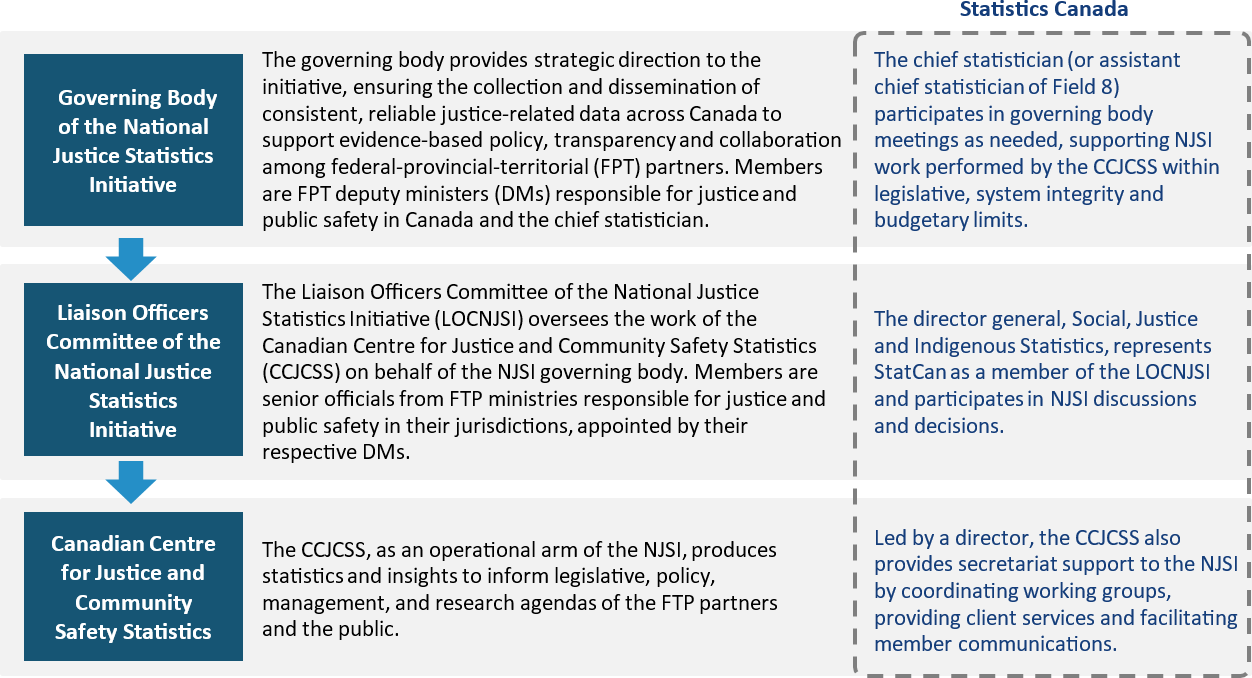
Description - Figure 1
Figure 1 illustrates the governance structure of the Canadian Centre for Justice and Community Safety Statistics (CCJCSS) within the National Justice Statistics Initiative (NJSI), shown as a vertical flow from strategic oversight to operational delivery and identifies the Statistics Canada official responsible and their role at each level.
1. Governing Body of the NJSI
- The governing body provides strategic direction to the initiative, ensuring the collection and dissemination of consistent, reliable justice-related data across Canada to support evidence-based policy, transparency, and collaboration among FPT partners. Members are FPT DMs responsible for justice and public safety in Canada and the Chief Statistician.
- Statistics Canada role
The Chief Statistician (or Assistant Chief Statistician of Field 8) participates in governing body meetings as needed, supporting NJSI work performed by the CCJCSS within legislative, system integrity, and budgetary limits.
2. Liaison Officers Committee of the NJSI (LOCNJSI)
- The LOCNJSI oversees the work of the CCJCSS on behalf of the NJSI governing body. Members are senior officials from FPT ministries responsible for justice and public safety in their jurisdictions, appointed by their respective DMs.
- Statistics Canada role
The Director General, Social, Justice and Indigenous Statistics, represents StatCan as a member of the LOCNJSI and participates in NJSI discussions and decisions.
3. Canadian Centre for Justice and Community Safety Statistics (CCJCSS)
- The CCJCSS, as operational arm of the NJSI, produces statistics and insights to inform legislative, policy, management, and research agendas of the FPT partners and the public.
- Statistics Canada role
Led by a director, the CCJCSS also provides secretariat support to the NJSI by coordinating working groups, providing client services, and facilitating member communication.
Legislation and program direction
The program operates under legislative authority provided by the Statistics Act, which requires the collection of criminal statistics from courts, correctional institutions and law enforcement agencies. In practice, the CCJCSS also provides data to support broader legislative and policy objectives, including initiatives such as bail reform, Indigenous justice strategies and gender-based violence prevention. Its outputs cover themes such as crime, courts, corrections, victimization, justice system equity and emergency management. The products are widely used by FPT governments, law enforcement agencies, academics, non-governmental organizations and the media.
The demand for CCJCSS data continues to grow as stakeholders seek more granular, timely and disaggregated information to address complex issues such as systemic overrepresentation, hate crimes and emerging threats like cybercrime. At the same time, modernization efforts—including the transition to open-source tools, integration of artificial intelligence (AI) and adoption of advanced analytics—are reshaping the program's operations. These changes aim to improve timeliness, enhance accessibility and enable richer insights through linked datasets and predictive modelling.
About the evaluation
Authority
The evaluation was conducted under the authority of the approved StatCan Risk-based Audit and Evaluation Plan 2025/2026 to 2029/2030, in accordance with the Treasury Board Policy on Results.
Objective and scope
The objective of the evaluation is to provide credible and neutral information on the ongoing performance and future direction of the Justice and Community Safety Statistics Program. The scope, established in collaboration with the office of primary interest, included the CCJCSS data products outlined in Appendix A. The evaluation was conducted from August to December 2025.
Approach and methodology
During the planning phase of the evaluation, a key priority identified by the office of primary interest was to clarify the program's strategic direction and determine where efforts should be concentrated to achieve the greatest impact. To support this objective, the evaluation was intentionally designed to address critical questions about the relevance and utility of the program's suite of data products and to identify which areas deliver the most value to users.
Given the program's extensive and diverse range of topics and outputs, it was not feasible to engage stakeholders on every individual product. Instead, the evaluation team collaborated with program management to organize products into overarching themes and sub-themes, creating a structured framework for more effective engagement. This approach allowed stakeholders to focus on broader areas of interest rather than individual outputs, ensuring meaningful input while maintaining efficiency.
To operationalize this framework, a comprehensive table of CCJCSS themes, sub-themes and corresponding products (Appendix A) was developed. This resource was used throughout data collection, both in key informant interviews and in the user survey, enabling participants to prioritize the themes and products most relevant to their work.
The following two evaluation questions were identified:
- To what extent is the overall suite of data products produced by the CCJCSS relevant and useful to users?
- Where should the program focus to produce the most value for users?
More information about the evaluation questions and related indicators can be found in Appendix B.
The data collection methods outlined in Figure 2 were used. The findings outlined in this report are based on the triangulation of these data collection methods.
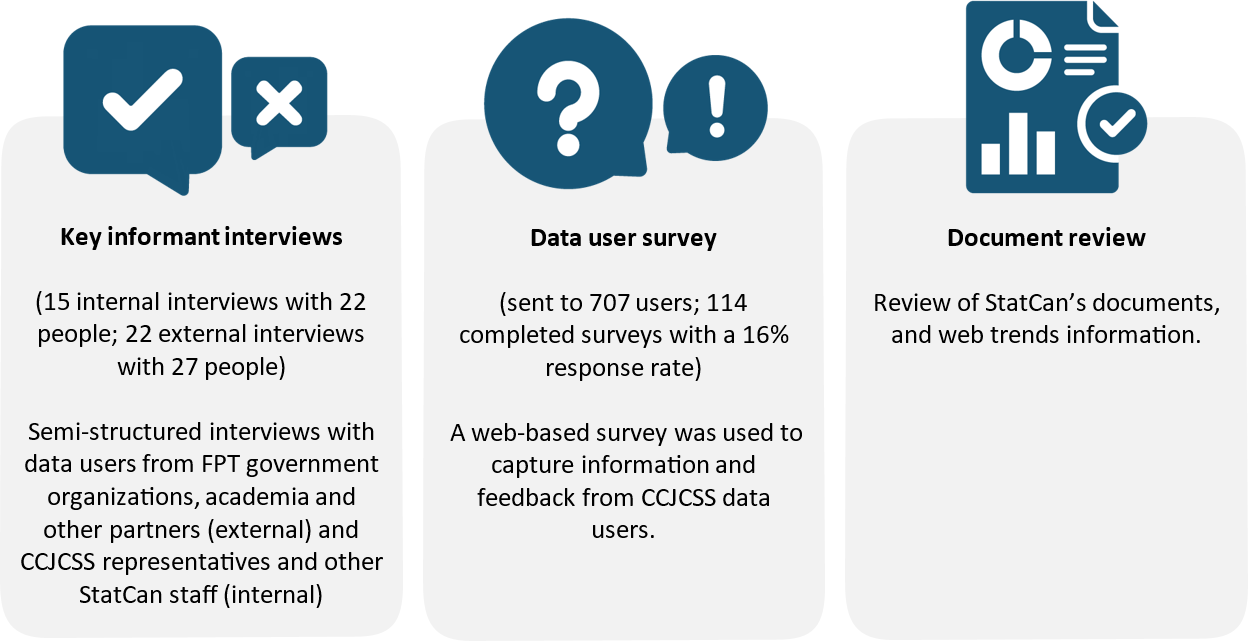
Description - Figure 2
Figure 2 outlines the methods used by the evaluation for data collection.
- Key informant interviews: Key informant interviews included 15 internal interviews with 22 people and 22 external interviews with 27 people. Semi-structured interviews were conducted with data users from FPT government organizations, academia, and other partners (external), as well as CCJCSS representatives and other Statistics Canada staff (internal).
- Data user survey: The data user survey was sent to 707 users, with 114 completed surveys, for a response rate of 16%. A web-based survey was used to capture information and feedback from CCJCSS data users.
- Document review: Review of StatCan's documents, and web trends information.
Three main limitations were identified, and mitigation strategies were employed, as outlined in Table 1.
| Limitations | Mitigation strategies |
|---|---|
| The perspectives gathered through external interviews may not be fully representative. | External interviewees were selected using specific criteria to maximize strategic reach for the interviews and multiple recruitment strategies were used. A survey of users was implemented to gather user perspectives from a broader group. |
| Self-report bias can occur in internal interviews, where individuals reporting on their own activities may portray them in a more positive light. | To the extent possible, feedback and reflections on activities were sought from a range of perspectives. A review of program documents also supported a balanced perspective. |
| There was lower uptake to the survey of users (16%, n=114) and, therefore, findings from the survey may not be fully representative of the entire user group population. | The evaluation included interviews with users across population groups to establish a more representative sample. Purposeful sampling of interviewees aimed to gather feedback from diverse users. |
What we learned
Performance
To what extent is the overall suite of data products produced by the CCJCSS relevant and useful to users?
CCJCSS data products are highly relevant, widely used and integral to a broad spectrum of activities, from policy development and research to public communication and accountability. These products underpin evidence-informed decision making, enabling policy makers, researchers and FPT governments to design interventions grounded in reliable evidence. Their strong reputation for quality and reliability positions the CCJCSS as a cornerstone of Canada's justice and community safety data infrastructure. However, opportunities remain to enhance visibility, accessibility and timeliness to ensure continued responsiveness to evolving user needs.
In assessing the program's performance, the evaluation examined the user landscape by identifying key user groups, their profiles and how they use CCJCSS data products; explored user experience through their perceptions of relevance, utility, accessibility, methodological clarity, quality and timeliness; and reviewed how the program has adapted to evolving needs, while noting ongoing challenges that impact responsiveness.
User profile
Key users and familiarity with CCJCSS products
There are several key user groups accessing CCJCSS data products at varying frequencies. Almost all users indicated that they have a high level of familiarity with CCJCSS data products.
The user landscape for CCJCSS data products is diverse, encompassing both internal stakeholders at StatCan and a wide array of external users, such as FPT government departments, law enforcement agencies, academics, non-governmental organizations and municipal governments. Almost all users reported being somewhat or very familiar with CCJCSS products, particularly with those most relevant to their work. Internal users and other federal departments leverage these products to support interdepartmental initiatives and legislative priorities. External stakeholders such as the media and parliamentarians also rely on CCJCSS outputs, particularly for crime-related topics.
From 2022 to 2024, the CCJCSS received 516 media requests, with the majority (444) focused on crime, including policing, violence and victimization. The remaining inquiries pertained to the court system, correctional services and the other thematic areas (Figure 3).
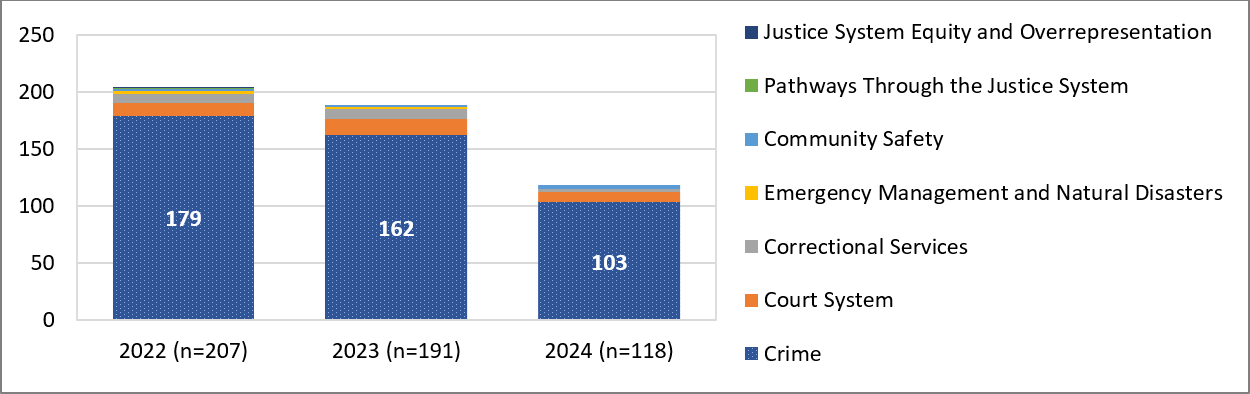
Description - Figure 3
Figure 3 presents the number of media requests received between 2022 and 2024, disaggregated by the following thematic areas (crime, court system, correctional services, emergency management and natural disasters, community safety, pathways through the justice system, and justice system equity and overrepresentation).
2022
- Total media requests: 207
- Crime: 179
- Other subject areas (court system; correctional services; emergency management and natural disasters; community safety; pathways through the justice system; justice system equity and overrepresentation): 28
2023
- Total media requests: 191
- Crime: 162
- Other subject areas (court system; correctional services; emergency management and natural disasters; community safety; pathways through the justice system; justice system equity and overrepresentation): 29
2024
- Total media requests: 118
- Crime: 103
- Other subject areas (court system; correctional services; emergency management and natural disasters; community safety; pathways through the justice system; justice system equity and overrepresentation): 15
Frequency of use and importance of the data to users
About half of users interviewed used CCJCSS products frequently, while the other half used them infrequently. Most survey respondents indicated that they used CCJCSS products monthly. Two-thirds of users considered these data products to be extremely or very important to their work, indicating notable relevance and utility for the program and its outputs.
Patterns of use varied—about half of interviewed users accessed these products frequently, while the other half used them less frequently. Survey data revealed that most respondents used CCJCSS products monthly, with some accessing them weekly and a few daily (Figure 4). This variability reflects the program's ability to serve both routine and specialized data needs.

Description - Figure 4
Figure 4 presents how often surveyed users reported using CCJCSS data, categorized as monthly, weekly, or daily use.
Among surveyed users, 56% reported monthly use of CCJCSS data. Weekly use was reported by 35% of surveyed users, while 9% reported daily use.
Two-thirds of surveyed users rated CCJCSS products as extremely or very important to their work (Figure 5). Interviewees described these products as critical, integral and essential for policy development, program planning and legislative analysis. One interviewee noted that the data are critically important to their work and that they used it daily to inform policy, to develop Memorandums to Cabinet and for budgeting decisions. The significant reliance on CCJCSS outputs underscores their relevance across multiple sectors and decision-making contexts.

Description - Figure 5
Figure 5 presents how surveyed users rated the importance of CCJCSS data to their work, categorized as slightly or not important, moderately important, and extremely or very important.
Among surveyed users, 66% reported that CCJCSS data were extremely or very important to their work. Moderately important was reported by 20% of surveyed users, while 14% reported that CCJCSS data were slightly or not important to their work.
Reach and visibility
Crime and justice statistics rank as one of the top five subject areas at Statistics Canada, with 6.2 million page views and 143,000 downloads from 2022/2023 to 2024/2025.
Crime and justice statistics rank among the top five subjects accessed on the StatCan website, with over 6.2 million page views and 143,000 downloads in recent years. Publications remain the most viewed and downloaded product type, followed by data tables and analytical reports (figures 6 and 7). Media engagement also underscores the visibility of the program; as noted earlier, the CCJCSS responded to 516 media requests from 2022 to 2024, with most inquiries focusing on crime, policing, violence and victimization.
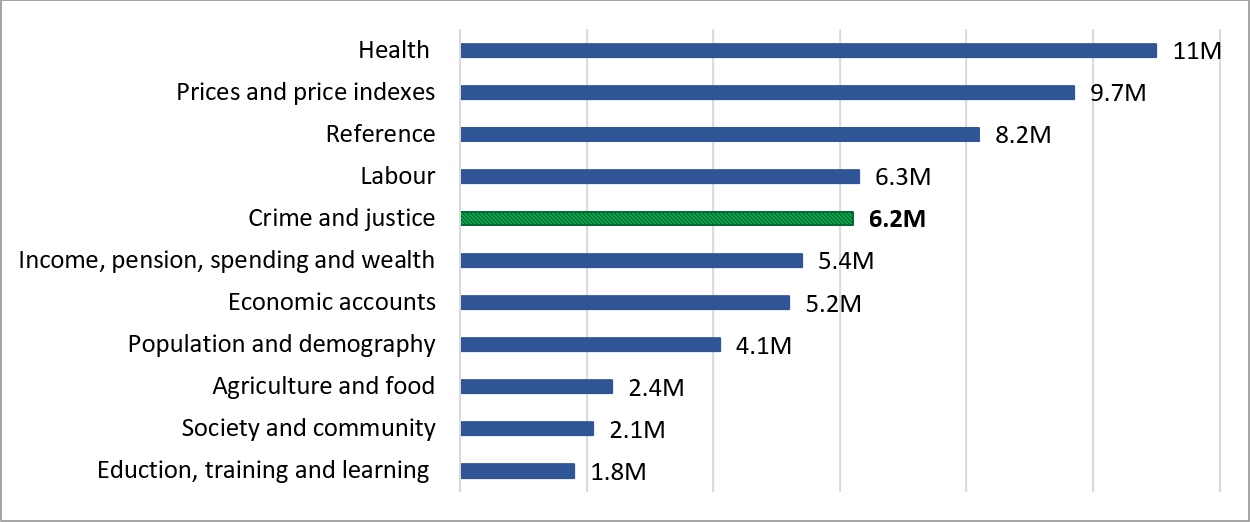
Description - Figure 6
Figure 6 presents the number of page views for statistical outputs accessed on the StatCan website by Canadians by subject area during the 2022/2023 to 2024/2025 period.
- Health: 11 million page views
- Prices and price indexes: 9.7 million page views
- Reference: 8.2 million page views
- Labour: 6.3 million page views
- Crime and justice: 6.2 million page views
- Income, pension, spending and wealth: 5.4 million page views
- Economic accounts: 5.2 million page views
- Population and demography: 4.1 million page views
- Agriculture and food: 2.4 million page views
- Society and community: 2.1 million page views
- Education, training and learning: 1.8 million page views
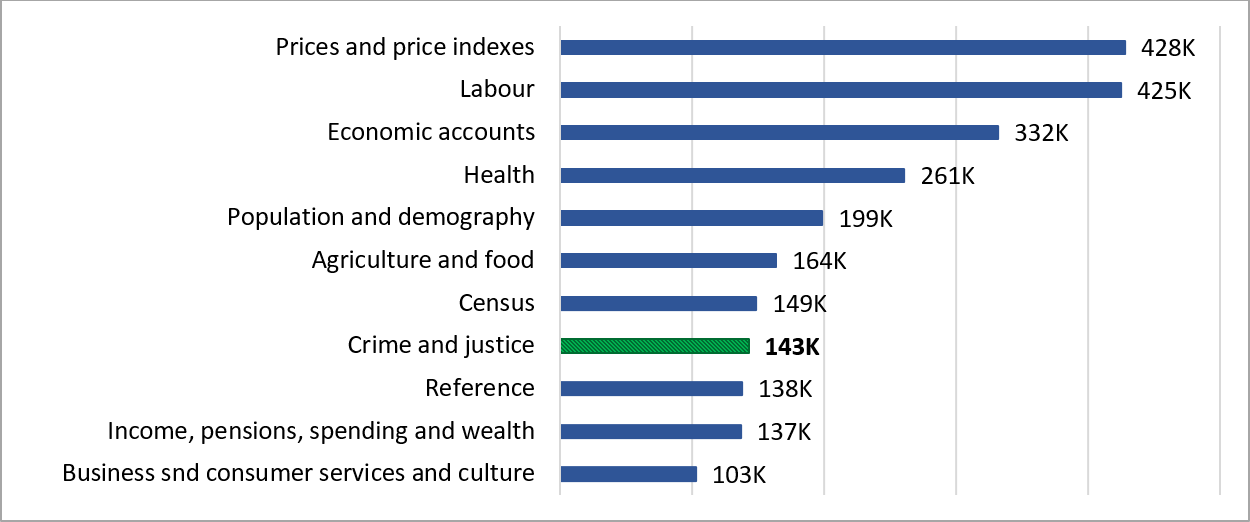
Description - Figure 7
Figure 7 presents the number of downloads of statistical outputs from the StatCan website by Canadians by subject area during the 2022/2023 to 2024/2025 period.
- Prices and price indexes: 428 thousand downloads
- Labour: 425 thousand downloads
- Economic accounts: 332 thousand downloads
- Health: 261 thousand downloads
- Population and demography: 199 thousand downloads
- Agriculture and food: 164 thousand downloads
- Census: 149 thousand downloads
- Crime and justice: 143 thousand downloads
- Reference: 138 thousand downloads
- Income, pensions, spending and wealth: 137 thousand downloads
- Business and consumer services and culture: 103 thousand downloads
Most useful products according to users
Analytical products and data tables were rated as extremely or very useful by users. Analytical products were generally more useful to non-technical users, while data tables supported custom analysis for data-savvy users.
Analytical products and data tables were consistently rated as the most useful outputs. Analytical products were valued for providing ready-to-use insights that support policy development, direct regulations and legislation, research, and teaching, while data tables enabled technical users with statistical backgrounds to conduct custom analyses. Data tables were considered most useful because they can be used to build their own products relevant to their needs. Infographics and dashboards were also considered helpful for communicating complex information in accessible formats (Table 2).
| Product | Percent |
|---|---|
| Users surveyed | |
| Analytical products | 80% |
| Data tables | 67% |
| Infographics | 62% |
| Reference information | 61% |
| The Daily | 55% |
| Dashboards | 47% |
| Raw datasets | 41% |
| Users interviewed | |
| Analytical products | 82% |
| Data tables | 82% |
| Raw datasets | 68% |
| The Daily | 68% |
| Dashboards | 50% |
| Reference Info | 45% |
| Infographics | 41% |
Themes and sub-themes most useful for users' work
All 7 themes and 31 sub-themes were ranked as important to different user groups, indicating that the diverse suite of CCJCSS products meets the needs of a wide range of users. While all seven themes were ranked as important to some user groups, Crime, Justice System Equity and Overrepresentation, Community Safety, and Court System were ranked highest in importance.
All seven thematic areas were considered important by different user groups (Figure 8). Crime ranked the highest in importance for users' work, reflecting the ongoing demand for timely and detailed data on policing, violence and victimization. Users emphasized that crime statistics are essential for monitoring public safety trends, informing law enforcement strategies, and shaping legislative responses to pressing concerns like organized crime and gender-based violence. The theme of Justice System Equity and Overrepresentation ranked second in importance for users' work, underscoring the growing need for disaggregated data to address systemic disparities. Users highlighted that understanding the experiences of Indigenous Peoples, racialized communities and other marginalized groups within the justice system is vital for advancing equity-focused policies and programs. Community Safety was also identified as a theme of high importance for users' work, reflecting the shift toward a more holistic approach to justice that considers social determinants of crime and public well-being. Court System ranked among the top four themes because of its relevance for monitoring case flow, court outcomes and access to justice.
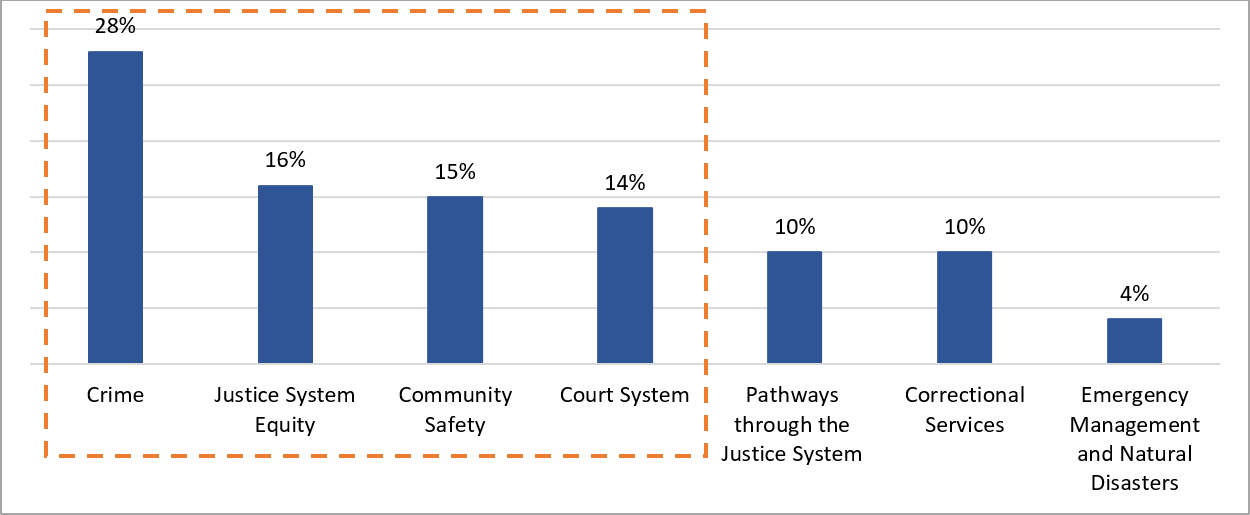
Description - Figure 8
Figure 8 presents the weighted distribution of overall rankings by theme with the top four themes highlighted.
- Crime: 28%
- Justice system equity: 16%
- Community safety: 15%
- Court system: 14%
- Pathways through the justice system: 10%
- Correctional services: 10%
- Emergency management and natural disasters: 4%
All sub-themes under the seven overarching themes were considered important by different user groups. Figure 9 illustrates the ranking of sub-themes across all themes, highlighting areas of greatest perceived value. Each theme consists of three sub-themes, except for Crime, which encompasses a broader set of topics because of its complexity and public prominence. The sub-themes under Crime that were ranked lower in importance included Online Child Exploitation, Rural Crime, Residential Facilities for Victims of Abuse, Police Resources and Expenditures, Firearm-Related Crime, and Cybercrime (not listed in Figure 9).
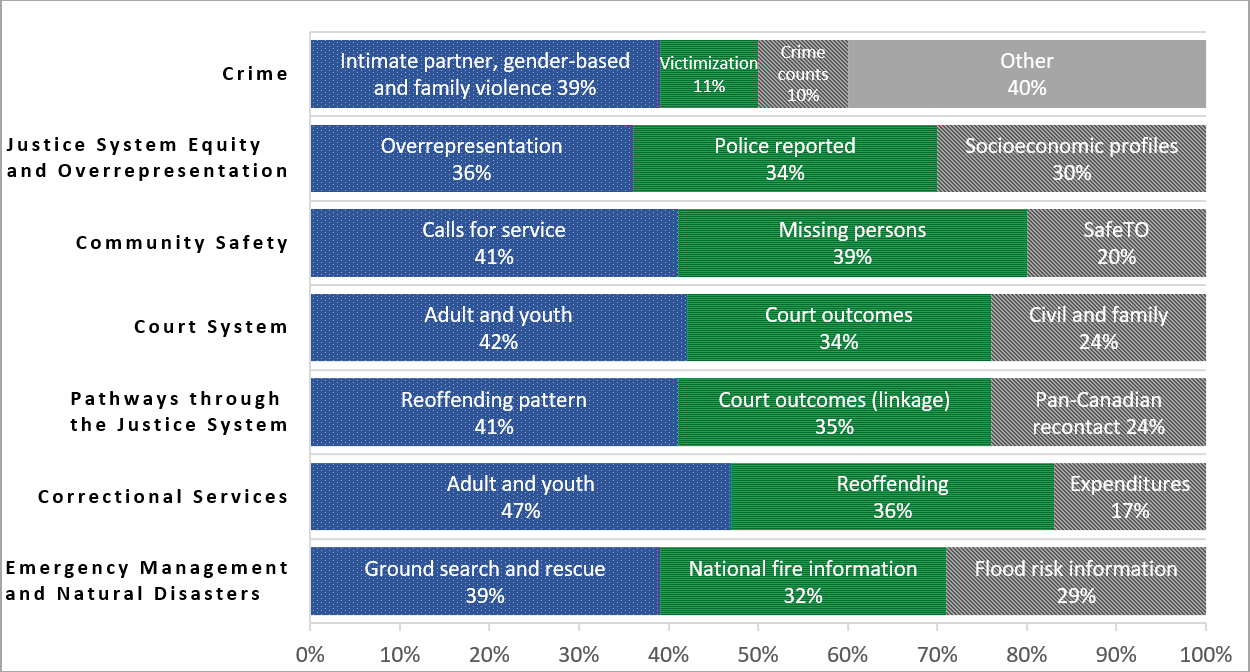
Description - Figure 9
Figure 9 presents the weighted ranking of sub-themes shown as percentages within each theme. Themes are ranked by overall prominence from top to bottom. Note that sub-theme percentages compare only within each theme.
Theme: Crime
Sub-themes:
- Intimate partner, gender-based and family violence: 39%
- Victimization: 11%
- Crime count: 10%
- Other: 40%
Theme: Justice system equity
Sub-themes:
- Overrepresentation: 36%
- Police reported: 34%
- Socio-economic profiles: 30%
Theme: Community safety
Sub-themes:
- Calls for service: 41%
- Missing persons: 39%
- Safe TO: 20%
Theme: Court system
Sub-themes:
- Adults and youth: 42%
- Court outcomes: 34%
- Civil and family: 24%
Theme: Pathways through the justice system
Sub-themes:
- Reoffending pattern: 41%
- Court outcomes (linkage): 35%
- Pan-Canadian contact: 24%
Theme: Correctional services
Sub-themes:
- Adults and youth: 47%
- Reoffending patterns: 36%
- Expenditures: 17%
Theme: Emergency management and natural disasters
Sub-themes:
- Ground search and rescue: 39%
- National fire information: 32%
- Flood risk information: 29%
How products are used
CCJCSS data products were used in many ways by different user groups, highlighting how the diversity of themes, sub-themes and products are relevant and useful for users. Almost all (96%) surveyed users agreed or strongly agreed that the data products produced by the CCJCSS are useful.
The evaluation found that CCJCSS data products are widely accessed, reflecting their versatility and importance. An overwhelming 96% of surveyed users agreed or strongly agreed that CCJCSS data products are useful, underscoring their critical role in supporting evidence-based practices and informed decision making. Users indicated that data products are used for the following:
- Comparative analysis and contextualization: Users across jurisdictions leveraged CCJCSS data to compare regional, national and international trends, supporting evidence-informed decisions at the local level. Comparative analysis is particularly valuable for law enforcement agencies and provincial ministries seeking to benchmark performance, identify disparities and implement targeted interventions.
- Decision making, policy development and program planning: CCJCSS outputs are integral in evidence-informed decision making to shape public policy and design programs that address justice and community safety priorities. Users shared that they rely on these data to inform legislative reforms, allocate resources and monitor progress on initiatives such as bail reform, gender-based violence prevention and Indigenous justice strategies. For example, crime severity indices and court processing data help policy makers assess system performance and identify areas requiring intervention.
- Research and teaching: Academic institutions and research organizations used CCJCSS data for research, teaching and to supplement other forms of analyses (i.e., qualitative data). These datasets enable longitudinal analyses of crime trends, systemic overrepresentation and victimization patterns, often serving as the foundation for scholarly publications and graduate-level coursework. Researchers highlighted that CCJCSS products provide the credibility and rigour necessary for peer-reviewed studies.
- Updating government: CCJCSS data were frequently used to respond to parliamentary questions, inform committee reports and support ministerial briefings. These outputs provided legislators with credible, up-to-date information on crime rates, court processing times and systemic issues such as overrepresentation.
- Citation in the media: CCJCSS products were widely referenced in media coverage, shaping public understanding of crime and justice issues, highlighting the reach and influence of the Justice and Community Safety Statistics Program.
User experience
Users generally had a positive experience with CCJCSS data products and had confidence in their quality and usefulness, though some noted gaps in disaggregation and consistency across jurisdictions. Accessibility is mixed, with frequent users navigating products easily and others finding the website and microdata access challenging. While documentation is significant, technical outputs can be difficult for non-specialists. Timeliness is the main concern, with users seeking faster updates and more frequent releases.
- Quality: Users expressed confidence in the quality of CCJCSS data products. Of users surveyed, 85% agreed or strongly agreed that the products are of good quality, citing StatCan's rigorous standards, validation processes and transparency regarding limitations. Many described the CCJCSS as the "gold standard" for statistical data, noting that metadata and caveats are consistently provided. Analytical products were praised in particular for their depth and reliability, enabling users to reference them confidently in policy documents and academic research. However, some concerns were raised about court data quality, which varies by province because of inconsistent reporting practices.
- Accuracy: While most users agreed that CCJCSS data accurately measure what they intend to, several noted gaps in capturing the full scope of issues. The most common concern was insufficient disaggregation, particularly for race, Indigenous identity and intersectional factors. Users emphasized that without granular data, analyses risk overlooking systemic inequities. For example, understanding differences in justice system overrepresentation by gender, ethnicity or offender history is difficult when data cannot be disaggregated. Additionally, inconsistencies in data collection across jurisdictions and missing years for certain provinces and territories limit trend analysis and comparability. These challenges were not attributed to CCJCSS methodology but to variations in the quality, completeness and consistency of data received from provinces and territories. These gaps highlight the need for continued support for jurisdictions to improve data collection, especially for complex topics like bail and recontact.
- AccessibilityFootnote 1: Accessibility to CCJCSS data products presents a mixed picture. While frequent users generally find dashboards and data tables straightforward to navigate, many stakeholders, especially occasional users, reported difficulties when locating products on the StatCan website. Accessing information often demands specialized knowledge, making the process burdensome for non-experts, and the website itself is frequently described as not user-friendly. Furthermore, obtaining microdata through research data centres is seen as time-consuming and administratively complex, often requiring multiple agreements and, in some cases, travel. To address these challenges, users have suggested several improvements: introducing a centralized product list (similar to Appendix A) on the website, streamlining legal agreements for organizations, implementing AI-powered search tools that mimic Google-style queries, and enhancing visualization options, such as interactive dashboards that allow users to filter data directly within tables. During the evaluation period, StatCan started a comprehensive redesign of its website. In July 2025, the agency launched a new home page featuring a cleaner and more engaging layout, updated branding, intuitive navigation and a streamlined structure. This refreshed home page represents the initial phase of the agency's broader website modernization project to enhance user experience.
- Interpretation and understanding: Most users found CCJCSS products to be clear and well documented, with comprehensive definitions and methodological notes. However, some products are highly technical, posing challenges for non-specialist audiences. Suggestions to improve interpretability and understanding include providing navigation webinars or tutorials for raw datasets, revising terminology within agency standards for racialized or Indigenous identity data to reflect local and culturally appropriate definitions, and incorporating more plain language.
- Timeliness: Timeliness was identified as the most significant challenge by users. Standard releases and custom data requests are not issued quickly enough, reducing relevancy and utility for users' work. Users stressed the need for more frequent updates and shorter turnaround times, particularly for emerging issues such as bail reform and race-based data. There is a strong desire for immediate and up-to-date data that can be used for real-time decision making. Suggestions included leveraging automation and AI tools to expedite custom tabulations, and exploring opportunities for preliminary data releases to meet urgent needs. The CCJCSS recognizes ongoing challenges related to the timeliness of its data products and is aware of the need for continued improvement in this area.
Overall, CCJCSS products were trusted and widely valued, but improvements in accessibility, timeliness and interpretability are critical to meeting evolving user needs. Addressing these areas will enhance user experience, strengthen evidence-based decision making, and position the CCJCSS as a leader in justice and community safety data modernization.
Evolution to meet user needs
CCJCSS program adaptations
The CCJCSS has demonstrated significant adaptability in response to evolving user needs, expanding its scope beyond traditional justice domains to include community safety and emergency management. The program has modernized its data collection and analytical practices, moving from aggregate reporting to micro-level data and linked datasets that enable more nuanced analysis. These changes have improved the relevance and utility of CCJCSS products, particularly for policy development and equity-focused research.
- Expansion of scope and themes: Originally focused on policing, courts and corrections, the CCJCSS has broadened its mandate to include community safety and emergency management, reflecting a shift toward a more holistic approach to measuring the health and resilience of the justice and community safety ecosystem. This expansion has introduced new indicators, such as calls for service, missing persons standards and bail, and supported initiatives like SafeTO and emergency preparedness data, aligning with user priorities for upstream, preventative measures and integrated service delivery.
- Modernization and technical innovation: The CCJCSS has transitioned from aggregate data to micro-level datasets, enabling more detailed and disaggregated analysis. The volume of microdata processed has grown exponentially, from approximately 10,000 cells per year to over 1 billion, driving ongoing modernization and adoption of new analytical tools and software. Further, this evolution supports linkage across surveys (e.g., courts and corrections) and integration with external datasets such as health and census data. Linked data products, such as the Pan-Canadian Recontact Project, allow users to examine pathways through the justice system and assess systemic issues like overrepresentation. Users praised these innovations for providing richer insights and supporting evidence-based policy reforms, such as bail reform and youth justice outcomes.
- Strengthened collaboration: The CCJCSS has strengthened its analytical capacity through partnerships with other StatCan divisions (e.g., Census Operations, Health Statistics) and external organizations such as the Centre for Addiction and Mental Health and the Canadian Centre for Child Protection, funded by Public Safety Canada. These collaborations enable the CCJCSS to provide context-rich analysis rather than simply reporting counts. For example, when a new offence is added to the Criminal Code, partnerships with justice and policing help explain why crime rates appear to rise, offering users a more accurate interpretation. Similarly, a partnership with Justice Canada has provided permanent funding for modernization initiatives, including efforts to address overrepresentation in the justice system. This work supports the development of macro-simulation models to examine pathways through the justice system and assess disparities related to discrimination and access to justice. These strengthened collaborations ensure that more data are available to users, supporting impactful analysis and evidence-based decision making.
Challenges and constraints
While the adaptations noted above have evolved in response to user needs, this evolution has been constrained by structural challenges, including reliance on cost recovery, and resource and workforce challenges. These constraints have slowed innovation and impacted the timeliness of outputs, despite strong user demand for more granular and real-time data.
- Cost-recovery constraints: Despite growing complexity and demand, the CCJCSS operates with funding levels designed for aggregate data collection (i.e., requiring less complex analysis), creating a persistent resource gap. The program relies heavily on cost-recovery arrangements, which prioritize funded projects over broader program priorities. This model limits agility and constrains the ability to pursue emerging issues or produce outputs outside partner-driven priorities.
- Resource and workforce constraints: The shift to microdata and linked datasets have increased analytical complexity requiring advanced technical skills and longer processing times. Staff face heavy workloads, procedural requirements, and limited opportunities for training and knowledge transfer, raising concerns about burnout and succession planning. Data from internal document review indicate that internal resources have been reduced over the last few years; however, the complexity of the work continues to grow, as does the time it takes to complete tasks. These pressures affect the program's ability to maintain timeliness, innovate and acquire mandatory internal approvals for AI initiatives, despite strong interest in adopting tools like AI for automation and data extraction.
Program direction
Where should the program focus to produce the most value to users?
The CCJCSS should focus on areas that maximize strategic alignment, operational efficiency and responsiveness to user needs. While all program components provide value, prioritizing themes, products and processes most closely aligned with the CCJCSS's mandate and strategic objectives will deliver the greatest impact. Key priorities include clarifying mandated obligations, strengthening cost-recovery governance and embedding workforce planning into long-term strategies. These actions, in addition to continued advancements in technology and innovation, will enable the CCJCSS to sustain relevance, improve timeliness and meet growing demands in a resource-constrained environment.
In reviewing program direction, the evaluation highlighted several key factors that shape the operational environment of the CCJCSS. Rather than serving as direct actions, these factors provide essential context for the proposed recommendations. These factors include strategic alignment, operational complexity, workforce well-being, and technology and innovation.
Strategic alignment
Uncertainty surrounding legislative requirements and reliance on cost-recovery funding have created significant challenges for the CCJCSS in maintaining a clear and unified strategic direction. These factors limit responsiveness to emerging priorities, create gaps in addressing public-interest topics and challenge efforts to maintain a cohesive strategic direction.
Interpretation of CCJCSS mandate
Sections 26 to 29 of the Statistics Act provide the legislative authority for StatCan to operate and provides the CCJCSS with a broad mandate to collect and disseminate justice-related data. However, the evaluation revealed uncertainty within the CCJCSS regarding the scope of this mandate. One key informant shared that there is a responsibility for the CCJCSS to collect information on the administration of the justice system, but the definition is broad and the legal mandate is unclear.
This ambiguity has implications for modernization efforts. As justice data needs evolve, such as the demand for bail indicators and disaggregated identity data, the CCJCSS recognizes that more agile data collection and sharing may be required. Clarity on which activities of the program are directly mandated is important for the program to prioritize emerging needs and secure resources to address them.
Focus on cost recovery
A significant portion of the CCJCSS's work is funded through cost-recovery agreements with federal partners, including Justice Canada and Public Safety Canada. While these partnerships enable important initiatives, such as justice modernization and equity-focused projects, they also create dependency on external priorities. This reliance limits the flexibility to produce outputs on topics of high public interest that lack dedicated funding, such as youth crime or motor vehicle theft, despite their prominence in media and public discourse. Staff expressed concern that, without published analysis on these issues, misinformation may persist. This underscores the importance of finding ways to make reliable data on these topics publicly available to counter misinformation and meet public interest.
Additionally, cost-recovery decisions are often made at the section level, rather than at the program level, resulting in possible parallel efforts rather than a unified program direction. This fragmentation underscores the need for stronger coordination to align cost-recovery initiatives with broader strategic priorities. Developing clear guidelines or frameworks for approving, prioritizing and completing cost-recovery projects will support transparency and ensure alignment with strategic priorities. This approach will also help balance external funding requirements with the program's broader mandate.
Operational complexity
Modernization initiatives and the shift to more complex analytical work have positioned the CCJCSS for long-term success, but also introduced significant operational challenges. Without targeted investments in training, workforce development and process support, these changes risk overwhelming staff and undermining program sustainability.
Modernization initiatives
StatCan's push to centralize and streamline operations aims to improve efficiency and timeliness. The CCJCSS is actively participating in this recentralization effort, which is expected to enhance agility and standardize processes across divisions. However, these changes have also introduced uncertainty and stress among staff because of organizational restructuring and resource constraints. The transition requires significant adjustments to established workflows, creating short-term operational challenges even with long-term benefits.
The CCJCSS is transitioning from proprietary software to open-source tools such as R and Python to modernize its analytical capabilities. While this shift is necessary to remain current and leverage advanced data science techniques, it presents learning curves for staff. Limited time for training and resource shortages exacerbate these challenges, leaving staff to adapt while managing existing workloads. This transition underscores the need for structured training programs and dedicated capacity-building initiatives to ensure successful adoption.
Increasing complexity of work
The nature of the CCJCSS's work has grown exponentially in complexity. While the program has historically focused on aggregate data, it now processes microdata and linked datasets, handling billions of data cells, compared with thousands in the past. This evolution enables richer, more granular analysis but requires advanced technical skills and sophisticated methodologies.
To meet these demands, staff need specialized expertise in data linkage, statistical modelling and programming. However, training and succession planning remains limited, creating risks for knowledge transfer and continuity. These pressures contribute to staff burnout and threaten the program's ability to sustain modernization efforts over time.
Workforce capacity and development
Operational complexity and modernization have increased the need for specialized skills, yet funding for training and succession planning remains limited. The Public Service Employee Survey (PSES) results highlight systemic challenges in workforce development. CCJCSS staff reported lower scores when asked if they have the training needed to do their job, compared with StatCan or public service employees overall. This result is similar when respondents were asked if the department or agency does a good job of supporting career development and if they plan to leave their current position within the next two years (Figure 10).
Historically, many core functions have relied on the expertise of long-serving staff, which has reduced the urgency for formal succession planning. However, with anticipated retirements and ongoing fiscal pressures, it is now essential to capture and transfer institutional knowledge to support continued program delivery.
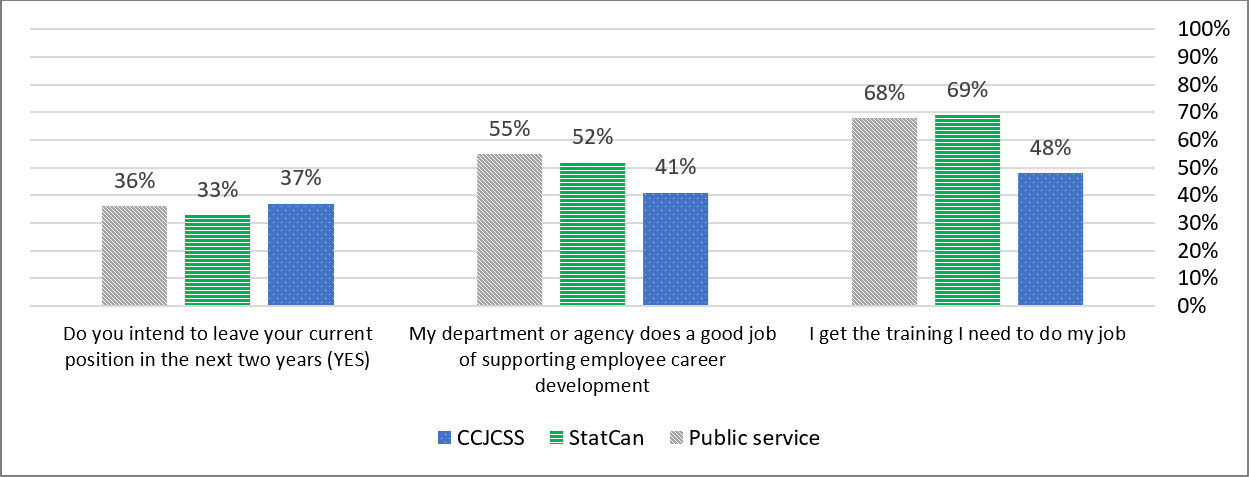
Description - Figure 10
Figure 10 presents the percentage of respondents who agreed with selected 2024 Public Service Employee Survey statements, shown for CCJCSS, Statistics Canada, and the Public Service overall.
Do you intend to leave your current position in the next two years (yes):
- CCJCSS: 37%
- Statistics Canada: 33%
- Public Service: 36%
My department or agency does a good job of supporting employee career development:
- CCJCSS: 41%
- Statistics Canada: 52%
- Public Service: 55%
I get the training I need to do my job:
- CCJCSS: 48%
- Statistics Canada: 69%
- Public Service: 68%
Workforce well-being
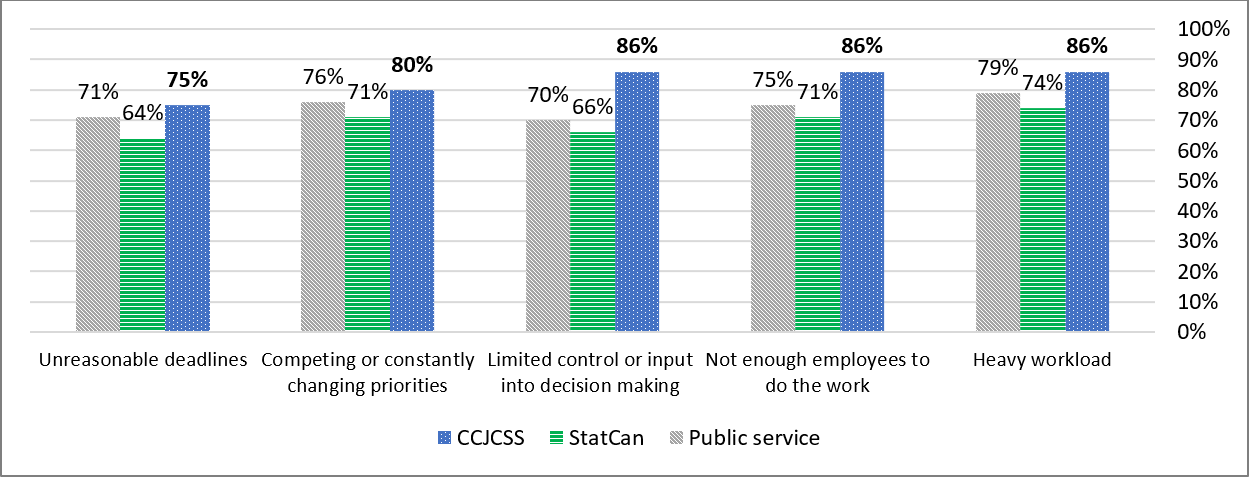
Workforce well-being at the CCJCSS is influenced by factors such as heavy workloads, staffing levels and career development opportunities, which may affect operational stability and progress toward strategic objectives.
Description - Figure 11
Figure 11 presents the percentage of respondents who reported that selected factors cause them work-related stress, shown for CCJCSS, Statistics Canada, and the Public Service overall, taken from the Public Service Employee Survey 2024.
Unreasonable deadlines:
- CCJCSS: 75%
- Statistics Canada: 64%
- Public Service: 71%
Competing or constantly changing priorities:
- CCJCSS: 80%
- Statistics Canada: 71%
- Public Service: 76%
Limited control or input into decision making:
- CCJCSS: 86%
- Statistics Canada: 66%
- Public Service: 70%
Not enough employees to do the work:
- CCJCSS: 86%
- Statistics Canada: 71%
- Public Service: 75%
Heavy workload:
- CCJCSS: 86%
- Statistics Canada: 74%
- Public Service: 79%
Recent PSES results indicate that heavy workloads and limited staffing contribute significantly to work-related stress among CCJCSS staff, reflecting broader trends across StatCan and the public service. Notably, CCJCSS staff reported higher levels of stress than their counterparts in StatCan and the public service (Figure 11). Interview feedback supports these findings, highlighting concerns about morale, workload pressures, career advancement opportunities and mental health.
Additionally, PSES scores point to low confidence in senior management and communication, compared with other areas of StatCan, contributing to some uncertainty and reduced engagement. While immediate supervisors are generally viewed as supportive, ongoing challenges such as budget constraints and limited advancement opportunities remain. Despite a recalibration of future deliverables in response to the upcoming austerity period, these combined factors may impact employee well-being and organizational resilience. This underscores the importance of continued strategic efforts to support staff and maintain capacity in a resource-constrained environment. As part of agency-wide efforts in response to the results of the PSES, the CCJCSS developed an action plan outlining measures to promote a more balanced and supportive workplace environment.
Technology and innovation
Technology and innovation are essential for the CCJCSS to address increasing demands and remain strategically relevant. Expanding the use of AI for data extraction, validation and automation, as well as leveraging performance metrics and enhancing usability through interactive dashboards and advanced search tools, will enable the CCJCSS to deliver more timely, accurate and accessible products.
Enhancing data access and validation
AI offers transformative potential for improving data quality and accessibility. For example, AI tools can efficiently review court transcripts to generate more comprehensive Courts Program data, addressing gaps in traditional data collection methods. Similarly, AI can validate survey results by scanning online sources, such as verifying homicide counts from the Homicide Survey, thereby strengthening accuracy and reliability. Interactive dashboards complement these efforts by providing richer data visualizations and intuitive navigation, enabling less data-savvy users to explore complex datasets with ease.
Streamlining processes
Automation of routine tasks through AI can significantly reduce turnaround times and free analysts to focus on more complex and value-added work. For instance, AI-generated draft reports (such as The Daily) accelerate the publication process, improving timeliness and responsiveness to emerging issues. Continued exploration of AI-driven process improvements will help the CCJCSS move from completion to dissemination more efficiently, addressing one of the most persistent challenges identified by users.
Improving usability
Building on existing AI initiatives, such as the CrimPath-1 simulation model, can enhance decision-making by modelling justice system trajectories and projecting the impacts of policy interventions. CrimPath-1, developed in collaboration with Justice Canada, aims to model the trajectories of individuals involved in the criminal justice system (CJS), to project the impacts of hypothetical justice interventions on CJS outcomes and associated costs, and to identify strategies that reduce recontact with the justice system and address overrepresentation of Indigenous and racialized populations.
Additionally, addressing website usability remains a priority. It was suggested that the CCJCSS explore ways to integrate AI-powered features, such as accessible map reading in the Flood Risk Portal Project and a Google-like search function, to significantly improve user experience. Challenges with the website are a StatCan-wide issue, and the CCJCSS cannot undergo website enhancements in isolation. Instead, findings from this evaluation can be shared at the agency level to support work that aims to improve the usability of the website. These enhancements align with StatCan's commitment to user-centric service delivery and ensure that CCJCSS products remain accessible and relevant.
Leveraging performance metrics
Web metrics and engagement data offer valuable insights for prioritization. For example, should certain products see diminishing engagement, the program can prioritize alternative products that have high visibility and are increasing in popularity.
Strengthening the use of performance metrics and developing systematic processes for analyzing product reach and user engagement will enable the CCJCSS to focus on outputs that deliver the greatest value. Considering performance metrics in strategic planning will ensure that investments align with user demand and program objectives.
How to improve the program
To remain relevant and maximize value, the CCJCSS must adopt a strategic approach that emphasizes prioritization and workforce resilience. This includes clarifying its mandate to guide priorities, strengthening its cost-recovery governance and focusing resources on developing products that provide the most value to their intended audience. Additionally, strengthening workforce resilience through knowledge transfer and succession planning will further support sustainability.
Recommendation 1
The assistant chief statistician (ACS) of the Social, Health and Labour Statistics Field (Field 8) should ensure that the CCJCSS adopts a structured, metrics-driven approach to prioritization. This will better align outputs with the CCJCSS's mandate and foster continuous improvement. Key actions should include the following:
- Clarifying the CCJCSS mandate: Clearly define the CCJCSS's core purpose, scope and intended audience. Establish a framework to identify which outputs and activities most directly support its strategic objectives.
- Strengthening cost-recovery governance: Enhance coordination within the CCJCSS to ensure that initiatives are aligned with broader strategic priorities.
- Distinguishing essential versus discretionary activities: Identify which outputs and initiatives are essential to fulfilling the CCJCSS mandate and which are discretionary.
- Leveraging performance metrics: Systematically assess outputs using metrics such as web analytics, social media engagement, data request trends and consultation feedback to create a shortlist of high-impact products. The user rankings of themes and subthemes from the evaluation can also be leveraged in this exercise.
- Prioritizing strategic value: Focus resources on users and outputs that deliver the greatest strategic impact.
- Monitoring and adjusting: Regularly evaluate the effects of prioritization on timeliness, user satisfaction and employee morale, and adjust the approach as needed.
Recommendation 2
The ACS of Field 8 should ensure that the CCJCSS develops a succession and knowledge transfer plan that includes the following:
- Identifying critical tasks and responsibilities: Pinpoint essential operational activities.
- Mapping institutional knowledge holders and retirement timelines: Assess areas of risk to prioritize knowledge transfer.
- Developing clear documentation protocols: Create step-by-step guides and templates, and ensure storage in accessible repositories.
- Mentoring and shadowing: Provide opportunities for newer staff to learn from experienced colleagues before departures.
- Aligning training and capacity building: Build workforce skills and capacity to keep pace with growing demands and evolving tasks.
- Monitoring and updating: Review the plan regularly to keep it current and effective.
Management response and action plan
Recommendation 1
The ACS of Field 8 should ensure that the CCJCSS adopts a structured, metrics-driven approach to prioritization. This will better align outputs with the CCJCSS's mandate and foster continuous improvement. Key actions should include the following:
- Clarifying the CCJCSS mandate: Clearly define the CCJCSS's core purpose, scope and intended audience. Establish a framework to identify which outputs and activities most directly support its strategic objectives.
- Strengthening cost-recovery governance: Enhance coordination within the CCJCSS to ensure that initiatives are aligned with broader strategic priorities.
- Distinguishing essential versus discretionary activities: Identify which outputs and initiatives are essential to fulfilling the CCJCSS mandate and which are discretionary.
- Leveraging performance metrics: Systematically assess outputs using metrics such as web analytics, social media engagement, data request trends and consultation feedback to create a shortlist of high-impact products. The user rankings of themes and sub-themes from the evaluation can also be leveraged in this exercise.
- Prioritizing strategic value: Focus resources on users and outputs that deliver the greatest strategic impact.
- Monitoring and adjusting: Regularly evaluate the effects of prioritization on timeliness, user satisfaction and employee morale, and adjust the approach as needed.
Management response
Management agrees with the recommendation.
Clarifying the CCJCSS mandate
- The CCJCSS will develop a strategic plan that clearly defines its purpose, scope and audience, and differentiates its role from the Liaison Officer Committee of the National Justice Statistics Initiative (LOCNJSI).
- The plan will include a logic model that outlines the CCJCSS's outputs, activities and strategic objectives.
- It will also inform the CCJCSS Triennial Program Review scheduled for January to May 2027.
Strengthening cost-recovery governance
- The CCJCSS will develop a prioritization tool that documents how incoming cost-recovery projects are assessed and to ensure that they align with the CCJCSS's strategic objectives.
Distinguishing essential versus discretionary activities
- The strategic plan, supported by a logic model, will clearly distinguish essential outputs and initiatives from discretionary ones for the upcoming year.
Leveraging performance metrics
- Using available performance metrics, the CCJCSS will assess, categorize and prioritize existing outputs based on project requirements and strategic objectives. The results will be documented in the strategic plan.
- A performance metrics tracking document will be developed, informed by both the strategic plan and the rankings collected through the evaluation.
Prioritizing strategic value
- The CCJCSS will create an operational plan, aligned with the strategic plan, to ensure that resources are directed to priorities that deliver the greatest strategic impact.
Monitoring and adjusting
- A dedicated annual management meeting will be convened to review and update the strategic and operational plans, with minutes and updates formally documented.
- On a quarterly basis, the CCJCSS will monitor and update the performance metrics tracking document during the regular operational meetings with chiefs and assistant directors.
Deliverables and timelines
1a. A strategic plan building on and complementing the LOCNJSI Strategic Plan. It will inform the CCJCSS Triennial Program Review in January 2027. The plan will include
- a definition of the CCJCSS's purpose, scope and audience
- a logic model identifying outputs, activities and strategic objectives
- a clear definition of essential versus discretionary outputs and initiatives
- a performance metric framework.
This deliverable is due in April 2026, following approval by the director general of the Social, Justice and Indigenous Statistics Branch (SJISB). It will be adjusted in October 2026 to reflect updates from the LOCNJSI Strategic Plan and subsequently updated annually to align with the agency's planning cycle.
1b. A prioritization tool outlining existing and incoming letters of agreement and how each aligns with the strategic objectives of LOCNJSI and the mandate of the CCJCSS.
This deliverable is due in April 2026, following approval by the director general of SJISB.
1c. A performance metrics tracking document, which includes web analytics, data requests and media requests.
This deliverable is due in September 2026, following approval by the director general of SJISB, and will be updated quarterly thereafter.
1d. An operational plan, derived from the strategic plan, outlining all projects, identifying the responsible sections and employees, and specifying the associated budget sources and funding allocations.
This deliverable is due in April 2026, following approval by the director of CCJCSS, and will be updated annually to align with the strategic plan.
Recommendation 2
The ACS of Field 8 should ensure the CCJCSS develops a succession and knowledge transfer plan that includes the following:
- Identifying critical tasks and responsibilities: Pinpoint essential operational activities.
- Mapping institutional knowledge holders and retirement timelines: Assess areas of risk to prioritize knowledge transfer.
- Developing clear documentation protocols: Create step-by-step guides and templates, and ensure storage in accessible repositories.
- Mentoring and shadowing: Provide opportunities for newer staff to learn from experienced colleagues before departures.
- Aligning training and capacity building: Build workforce skills and capacity now to keep pace with growing demands and evolving tasks.
- Monitoring and updating: Review the plan regularly to keep it current and effective.
Management response
Management agrees with the recommendation.
Identifying critical tasks and responsibilities
- The operational plan in 1d will pinpoint essential operational activities.
Mapping institutional knowledge holders and retirement timelines
- A human resources plan will be developed to map upcoming retirements and anticipated staffing changes, and to document corresponding succession planning strategies. The plan will also include an employee engagement strategy with regular touchpoints, including weekly section and management meetings and monthly all-staff meetings.
Developing clear documentation protocols
- A list of departing employees will be maintained to ensure that key processes are documented within the approved GCdocs structure before staff transitions occur.
- The CCJCSS will continue strengthening information management practices by maintaining an evergreen inventory of critical corporate knowledge and ensuring that all related documentation is stored and easily accessible through GCdocs.
Mentoring and shadowing
- The CCJCSS will develop a document outlining cascading work objectives for all levels within the CCJCSS, along with key learning plan requirements such as mentorship and shadowing opportunities. These commitments, aligned with the human resources plan and employee engagement strategy, will be integrated into employees' work objectives and learning plans in the Public Service Performance Management (PSPM) app, while allowing customization as needed.
Aligning training and capacity building
- The same cascading work objectives document will also guide training and skill development to ensure that the workforce has the competencies needed to support strategic priorities and the operational plan as tasks evolve.
Monitoring and updating
- Quarterly management meetings will be used to monitor the operational and human resources plans, with adjustments made as necessary.
- Cascading work objectives and learning plan requirements will be refreshed at the beginning of the performance management cycle.
Deliverables and timelines
2a. A list of departing employees and an evergreen list of critical corporate knowledge, including their file locations, will be incorporated into the operation plan in 1d.
This deliverable is due in April 2026, following approval by the director of the CCJCSS, and will be updated annually to align with the strategic plan.
2b. A human resources plan that includes a succession plan and an employee engagement strategy.
This deliverable is due in April 2026, following approval by the director of the CCJCSS, and will be updated annually to align with the agency's planning cycle.
2c. A cascading work objectives and learning plan requirements document for all employees, designed for use in the PSPM app and aligned with the human resources plan.
This deliverable is due at the beginning of the 2026-27 performance management cycle (April 2026), following approval by the director of the CCJCSS, and will be updated annually thereafter.
Appendix A – Canadian Centre for Justice and Community Safety Statistics themes, sub-themes and products
| Sub-theme | Related data products |
|---|---|
| 1. Crime (policing, violence, and victimization) | |
| Crime counts and characteristics (general) | |
| Firearm-related crime | |
| Rural crime | |
| Hate crime | |
| Cybercrime | |
| Human trafficking | |
| Online child exploitation | |
| Family violence | |
| Intimate partner violence | |
| Gender-based violence | |
| Victimization |
|
| Residential facilities for victims of abuse | |
| Police resources and expenditures | |
| 2. Court system | |
| Adult and youth criminal courts | |
| Civil and family courts | |
| Court outcomes | |
| 3. Correctional services in Canada | |
| |
| 4. Justice system equity and overrepresentation | |
|
|
| 5. Pathways through the justice system | |
| No recently released products because these are long-term projects still in progress. |
| 6. Emergency management and natural disasters | |
| No recently released products |
| 7. Community safety | |
| No recently released products because these are long-term projects still in progress. |
Appendix B – Evaluation questions and indicators
| Evaluation questions | Evaluation indicators |
|---|---|
| 1. To what extent is the overall suite of data products produced by the CCJCSS relevant and useful to users? | 1.1 Identification of data products released and their rationale. 1.2 Identification of how internal and external users are using the suite of data products. 1.3 The extent to which the overall suite of data addresses the needs of key users in the following areas:
|
| 2. Where should the program focus to produce the most value to users? | 2.1 Identification of themes or components that provide the most value as perceived by users. 2.2 Identification of factors to consider for the program to provide the most value to users. |
Appendix C – Interview quantification scale
Interview responses are quantified and categorized in this report using the scale shown in the table below.
| Term | Definition |
|---|---|
| One | "One" is used when one participant provided the answer. |
| Few | "Few" is used when 4% to 15% of participants responded with similar answers. The sentiment of the response was articulated by these participants but not by other participants. |
| Some | "Some" is used when 16% to 45% of participants responded with similar answers. |
| About half | "About half" is used when 46% to 55% of participants responded with similar answers. |
| Most or a majority | "Most or a majority" is used when 56% to 89% of participants responded with similar answers. |
| Almost all | "Almost all" is used when 90% to 99% of participants responded with similar answers. |
| All | "All" is used when 100% of participants responded with similar answers. |