

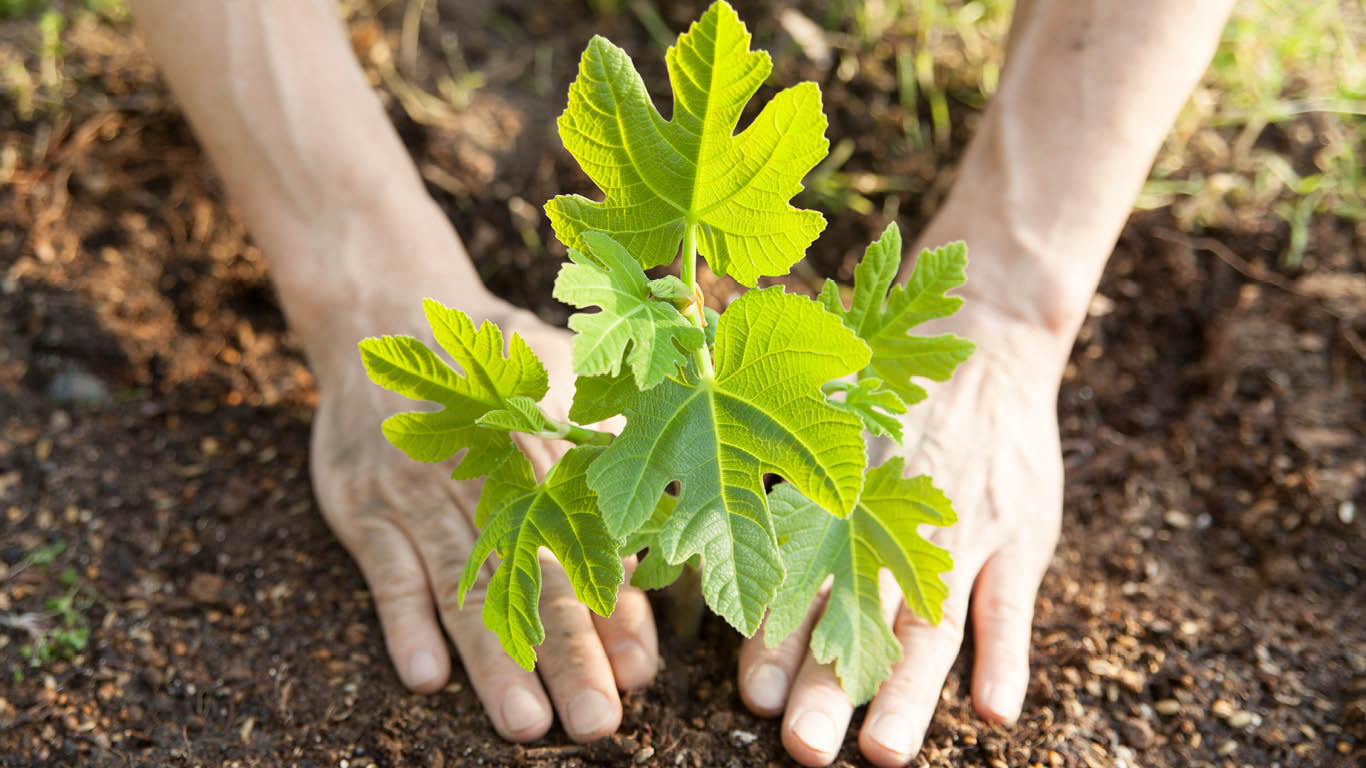
Every year, hundreds of millions of trees across Canada die, brought down by old age, poor growing conditions, disease, beetles, beavers, fire, drought, flooding and, of course, humans.
When a tree dies in the middle of nowhere, nature is generally left to take its course. In developed areas of Canada, households play an important role in managing our “urban forest.”
Forest rangers at the household level
Homeowners and even renters play an important role in maintaining urban forests in Canada. In 2023, just over three in four Canadian households (77%) reported having trees on their property, with households occupied by homeowners (83%) much more likely to have trees on their property than those occupied by renters (58%).
Just over 9 in 10 households in single-detached dwellings (91%) reported having trees on their property in 2023, the highest rate of all dwelling types. In the previous five years, single-detached dwelling homeowners were as likely to have planted a tree as to have cut one down (both at 37%).
By way of comparison, 63% of households living in row houses or townhouses reported having trees on their property in 2023, with just over one in five (21%) of these homeowners reporting planting a tree in the previous five years and 18% cutting a tree down.
Meanwhile, just over three in four households living in a mobile home (77%) reported having a tree on their property, with just under one in four (24%) mobile homeowners reporting a planting a tree in the previous five years and almost one-third (31%) chopping a tree down, the highest rate among dwelling types.
The tree growing business
There were 733 nursery and tree production businesses with employees operating in Canada at the end of 2025 including 301 small businesses with one to four employees. By way of comparison, 15 businesses employed 100 or more employees.
Regionally, there were more nursery and tree growers in Quebec (206) than neighbouring Ontario (192). Nova Scotia (52) had more nursery and tree growers than every other Atlantic province combined (33), and British Columbia (165) had almost twice as many nursery and tree growers than all three Prairie provinces combined (84).
There was also one nursery and tree growing business operating in Yukon.
Conifers are Canada’s best-selling tree
Conifers were Canada’s best-selling nursery tree with 5.0 million sold in 2025, followed by shade and ornamental trees (3.7 million) and fruit trees (1.2 million).
Caring for trees and taking them down safely
When it comes to tree removal, Canadian households have two options.
If the tree is small, some do-it-yourself types may tackle the problem alone. In 2023, 15% of Canadian households owned a chainsaw. Chainsaw ownership rates were highest in Atlantic Canada, with a nation-leading 30% of households in Prince Edward Island owning a chainsaw.
For larger trees, it is best to call the pros. At the end of 2025, there were 13,651 landscaping businesses with employees across Canada, some of which specialize in tree surgery and removal.
Measuring urban greenness
Every tree planted contributes to making Canada a little bit greener.
“Urban greenness” is a measure that assesses the condition and health of an urban landscape. Vegetation contributes to more livable, beautiful communities by helping to clean the air, moderate the local climate, control water flow and provide habitats for wildlife.
Contact information
For more information, contact the Statistical Information Service (toll-free 1-800-263-1136; 514-283-8300; infostats@statcan.gc.ca) or Media Relations (statcan.mediahotline-ligneinfomedias.statcan@statcan.gc.ca).