
Databyte
Databyte

Bullying victimization is higher among sexually and gender diverse youth

Databyte
In 2019, 7 in 10 youth aged 15 to 17 years reported that they had experienced bullying at some point in the previous year.
The risk of being teased, insulted or excluded was heightened among sexually and gender diverse youth—including those who are transgender, are non-binary and/or have same-gender attraction—compared with cisgender youth attracted exclusively to people of a different gender.
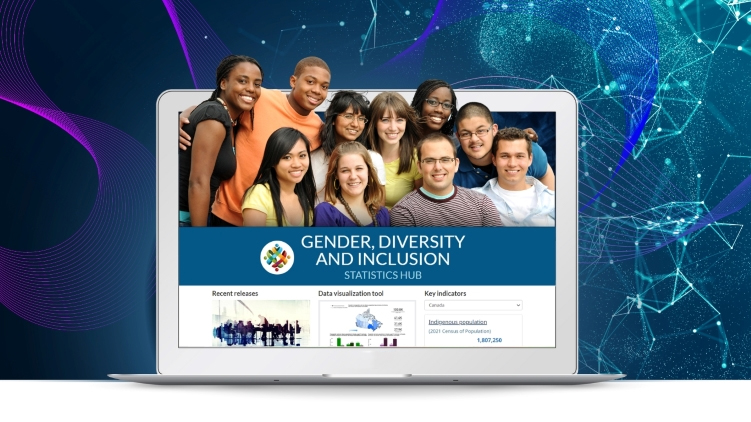
Check out the new and improved Gender, Diversity and Inclusion Statistics Hub
Databyte
This just in: the Gender, Diversity and Inclusion Statistics hub has a new look and feel!
As part of the Disaggregated Data Action Plan (DDAP), Statistics Canada is redesigning and enhancing its Gender, Diversity and Inclusion Statistics hub. By working with communities and population groups, DDAP is helping to ensure that all Canadians are represented in our data so that Statistics Canada can provide a more accurate portrait of our modern society.
Virtual care during the COVID-19 pandemic: Experiences of health care workers

Databyte
The COVID-19 pandemic has forced us to rethink our ways of doing things and to adapt how we offer services to the public. The health care field has been no exception, with the expansion of virtual care as a standard approach for providing health care. This change is highlighted by Digital Health Week, which is an annual celebration of how digital and virtual health is transforming the delivery of care across Canada. In the fall of 2021, about one in four health care workers (24%) reported providing some health care services virtually since March 2020—the official start of the pandemic.
Sort out these stats: Doing your laundry at the laundromat or at home

Databyte
You could say we’re nostalgic here at Statistics Canada. For example, we track the production of wheat and other grains all the way back to 1908, honey production back to 1924, and consumer price change back to 1914. We also track the number of businesses in various industries and sectors, even those that have already had their heyday, like laundromats!
Fall into this pile of data, all raked up—we’ll leaf you to it

Databyte
We’re deep into fall, and the leaves have been in free fall for weeks. And we at Statistics Canada know that you want to know the numbers. It seems like just yesterday we were talking about cutting the grass!
These stats are not a waste of your time: How do Canadians dispose of hazardous items?
Databyte
Every two years, Statistics Canada surveys Canadian households on how they dispose of hazardous waste. Recently, we released 2021 numbers. While the majority of households diverted such waste away from landfills, a considerable percentage still dumped it in the trash.