Legislative Influences - 2019

Changes in legislation and the resulting change in the offence classification creates discontinuity in the historical record of particular criminal offences. Legislative changes to assault, sexual assault, theft, arson, mischief, prostitution and youth crime must be considered when making comparisons over time. Some of the more significant changes are as follows:

Sexual Assault: Bill C-127 (1983):

Bill C-127 abolished the offences of rape, attempted rape and indecent assault and introduced a three-tiered structure for sexual assault offences. C-127 also eased the circumstances under which police could lay charges in incidents of sexual and non-sexual assault.

Young Offenders Act (1984):

With the proclamation of the Young Offenders Act in April 1984, 12 years old became the minimum age for which charges could be laid under the Criminal Code. However, the maximum age continued to vary until April 1985, when the maximum age of 17 (up to the 18th birthday) was established in all provinces and territories. Youths, as defined in this publication, refer to those aged 12 to 17 (inclusive). This definition applies to the target group who fall under the delegation of the Young Offenders Act (YOA).

Traffic Offences: Bill C-18 (1985):

In December 1985, Bill C-18 made major legislative changes with respect to certain traffic offences. It imposed more stringent sentences for dangerous driving and drinking and driving. It also facilitated the enforcement of impaired driving laws by authorizing police to take blood and/or breath samples under certain circumstances. As a result, data previous to 1985 for traffic offences are not comparable and have not been presented.

Property value limits: Bill C-18 (1985) and Bill C-42 (1995):

In 1985, Bill C-18 altered the property value limits from under and over $200 to under and over $1,000. This applied to offences such as Theft, Possession of Stolen Goods, Mischief and Fraud. As of February 1995, Bill C-42 revised the property value limits to under and over $5,000.

Alternative measures: Bill C-41 (1996):

Bill C-41 came into force on September 3, 1996. One of its highlights was the introduction of "alternative measures" for adults, which provided ways of dealing with disputes and minor offences outside of formal court proceedings.

Firearms: Bill C-68 (1997):

Bill C-68, came into force on January 1, 1997, requiring all firearm owners to obtain a firearms license by January 1st, 2001. This license replaces the Firearms Acquisition Certificate (FAC) in use since 1977. As of October 1, 1998, firearms had to be registered by October 1st 2003 (within 5 years). Bill C-68 also provided for tougher penalties for using a firearm while committing a crime.

Controlled Drugs and Substances Act: Bill C-8 (1997):

This legislation came into force on May 14, 1997. The Controlled Drugs and Substances Act (CDSA) repealed and replaced the Narcotic Control Act (NCA) and parts of the Food and Drug Act (FDA). With this change in legislation, offences related to the possession, trafficking and importation of certain controlled or restricted substances not identified in earlier statutes were now (since 1997) included in the 'other drugs' category. Comparisons with years prior to 1997 should be made with caution.

Dangerous Operation Evading Police: Bill C-202 (2000):

Bill C-202 came into effect on March 30th, 2000. This legislation modifies section 249 of the Criminal Code, thus creating new offences surrounding the dangerous operation of a motor vehicle when used for evading police.

Youth Criminal Justice Act: Bill C-7 (2003):

The extrajudicial measures encouraged by the Youth Criminal Justice Act (YCJA), proclaimed on April 1, 2003, included: taking no further action informal police warnings, referrals to community programs, formal police cautions, Crown cautions, and extrajudicial sanctions programs.

Street Racing: Bill C-19 (2006):

Bill C-19 came into force on December 14, 2006 and addressed the street-racing problem by making four amendments to the Criminal Code. "Street-racing" was defined and five new street-racing offences were added. For three of the new offences, it provided maximum penalties longer than those currently provided for Dangerous Operation or Criminal Negligence in the Operation of a Motor Vehicle, and it introduced mandatory driving prohibition orders for a minimum period of time, with the length of the prohibition increasing for repeat offences.

Unauthorized Recording of a Movie: Bill C-59 (2007):

Bill C-59, came into force on June 22, 2007, addressing the illegal recording of movies in theatres by creating two new offences in the Criminal Code: Recording for Personal Use of a Movie Shown in a Theatre and Recording for Commercial Purposes of a Movie Shown in a Theatre.

Tackling Violent Crime: Bill C-2 (2008):

As a result of Bill C-2, which came into force on February 28, 2008, the age of consent was raised from 14 to 16 for the following Criminal Code offences: Sexual Interference, Invitation to Sexual Touching, Sexual Exploitation, Bestiality and Exposure to Person Under 14. The UCR also created a new violation code for Sexual Exploitation of a Person with a Disability.

Impaired Operation and Failure to Provide a Blood Sample were modified to now differentiate between alcohol and drugs (or a combination of the two). Fail/refuse to provide breath sample and failure to comply or refusal (drugs) will now have a maximum penalty of 25 years.

Bill C-2 also created two additional firearm-related offences, Robbery to Steal a Firearm and Breaking and Entering to Steal a Firearm, both of which carry a maximum penalty of 25 years.

Act to amend the Criminal Code (organized crime and protection of justice system participants) Bill C-14 (2009):

Bill C-14 officially came into effect on October 2, 2009. As a result, two new violation codes were created: Assault Against Peace Officer with a Weapon or Causing Bodily Harm, and Aggravated Assault Against a Peace Officer.

Codifying Identity Theft: Bill S-4 (2010):

Bill S-4 came into effect on January 8, 2010. As a result, two new violation codes were created: Identity Theft and Identity Fraud.

Trafficking in Person's under the age of 18: Bill C-268 (2010):

Bill C-268 came into effect on June 29, 2010. As a result, section 279.011(1) was added to the Criminal Code. This section is incorporated into the existing UCR violation code for Trafficking in Persons.

An Act to amend the Criminal Code (suicide bombings): Bill S-215 (2010):

Bill S-215 became law on December 15, 2010. This bill amended the Criminal Code to clarify that suicide bombings fall within the definition of "terrorist activity" and as such, are included under UCR codes for the following: Participate in Terrorist Activity, Facilitate Terrorist Activity, and Instruct/Carry Out Terrorist Activity.

Tackling Auto Theft and Trafficking in Property Obtained by Crime: Bill S-9 (2011):

Bill S-9 officially came into effect on April 29, 2011. As a result, a new UCR violation code for Motor Vehicle Theft was created, replacing the former UCR violations of Motor Vehicle Theft Over $5,000 and Motor Vehicle Theft $5,000 and Under.

Possession of Stolen Goods was separated into two new categories; Possession of Stolen Goods Over $5,000 and Possession of Stolen Goods $5,000 and Under.

Three new UCR violation codes were also created: Altering/Destroying/Removing a Vehicle Identification Number (VIN), Trafficking in Stolen Goods Over $5,000 and Trafficking in Stolen Goods $5,000 and Under.

Amendment to the Controlled Drugs and Substances Act: Bill C-475 (2011):

Bill C-475 came into effect on June 26, 2011. As a result, section 7.1(1) was added to the Criminal Code. This section is included under the UCR violation code of Precursor/Equipment (Crystal Meth, Ecstasy).

The Safe Streets Act: Bill C-10 (2012):

Bill C-10 came into effect on August 9, 2012. As a result, two new sections were added to the Criminal Code; Section 172.2(1) and Section 171.1(1). Section 172.2(1) is mapped to the existing UCR code of Luring a Child Via Computer. Section 171.1(1) is mapped to the new UCR violation code of Making Sexually Explicit Material Available to Children.

Combating Terrorism Act: Bill S-7 (2013):

Bill S-7 came into effect on July 15th, 2013. This bill amends the Criminal Code to create the offences of: Leaving or Attempting to Leave Canada to Commit Certain Terrorism Offences, and brought changes to the offence of Harbouring / Concealing Terrorist. Seven new UCR violation codes were introduced mid-2013 in response to this legislation.

Mischief to war memorials: Bill C-217 (2014):

Under Criminal Code sections 430(4.11(a)), 430(4.11(b)) and 430 (4.2), Bill C-217 created a new criminal offence of Mischief Relating to War Memorials when it came into force on the 19th of June, 2014. At the same time, the UCR violation Mischief in Relation to Cultural Property was introduced to the survey.

Recruitment to Criminal Organizations: Bill C-394 (2014):

This bill came into force on September 6th, 2014 and made the recruitment of members by a criminal organization a criminal offence under section 467.111 of the Criminal Code.

Protection of Communities and Exploited Persons Act: Bill C-36 (2014):

Bill C-36 came into effect in December 2014. The new legislation targeted "The exploitation that is inherent in prostitution and the risks of violence posed to those who engage in it" (Criminal Code Chapter 25, preamble). New violations classified as Offences in Relation to Sexual Service are considered to be violent offences and include: The Purchasing of Sexual Services or Communicating for that Purpose, Receiving a Material Benefit Deriving from the Purchase of Sexual Services, Procuring of Persons for the Purpose of Prostitution, and Advertising Sexual Services Offered for Sale. In addition, a number of other offences related to prostitution continue to be considered non-violent offences and are classified under Other Criminal Code offences. These include Public Communication to Sell Sexual Services and Offences Related to Impeding Traffic to Buy or Sell Sexual Services.

At the same time, the UCR survey was amended to add additional offence codes for the following violent violations: Parent or Guardian Procuring Sexual Activity, and Householder Permitting Prohibited Sexual Activity. The following violations officially expired on December 5, 2014: Bawdy House, Living off the Avails of Prostitution of a Person Under 18, Procuring, Obtains/Communicates with a Person Under 18 for Purpose of Sex, and Other Prostitution.

Effective December 2014, Bill C-36 amended the definition of the offence "Common Bawdy House" in the Criminal Code to remove reference to prostitution. As a result of this amendment, the UCR violation of "Bawdy House" was terminated, and the new violation of "Common Bawdy House" was introduced under 'Other Violations'.

Protecting Canadians from Online Crime Act: Bill C-13 (2015):

On March 9, 2015, Bill C-13 Protecting Canadians from Online Crime Act came into effect. As a result, a new criminal offence of Non-Consensual Distribution of Intimate Images was added to the Criminal Code and the UCR survey. It also clarified the Criminal Code offence of Harassing / Indecent Communications can be committed by any means of telecommunication.

Tackling Contraband Tobacco Act: Bill C-10 (2015):

On April 10 2015, Bill C-10 Tackling Contraband Tobacco Act came into effect. As a result, this legislation created the Criminal Code offence of Trafficking in Contraband Tobacco which is counted under the UCR violation Offences Against the Administration of Law and Justice. Prior to April 2015, the offence was counted under the Excise Act. As such, comparisons of these two violations to previous years should be made with caution.

Tougher Penalties for Child Predators Act: Bill C-26 (2015):

On July 17th, 2015, Bill C-26 increased the maximum penalties for 6 sexual offences against children, including Sexual Interference, Invitation to Sexual Touching, Sexual Exploitation, Making Sexually Explicit Material Available to a Child and Failure to Comply with Order / Breach of Probation (when relating to a sexual offence).

Anti-terrorism Act: Bill C-51 (2015):

Bill C-51 came into effect on July 18, 2015. As a result, a new UCR violation code for the offence of "Advocating or Promoting Commission of Terrorism Offences" was added to the survey to respond to this amendment to the Criminal Code.

An Act to amend the Criminal Code and to make related amendments to other Acts (medical assistance in dying): Bill C-14 (2016):

On June 17, 2016, Bill C-14 came in effect. As a result, three new UCR violation codes were introduced in response to these amendments: Fail to Comply With Safeguards Forging /Destruction of Documents Related to Medical Assistance in Dying (MAID), and Failing to Comply with Regulations / Obligations regarding Medical Assistance in Dying (MAID).

An Act to amend the Controlled Drugs and Substances Act and to make related Amendments to other Acts: Bill C-37 (2017):

On May 18, 2017, Bill C-37 came into effect. As a result, the offence of possessing, producing, selling or importing anything knowing it will be used to produce or traffic in crystal meth or ecstasy was expanded to include all substances listed in Schedule I, II , III, IV or V of the Controlled Drugs and Substances Act.

An Act to Amend the Criminal Code (Mischief): Bill C-305 (2017):

On December 12, 2017, the Canadian Government granted royal assent to Bill C-305. This bill amended Section 430 (4.1) of the Criminal Code to include "mischief in relation to property that is used by an identifiable group for educational purposes, administrative, social, cultural, or sports activities or events or as residence for seniors." Previously this section of the Criminal Code only included "mischief to property primarily used for worship."

An Act respecting cannabis and to amend the Controlled Drugs and Substances Act, the Criminal Code and other Acts: Bill C-45 (2018):

On June 21, 2018, the Canadian Government granted royal assent to Bill C-45, An Act respecting cannabis and to amend the Controlled Drugs and Substances Act, the Criminal Code and other Acts. The 'come into force' date for this legislation was October 17, 2018. In response to this new legislation, on October 17, 2018 the Uniform Crime Reporting (UCR) Survey accepted 22 new violation codes and expired all existing cannabis-specific violations.

An Act to amend the Criminal Code (offences relating to conveyances) and to make consequential amendments to other Acts: Bill C-46 (2018):

On June 21, 2018, royal assent was granted to Bill C-46. The 'come into force' date for Part 1 of this legislation was June 21, 2018. Part 2 came into effect on December 18, 2018 (180 days after Part 1).

Part 1 (effective June 21, 2018)

Part 1 of Bill C-46 amended the provisions of the Criminal Code that dealt with offences and procedures relating to impaired driving. As a result, 7 new UCR violation codes were added to the survey.

Part 2 (effective December 18, 2018)

Part 2 of Bill C-46 repealed the provisions of the Criminal Code that dealt with offences and procedures relating to conveyances, including those provisions enacted by Part 1, and replaced them with provisions in a new part of the Criminal Code. In response to Part 2 of Bill C-46, all existing UCR traffic violation codes have been mapped to new Criminal Code sections or expired. In addition, the UCR survey will no longer be collecting provincial traffic offences.

An Act to amend certain Acts and Regulations in relation to firearms: Bill C-71 (2019):

On June 21, 2019, royal assent was granted to Bill C-71. Part 1 and part 2 of this Act proposed changes in firearms regulations. Part 1 amends the Firearms Act, the Criminal Code (Code) and the Regulations Prescribing Certain Firearms and Other Weapons, Components and Parts of Weapons, Accessories, Cartridge Magazines, Ammunition and Projectiles as Prohibited, Restricted or Non-Restricted.

Part 2 of the bill reintroduced the legislative amendments contained in Bill C-52 An Act to amend Chapter 6 of the Statues of Canada, 2012 (short title: Supporting Vested Rights Under Access to Information Act), which amend the Ending the Long gun Registry Act (ELRA), the Access to Information Act (ATIA) and the Privacy Act. However, in response to this Act no changes were made to the UCR survey.

An Act to Amend the Criminal Code (bestiality and animal fighting): Bill C-84 (2019):

On June 21, 2019, royal assent was granted to Bill C-84. This enactment amends the Criminal Code to define "bestiality"; expand the scope of the offence of encouraging, aiding or assisting in the fighting or baiting of animals or birds so that the offence includes promoting, arranging, receiving money for, or taking part in, the fighting or baiting of animals or birds, and also applies with respect to the training, transporting or breeding of animals or birds for fighting or baiting. It also expands the scope of the offence of building, making, maintaining or keeping a cockpit so that the offence applies with respect to any arena for animal fighting.

An Act to amend the Criminal Code, the Youth Criminal Justice Act and other Acts and to make consequential amendments to other Acts: Bill C-75 (2019):

On June 21, 2019, the Canadian Government granted royal assent to Bill C-75, "An Act to amend the Criminal Code, the Youth Criminal Justice Act and other Acts and to make consequential amendments to other Acts". As a response to the changes outlined in this new legislation, the Canadian Centre for Justice and Community Safety Statistics (CCJCSS) has made adjustments to the Uniform Crime Reporting (UCR) Survey.

Effective June 21, 2019, Criminal Code sections 159 Anal intercourse, 179 Vagrancy, 181 Spreading false news, 210 Keeping common bawdy-house, 211 Transporting person to bawdy-house and 287 Procuring miscarriage have been repealed. As a result, two UCR codes have been expired: Anal Intercourse and Common Bawdy House (to keep, to transport a person to).

Effective September 19, 2019, the general penalty for summary conviction offences (except sections 173(2)(b), 271(b) and 444(2)(b)) has been increased to 2 years. As a result, the maximum penalty for the 9 relevant UCR codes has been increased from 6 months to 2 years at this time: Communicating To Provide Sexual Services for Consideration, Stopping or Impeding Traffic for the Purpose of Offering, Providing or Obtaining Sexual Services for Consideration Betting House, Gaming House, Disturb the Peace, Indecent acts, Trespass at Night, and all Other Criminal Code (includes Part XII.1 CC) and Operation - low blood drug concentration violation codes.

Comparing UCR Data with Courts and Corrections Data

It is difficult to make comparisons between data reported by police and data from other sectors of the criminal justice system (i.e., courts and corrections). There is no single unit of count (i.e., incidents, offences, charges, cases or persons) which is defined consistently across the major sectors of the justice system. As well, charges actually laid can be different from the Most Serious Offence by which incidents are categorized. In addition, the number and type of charges laid by police may change at the pre-court stage or during the court process. Time lags between the various stages of the justice process also make comparisons difficult.

Data Elements and Violation Coding Structure for the Uniform Crime Reporting Survey

The Uniform Crime Reporting (UCR) Survey was designed to measure the incidence of crime in Canadian society and its characteristics. Presented are the data elements that are captured by the survey, and the violation codes that are used in data collection.

Data Elements

  • Aboriginal Indicator
  • Apparent Age
  • Attempted/Completed Violation
  • Charges Laid or Recommended
  • Clearance Date
  • Counter Frauds and Motor Vehicles
  • CSC Status (Charged/Suspect - Chargeable)
  • Cybercrime
  • Date Charges Laid or Recommended or Processed By Other Means
  • Date of Birth
  • Fingerprint Section I.D. (FPS) Number
  • FPS Number
  • Fraud Type
  • Gender
  • Geocode Information
  • Hate Crime
  • Incident Clearance Status
  • Incident Date/Time (From and To Date and Time)
  • Incident File Number
  • Level of Injury
  • Location of Incident
  • Most Serious Violation / Violations
  • Most Serious Violation Against The Victim (VAV)
  • Most Serious Weapon Present
  • Motor Vehicle Recovery
  • Name/Primary Key
  • Organized Crime Peace – Public Officer Status
  • Property Stolen
  • Relationship of CSC, (Charged/Suspect – Chargeable), To The Victim
  • Report Date
  • Respondent Code
  • Shoplifting Flag
  • Soundex Code
  • Special Survey Feature
  • Target Vehicle
  • Update Status
  • Vehicle Type
  • Weapon Causing Injury

Violation Structure for the Uniform Crime Reporting Survey

Crimes Against the Person

Violations Causing Death

  • Murder 1st Degree
  • Murder 2nd Degree
  • Manslaughter
  • Infanticide
  • Criminal Negligence Causing Death
  • Other Related Offences Causing Death

Attempting the Commission of a Capital Crime

  • Attempted Murder
  • Conspire to Commit Murder

Sexual Violations

  • Aggravated Sexual Assault
  • Sexual Assault With A Weapon
  • Sexual Assault
  • Other Sexual Crimes (expired 2008-03-31)
  • Sexual Interference (effective 2008-04-01)
  • Invitation To Sexual Touching (effective 2008-04-01)
  • Sexual Exploitation (effective 2008-04-01)
  • Sexual Exploitation of a Person with a Disability (effective 2008-05-01)
  • Incest (effective 2008-04-01)
  • Corrupting Children (effective 2008-04-01)
  • Making Sexually Explicit Material Available to Children (effective 2012-08-09)
  • Parent or Guardian Procuring Sexual Activity
  • Householder Permitting Prohibited Sexual Activity
  • Luring a Child via a Computer (effective 2008-04-01)
  • Agreement or Arrangement - sexual offence against child
  • Anal Intercourse (expired  2019-06-20)
  • Bestiality - Commit or Compel Person (effective 2008-04-01)
  • Bestiality in Presence of, or Incites, a Child
  • Voyeurism (effective 2008-04-01)
  • Non-Consensual Distribution of Intimate Images (effective 2015-03-09)
  • Sexual Offence which Occurred Prior to January 4, 1983 (effective 2019-11-04)

Assaults

  • Aggravated Assault Level 3
  • Assault With Weapon or Causing Bodily Harm Level 2
  • Assault Level 1
  • Unlawfully Causing Bodily Harm
  • Discharge Firearm with Intent
  • Using Firearm/Imitation of Firearm in Commission of Offence (effective 2008-04-01)
  • Pointing a Firearm (effective 2008-04-01)
  • Assault Against Peace Public Officer
  • Assault Against Peace Officer with a Weapon or Causing Bodily Harm (effective 2009-10-02)
  • Aggravated Assault Against Peace Officer (effective 2009-10-02)
  • Criminal Negligence Causing Bodily Harm
  • Trap Likely to or Causing Bodily Harm (effective 2008-04-01)
  • Other Assaults

Violations Resulting in the Deprivation of Freedom

  • Kidnapping / Forcible Confinement (expired 2010-01-08)
  • Kidnapping (effective 2010-01-08)
  • Forcible Confinement (effective 2010-01-08)
  • Hostage Taking
  • Trafficking in Persons (effective 2005-11-01)
  • Abduction Under 14, Not Parent/Guardian
  • Abduction Under 16
  • Removal of Children from Canada (effective 1998-01-01)
  • Abduction Under 14 Contravening A Custody Order
  • Abduction Under 14, by Parent/Guardian

Sexual Services Offences

  • Obtaining Sexual Services for Consideration (effective 2014-12-06)
  • Obtaining Sexual Services for Consideration from Person Under 18 Years (effective 2014-12-06)
  • Receive Material Benefit from Sexual Services (effective 2014-12-06)
  • Receive Material Benefit from Sexual Services Provided by a Person Under 18 Years (effective 2014-12-06)
  • Procuring (effective 2014-12-06)
  • Procuring - Person Under 18 Years (effective 2014-12-06)
  • Advertising Sexual Services (effective 2014-12-06)

Other Violations Involving Violence or the Threat of Violence

  • Robbery
  • Robbery to Steal Firearm (effective 2008-05-01)
  • Extortion
  • Intimidation of a Justice System Participant or a Journalist (effective 2008-04-01)
  • Intimidation of a Non-Justice System Participant (effective 2008-04-01)
  • Criminal Harassment (effective 1994-01-01)
  • Indecent/Harassing Communications (effective 2008-04-01)
  • Utter Threats to Person (effective 1998-01-01)
  • Explosives Causing Death/Bodily Harm (effective 1998-01-01)
  • Arson – Disregard for Human Life (effective 1999-05-01)
  • Failure to Comply with Mandatory Safeguards in Relation to Medical Assistance in Dying (MAID)(effective 2016-06-17)
  • Forging or Destroying Documents Related to Assistance Requests with Criminal Intent (MAID)(effective 2016-06-17)
  • Other Violations Against the Person

Crimes Against Property

  • Arson
  • Break and Enter
  • Break and Enter to Steal Firearm (effective 2008-05-01)
  • Break and Enter a Motor Vehicle (Firearm) (effective 2008-05-01)
  • Theft Over $5,000
  • Theft of a Motor Vehicle over $5,000 (effective 2004-01-01) (expired 2011-04-28)
  • Theft Over $5,000 from a Motor Vehicle (effective 2004-01-01)
  • Shoplifting Over $5,000 (effective 2008-04-01)
  • Motor Vehicle Theft (effective 2011-04-29)
  • Theft $5,000 or Under
  • Theft of a Motor Vehicle $5,000 and Under (effective 2004-01-01) (expired 2011-04-28)
  • Theft $5,000 or Under from a Motor Vehicle (effective 2004-01-01)
  • Shoplifting $5,000 or Under (effective 2008-04-01)
  • Have Stolen Goods (expired 2011-04-28)
  • Trafficking in Stolen Goods over $5,000 (effective 2011-04-29)
  • Possession of Stolen Goods over $5,000 (effective 2011-04-29)
  • Trafficking in Stolen Goods $5,000 and under (effective 2011-04-29)
  • Possession of Stolen Goods $5,000 and under (effective 2011-04-29)
  • Fraud
  • Identity Theft (effective 2010-01-08)
  • Identity Fraud (effective 2010-01-08)
  • Mischief
  • Mischief over $5,000 (expired 2008-03-31)
  • Mischief $5,000 or Under (expired 2008-03-31)
  • Mischief in Relation to Cultural Property (effective 2014-06-19)
  • Hate-Motivated Mischief Relating to Property Used by Identifiable Group (effective 2008-04-01)
  • Mischief Relating to War Memorials (effective 2014-06-19)
  • Altering/Destroying/Removing a Vehicle Identification Number (VIN) (effective 2011-04-29)

Other Criminal Code Violations

Prostitution

  • Bawdy House (expired 2014-12-05)
  • Living off the Avails of Prostitution of a Person Under 18 (effective 1998-01-01) (expired 2014- 12-05)
  • Procuring (expired 2014-12-05)
  • Obtains/Communicates with a Person Under 18 for Purpose of Sex (effective 1998-01-01) (expired 2014-12-05)
  • Other Prostitution (expired 2014-12-05)
  • Public Communication to Sell Sexual Services (effective 2014-12-06)
  • Offences Related to Impeding Traffic to Buy or Sell Sexual Services (effective 2014-12-06)

Disorderly Houses, Gaming and Betting

  • Betting House
  • Gaming House
  • Other Gaming and Betting
  • Common Bawdy House (expired 2019-06-20)

Offensive Weapons

  • Explosives
  • Prohibited (expired 1998-12-01)
  • Restricted (expired 1998-12-01)
  • Firearm Transfers/Serial Numbers (expired 1998-12-01)
  • Other Offensive Weapons (expired 1998-12-01)
  • Using Firearms/Imitation (expired 2008-03-31)
  • Weapons Trafficking (effective 1998-12-01)
  • Weapons Possession Contrary to Order (effective 1998-12-01)
  • Possession of Weapons (effective 1998-12-01)
  • Unauthorized Importing/Exporting of Weapons (effective 1998-12-01)
  • Pointing a Firearm (expired 2008-03-31)
  • Firearms Documentation/Administration (effective 1998-12-01)
  • Unsafe Storage of Firearms (effective 1998-12-01)

Other Criminal Code

  • Failure to Comply with Order
  • Counterfeiting Currency
  • Disturb the Peace
  • Escape Custody or Helps Escape From Lawful Custody
  • Indecent Acts
  • Possessing or Accessing Child pornography
  • Making, or Distribution of Child Pornography
  • Voyeurism (expired 2008-03-31)
  • Corrupting Morals
  • Luring a Child Via a Computer (expired 2008-03-31)
  • Obstruct Public Peace Officer
  • Prisoner Unlawfully At Large
  • Trespass at Night
  • Failure to Appear
  • Breach of Probation
  • Threatening/Harassing Phone Calls (expired 2008-03-31)
  • Utter Threats Against Property or Animals (effective 2008-04-01)
  • Advocating Genocide (effective 2008-04-01)
  • Public Incitement Of Hatred (effective 2008-04-01)
  • Unauthorized Recording of a Movie/Purpose of Sale, Rental, Commercial Distribution (2007-06- 22)
  • Offences Against Public Order (Part II CC)
  • Property or Services for Terrorist Activity (effective 2002-01-01)
  • Freezing of Property, Disclosure, Audit (effective 2002-01-01)
  • Participate in Activity of Terrorist Group (effective 2002-01-01)
  • Facilitate Terrorist Activity (effective 2002-01-01)
  • Instruction/Commission of Act of Terrorism (effective 2002-01-01)
  • Harbor or Conceal Terrorist (effective 2002-01-01) (expired 2013-07-14)
  • Hoax – Terrorism (effective 2005-01-01)
  • Advocating/Promoting Terrorism Offence (effective 2015-07-18)
  • Firearms and Other Offensive Weapons (Part III CC)
  • Leaving Canada to Participate in Activity of Terrorist Group (effective 2013-07-15)
  • Leaving Canada to Facilitate Terrorist Activity (effective 2013-07-15)
  • Leaving Canada to Commit Offence for Terrorist Group (effective 2013-07-15)
  • Leaving Canada to Commit Offence that is Terrorist Activity (effective 2013-07-15)
  • Concealing Person who Carried Out Terrorist Activity that is a Terrorism Offence for which that Person is Liable to Imprisonment for Life (effective 2013-07-15)
  • Concealing Person who Carried Out Terrorist Activity that is a Terrorism Offence for which that Person is Liable to Any Punishment Other than Life (effective 2013-07-15)
  • Concealing Person who is Likely to Carry Out Terrorist Activity (effective 2013-07-15)
  • Offences Against the Administration of Law and Justice (Part IV CC)
  • Sexual Offences, Public Morals and Disorderly Conduct (Part V CC)
  • Invasion of Privacy (Part VI CC)
  • Disorderly Houses, Gaming and Betting (Part VII CC) (expired 2008-03-31)
  • Offences Against the Person and Reputation (Part VIII CC)
  • Failure to Comply with the Regulations/Obligations for Medical Assistance in Dying
  • Offences Against the Rights of Property (Part IX CC)
  • Fraudulent Transactions Relating to Contracts and Trade (Part X CC)
  • Intimidation of Justice System Participant (expired 2008-03-31)
  • Willful and Forbidden Acts in Respect of Certain Property (Part XI CC)
  • Offences Related to Currency (Part XII CC)
  • Proceeds of Crime (Part XII.2 CC) (effective 1998-01-01)
  • Attempts, Conspiracies, Accessories (Part XIII CC)
  • Instruct Offence for Criminal Organization (effective 2002-01-01)
  • Commit Offence for Criminal Organization (effective 2002-01-01)
  • Participate in Activities of Criminal Organization (effective 2002-01-01)
  • Recruitment of Members by a Criminal Organization (effective 2014-09-06)
  • All other Criminal Code (includes Part XII.1 CC)

Controlled Drugs and Substances Act (effective 1997-06-01)

Possession

  • Heroin
  • Cocaine
  • Other Controlled Drugs and Substances Act
  • Cannabis (Pre-legalization) (expired 2018-10-16)
  • Methamphetamine (Crystal Meth) (effective 2008-04-01)
  • Methylenedioxyamphetamine (Ecstasy) (effective 2008-04-01)
  • Opioid (Other than Heroin)

Trafficking

  • Heroin
  • Cocaine
  • Other Controlled Drugs and Substances Act
  • Cannabis (Pre-legalization) (expired 2018-10-16)
  • Methamphetamine (Crystal Meth) (effective 2008-04-01)
  • Methylenedioxyamphetamine (Ecstasy) (effective 2008-04-01)
  • Opioid (Other than Heroin)

Importation and Exportation

  • Heroin
  • Cocaine
  • Other Controlled Drugs and Substances Act
  • Cannabis (Pre-legalization) (expired 2018-10-16)
  • Methamphetamine (Crystal Meth) (effective 2008-04-01)
  • Methylenedioxyamphetamine (Ecstasy) (effective 2008-04-01)
  • Opioid (Other than Heroin)

Production

  • Heroin (effective 2008-04-01)
  • Cocaine (effective 2008-04-01)
  • Other Controlled Drugs and Substances Act (effective 2008-04-01)
  • Cannabis (Pre-legalization) (expired 2018-10-16)
  • Methamphetamine (Crystal Meth) (effective 2008-04-01)
  • Methylenedioxyamphetamine (Ecstasy) (effective 2008-04-01)
  • Opioid (Other than Heroin)

Other

  • Possession, Sale, etc., for Use in Production of or Trafficking in Substance (effective 2011-06-26)
  • Proceeds of Crime (CDSA) (expired 2002-02-01)

Cannabis Act (effective 2018-10-17)

Possession

  • Possession of Illicit or Over 30g Dried Cannabis (or Equivalent) by Adult (effective 2018-10-17)
  • Possession of Over 5g Dried Cannabis (or Equivalent) by Youth (effective 2018-10-17)
  • Possession of Budding or Flowering Plants, or More than Four Cannabis Plants (effective 2018-10-17)
  • Possession of Cannabis by Organization (effective 2018-10-17)

Distribution

  • Distribution of Illicit, Over 30g Dried Cannabis (or equivalent), or to an Organization, by Adult (effective 2018-10-17)
  • Distribution of Cannabis to Youth, by Adult (effective 2018-10-17)
  • Distribution of Over 5g Dried Cannabis (or Equivalent), or to an Organization, by Youth (effective 2018-10-17)
  • Distribution of Budding or Flowering Plants, or More than Four Cannabis Plants (effective 2018-10-17)
  • Distribution of Cannabis by Organization (effective 2018-10-17)
  • Possession of Cannabis for Purpose of Distributing (effective 2018-10-17)

Sale

  • Sale of Cannabis to Adult (effective 2018-10-17)
  • Sale of Cannabis to Youth (effective 2018-10-17)
  • Sale of Cannabis to an Organization (effective 2018-10-17)
  • Possession of Cannabis for Purpose of Selling (effective 2018-10-17)

Importation and Exportation

  • Importation and Exportation of Cannabis (effective 2018-10-17)
  • Possession of Cannabis for Purpose of Exportation (effective 2018-10-17)

Production

  • Obtain, Offer to Obtain, Alter or Offer to Alter Cannabis (effective 2018-10-17)
  • Cultivate, Propagate or Harvest Cannabis by Adult (effective 2018-10-17)
  • Cultivate, Propagate or Harvest Cannabis by Youth or Organization (effective 2018-10-17)

Other Cannabis Violations

  • Possess, Produce, Sell, Distribute or Import Anything for Use in Production or Distribution of Illicit Cannabis (effective 2018-10-17)
  • Use of Young Person in the Commission of a Cannabis Offence (effective 2018-10-17)
  • Other Cannabis Act (effective 2018-10-17)

Other Federal Statute Violations

  • Bankruptcy Act
  • Income Tax Act
  • Canada Shipping Act
  • Canada Health Act
  • Customs Act
  • Competition Act
  • Excise Act
  • Young Offenders Act (expired 2003-03-31)
  • Youth Criminal Justice Act (effective 2003-04-01)
  • Immigration & Refugee Protection Act
  • Human Trafficking (effective 2011-04-29)
  • Human Smuggling fewer than 10 persons (effective 2011-04-29)
  • Human Smuggling 10 persons or more (effective 2011-04-29)
  • Firearms Act (effective 1998-12-01)
  • National Defence Act (effective 2002-01-01)
  • Other Federal Statutes

Traffic Violations

Dangerous Operation

  • Causing Death
  • Causing Bodily Harm
  • Operation of Motor Vehicle, Vessel or Aircraft

Flight from Peace Officer

  • Causing Death (effective 2000-03-30) (expired 2018-12-17)
  • Causing Bodily-Harm (effective 2000-03-30) (expired 2018-12-17)
  • Flight From Peace Officer (effective 2000-03-30)

Impaired Operation/Related Violations

  • Failure to Comply or Refusal (Alcohol) (expired 2018-12-17)
  • Failure to Comply or Refusal (Drugs) (expired 2018-12-17)
  • Failure to Provide Blood Sample (Alcohol) (expired 2018-12-17)
  • Failure to Provide Blood Sample (Drugs) (expired 2018-12-17)
  • Operation - Low Blood Drug Concentration
  • Operation while Impaired Causing Death (Alcohol)
  • Operation while Impaired Causing Death (Drugs)
  • Operation while Impaired Causing Death (Alcohol and Drugs)
  • Operation while Impaired Causing Death (Unspecified)
  • Operation while Impaired Causing Bodily Harm (Alcohol)
  • Operation while Impaired Causing Bodily Harm (Drugs)
  • Operation while Impaired Causing Bodily Harm (Alcohol and Drugs)
  • Operation while Impaired Causing Bodily Harm (Unspecified)
  • Operation while Impaired (Alcohol)
  • Operation while Impaired (Drugs)
  • Operation while Impaired (Alcohol and Drugs)
  • Operation while Impaired (Unspecified)
  • Fail/Refuse to Comply with Demand (Alcohol)
  • Fail/Refuse to Comply with Demand (Drugs)
  • Fail/Refuse to Comply with Demand (Alcohol and Drugs)
  • Fail/Refuse to Comply with Demand (Unspecified)
  • Fail/Refuse to Comply with Demand, Accident Resulting in Bodily Harm (alcohol)
  • Fail/Refuse to Comply with Demand, Accident Resulting in Bodily Harm (Drugs)
  • Fail/Refuse to Comply with Demand, Accident Resulting in Bodily Harm (Alcohol and Drugs)
  • Fail/Refuse to Comply with Demand, Accident Resulting in Bodily Harm (Unspecified)
  • Fail/Refuse to Comply with Demand, Accident Resulting in Death (Alcohol)
  • Fail/Refuse to Comply with Demand, Accident Resulting in Death (Drugs)
  • Fail/Refuse to Comply with Demand, Accident Resulting in Death (Alcohol and Drug)
  • Fail/Refuse to Comply with Demand, Accident Resulting in Death (Unspecified)

Other Criminal Code Traffic Violations

  • Failure to Stop or Remain (unspecified) (expired 2011-04-28)
  • Failure to Stop Causing Death (effective 2011-04-29)
  • Failure to Stop Causing Bodily Harm (effective 2011-04-29)
  • Failure to Stop or Remain (effective 2011-04-29)
  • Operation While Prohibited
  • Other Criminal Code (expired 2018-12-17)

Street Racing (expired 2018-12-17)

  • Causing Death by Criminal Negligence While Street Racing (effective 2006-12-14) (expired 2018-12-17)
  • Causing Bodily Harm by Criminal Negligence While Street Racing (effective 2006-12-14) (expired 2018-12-17)
  • Dangerous Operation Causing Death While Street Racing (effective 2006-12-14) (expired 2018-12-17)
  • Dangerous Operation Causing Bodily Harm While Street Racing (effective 2006-12-14) (expired 2018-12-17)
  • Dangerous Operation of Motor Vehicle While Street Racing (effective 2006-12-14) (expired 2018-12-17)

For more information, contact Information and Client Services, Canadian Centre for Justice and Community Safety Statistics by email at: statcan.ccjs-ccsj.statcan@statcan.gc.ca.

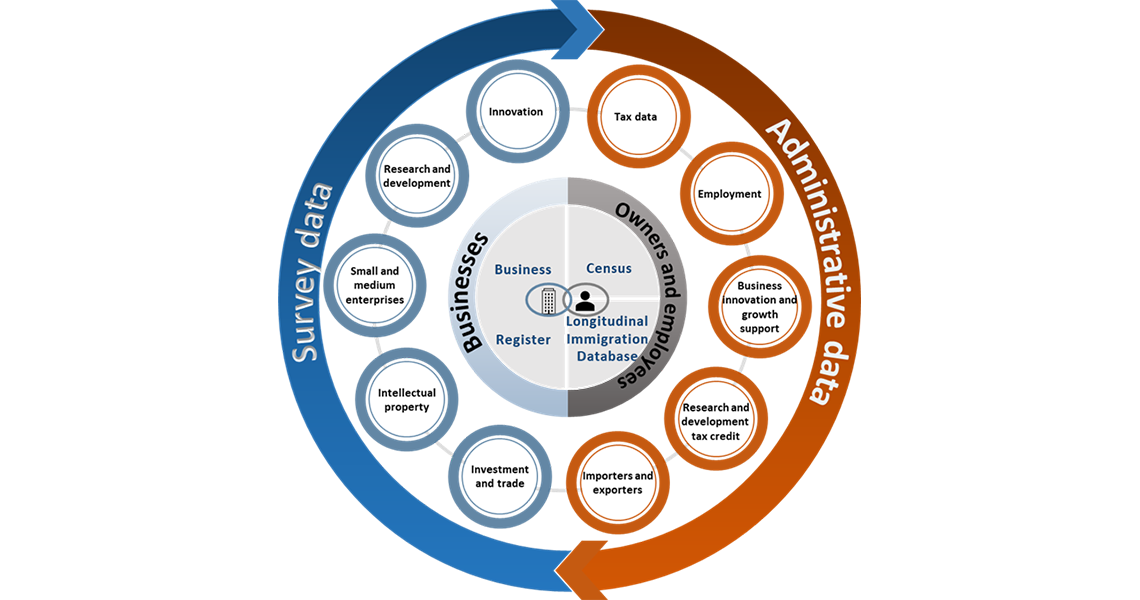
Record linkage results per province – 2019

Record linkage results per province
Linkage October 2020 Release
Linkage RateTablenote 1 False Discovery RateTablenote 2 False Negative error RateTablenote 3
%
Nova Scotia Census (individuals) 87.80 < 0.5 < 1.0
Tax & Social Insurance Registry (individuals) 94.20 < 0.5 < 2.5
Business Register (non-individuals) 95.60 < 0.5 < 2.0
New Brunswick Census (individuals) 84.90 < 3.0 < 3.0
Tax & Social Insurance Registry (individuals) 92.30 < 2.5 < 6.0
Business Register (non-individuals) 95.30 < 2.0 < 2.0
Ontario Census (individuals) 93.20 < 1.0 < 0.5
Tax & Social Insurance Registry (individuals) 98.20 < 0.5 < 0.5
Business Register (non-individuals) 97.40 < 2.0 < 1.0
British Columbia Census (individuals) 90.50 < 1.0 < 2.0
Tax & Social Insurance Registry (individuals) 96.80 < 1.0 < 1.5
Business Register (non-individuals) 97.30 < 6.0 < 1.5
Tablenote 1

Linkage Rate: The linkage rate is calculated as the percentage of owner records with accepted links to the database shown. It is the denominator for the false discovery rate (FDR). While it is not a data quality indicator alone, in addition to the FDR and the false negative error rate (FNR) it provides a complete picture of the overall linkage quality.

Return to tablenote 1 referrer

Tablenote 2

False Discovery Rate (FDR): The FDR is calculated as the percentage of records with false links among records with accepted links (i.e., a record with a false link is a record that was linked incorrectly).

Return to tablenote 2 referrer

Tablenote 3

False Negative error Rate (FNR): The FNR is calculated as the percentage of records with true links which were not found in the linkage process (i.e., records that were not linked when they should have been).

Return to tablenote 3 referrer

Linkage of the Longitudinal Administrative Databank (1982-2016) to the Discharge Abstract Database (1994/1995-2016/2017)

This project creates a LAD – DAD linkage key that allows users to link data on acute inpatient hospitalizations from the Discharge Abstract Database (DAD) with data on income and employment from the Longitudinal Administrative Databank (LAD). The resulting analytical files will allow for the study of relationships between income and hospitalizations such as the study of labour market and financial outcomes experienced by individuals and their families following hospitalizations resulting from acute illness and injuries for example.

The LAD – DAD linkage key allows users to link the Longitudinal Administrative Databank (LAD) with the hospital discharge events obtained from the Discharge Abstract Database (DAD) for all provinces and territories (excluding Quebec). LAD records contain information for a 20% longitudinal sample of Canadian tax filers between 1982 and 2016 and can be linked to the DAD hospitalization records for fiscal years 1994/1995 through 2016/17 via the linkage key.

The Data

Longitudinal Administrative Databank (LAD)

The LAD is a random, 20% sample of the T1 Family File (T1FF) tax database. Selection for LAD is based on an individual's social insurance number (SIN). There is no age restriction, but people without a SIN can only be included in the family component. Once a person is selected for the LAD, the individual remains in the sample and is picked up each year from the T1FF if he or she appears on the T1 that year. Individuals selected for the LAD are linked across years by a unique non-confidential LAD identification number (LIN__I) generated from the SIN, to create a longitudinal profile of each individual.

The LAD is augmented each year with a sample of new tax filers so that it consists of approximately 20% of tax filers for every year. The 20% sample has increased from 3,227,485 people in 1982 to 5,579,280 in 2016 (an increase of 73%). This increase reflects increases in the Canadian population and increases in the incidence of tax filing as a result of the introduction of the Federal sales tax credit in 1986 and the Goods and Services Tax credit in 1989.

For more information regarding the LAD, please refer to the LAD Data Dictionary available from your RDC analyst.

Discharge Abstract Database (DAD)

The Discharge Abstract Database (DAD) captures administrative, clinical and demographic information on hospital discharges (including in-hospital deaths, sign-outs and transfers) from all provinces and territoriesFootnote 1, except Quebec. Over time, the DAD has also been used to capture data on day surgery procedures, long-term care, rehabilitation and other types of care. Hospitals in Manitoba started submitting their records to DAD from April 1, 2004. Throughout the fiscal years that are covered in the linkage, there were openings, closure and mergers of institutions.

In the DAD, jurisdiction-specific instructions for collection of data elements evolve over time. Collection of each data element may be mandatory, mandatory if applicable, optional or not applicable. Collection requirements can vary by jurisdiction and by data year.

Researchers will find the listings of DAD data elements under the heading "Data Elements" at the DAD Metadata website. Please note that not all DAD data elements are included in the RDC DAD datasets for this linkage project. A list of available DAD variables is contained in user guide for the linked dataset. The documents on the website include information on mandatory versus optional collection status for each data element by jurisdiction, which is key to understanding coverage of data elements in the DAD.

For this record linkage, DAD records that linked to LAD cohort members from fiscal years 1994/1995 through 2016/17 were included.

File structure, layout

All variables from the LAD are available for analysis. Please see appropriate data dictionaries, available from your RDC analyst.

The DAD is an event based file, meaning that there will be more than one record for a person who was hospitalized more than once in the same fiscal year. During the linkage process, all DAD records belonging to the same LAD cohort member were identified using their LIN__I. Researchers can then choose to use the DAD file as an event based file (each row of data represents a hospitalization) or a person based file (each row of data represents an individual).

In order to use the file as a person based file, the researcher must transform the data to include all hospital information for one person as one record (one row on the data file).

Request for information - Transportation

Under the authority of the Statistics Act, Statistics Canada is hereby requesting the following information, which will be used solely for statistical and research purposes and will be protected in accordance with the provisions of the Statistics Act and any other applicable law. This is a mandatory request for data.

Air Transportation

Canadian Air Transport Security Authority Screened Passenger Counts

What information is being requested?

Statistics Canada is requesting the number of air passengers screened by the Canadian Air Transport Security Authority. Variables being requested include: date, airport code, sector (domestic, transborder, international), and the total count of screened passengers.

What personal information is included in this request?

This request does not contain any personal information.

What years of data will be requested?

Monthly data beginning with January 2019 (ongoing)

From whom will the information be requested?

This information is being requested from the Canadian Air Transport Security Authority; a Crown corporation responsible for securing specific elements of the air transportation system – from passenger and baggage screening to screening airport workers.

Why is this information being requested?

Statistics Canada requires this information to create and publish statistics on outbound air passenger traffic in Canada. These statistics can help improve the coverage and timeliness of air passenger data and can be used by policy makers, researchers, and industry stakeholders to make informed decisions based on the movement of people by air.

Statistics Canada may also use the information for other statistical and research purposes.

Why were these organizations selected as data providers?

The Canadian Air Transport Security Authority was selected as a data provider because the corporation collects information on screened passengers in order to manage security of the air transportation system.

When will this information be requested?

February 2022 and onward (monthly)

What Statistics Canada programs will primarily use these data?

When was this request published?

February 15, 2022

What information is being requested?

Statistics Canada is requesting NAV Canada flight data. The purpose of this amendment is to expand the data currently collected to include more flights from over 1600 Canadian airports. The aviation program has collected aircraft flight data for 100 major Canadian airports from NAV CANADA since the not-for-profit corporation was founded.

Variables being requested include: Flight ID, departure date and time, flight number, aircraft registration, aircraft type, air carrier code, aerodrome code, latitude of the point in which the flight entered/exited Canadian controlled airspace, and longitude of the point in which the flight entered/exited Canadian controlled airspace.

What personal information is included in this request?

This request does not contain any personal information.

What years of data will be requested?

Monthly data beginning with January 2020 (ongoing)

From whom will the information be requested?

This information is being requested from NAV CANADA; a not-for-profit corporation responsible for air traffic services that help ensure the safe movement of aircraft in Canada.

Why is this information being requested?

Statistics Canada requires this information to create and publish statistics on flight data in Canada. These statistics will help expand our current coverage of aircraft activity data from NAV CANADA and can be used by policy makers, researchers and industry stakeholders to make informed decisions based on access to timely flight data from more airports across the regions, provinces, territories.

Statistics Canada may also use the information for other statistical and research purposes.

Why were these organizations selected as data providers?

NAV CANADA was selected as a data provider because the corporation collects information on flight data and aircraft movements in order to manage air traffic services.

When will this information be requested?

January 2020 and onward (monthly)

What Statistics Canada programs will primarily use these data?

The aviation statistics program will use this data primarily under the following statistical program: 2715— Aircraft Movement Statistics

When was this request published?

November 19, 2021

Rail Transportation

Freight Rail Waybill Traffic Data

What information is being requested?

Statistics Canada is requesting detailed information about rail freight movements in Canada, such as data on the volume of freight, the types of goods transported, the equipment used, the distance covered within Canada (origin and destination cities), and the revenue generated from freight services within Canada provided by the Canadian railway companies from Transport Canada.

What personal information is included in this request?

This request does not contain any personal information.

What years of data will be requested?

Monthly data as of January 2018 (ongoing) will be requested. Subsequent monthly data are requested to be sent twice a year.

From whom will the information be requested?

This information is being requested from Transport Canada.

Why is this information being requested?

Statistics Canada requires this information to conduct an internal analysis with threefold objectives. First, to gain a better understanding of price trends within the freight rail industry; second, to validate the Freight Rail Services Price Index (FRSPI) that Statistics Canada produces and releases to the public on a monthly basis; and third, to perform a feasibility evaluation aimed at assessing the potential to enhance the FRSPI, which in turn may benefit Canadian businesses and researchers to make informed decisions regarding resource allocation, market focus, timing for using freight rail services, and other strategic considerations.

Why were these organizations selected as data providers?

Transport Canada collects and maintains detailed and up-to-date data on Canadian freight rail services. These data are essential for internal analysis, data consolidation, and for potential to construct a comprehensive price index within this sector. It is the only known source for these data.

When will this information be requested?

May 2024 and onward.

What Statistics Canada programs will primarily use these data?

Rail Service Price Index FRSPI: will make use of the data being requested, however the use of data is strictly internal only, and the data will not be used in the production of FRSPI.

When was this request published?

May 14, 2024

Road Transportation

Global Positioning System (GPS) data from trucks

What information is being requested?

Information on latitude–longitude coordinates from the itineraries travelled by commercial trucks in North America for the general delivery of goods is being requested.

What personal information is included in this request?

This request does not include personal information.

What years of data will be requested?

Monthly data beginning in July 2019 (ongoing).

From whom will the information be requested?

This information is being requested from Transport Canada.

Why is this information being requested?

Statistics Canada is requesting this administrative information to better fulfil the objective of its Freight Trucking Statistics Program, which is to measure the commodity movements and the outputs of the Canadian trucking industry. The survey data are then used by federal and provincial governments, trucking associations, members of the industry, universities and research institutions to assess the industry's growth rate and contribution to the Canadian economy, and to measure the volume of provincial and inter-provincial trade transported by trucking companies. The statistics are also used by planning boards to help determine the volume of traffic on highways and by trucking companies that are investigating expansion opportunities. Adding this GPS administrative data to survey data already being collected will improve coverage, and lead to better-quality statistics overall. In addition, these data are likely to reduce response burden for survey respondents and industry stakeholders, and lower data collection costs for the government as a whole.

Statistics Canada may also use the information for other statistical and research purposes.

Why were these organizations selected as data providers?

Transport Canada is responsible for developing policies and conducting research on different modes of transportation in Canada. These data will help Statistics Canada produce aggregate statistics for the benefit of all Canadians and the industry.

When will this information be requested?

From February 2021 on (monthly).

What Statistics Canada programs will primarily use these data?

When was this request published?

February 4, 2021

Vehicle Registration data

What information is being requested?

Information on vehicle registration data including the full, six-digit postal code, the Odometer reading, date of registration and the Vehicle Identification Number (VIN) is being requested.

These data will be added to the vehicle registration information currently provided to Statistics Canada.

What personal information is included in this request?

The vehicle registration information currently provided to Statistics Canada contains personal information, including name, address, date of birth, driver's license number and phone number. This request does not include additional personal information.

What years of data will be requested?

Monthly data as of November 2020 (ongoing).

From whom will the information be requested?

This information is being requested from all provincial and territorial transportation ministries/authorities.

Why is this information being requested?

Many data gaps still exist for the new motor vehicle industry, including: how far are Canadians driving? Do these patterns differ by fuel type, vehicle type, geographic location, and month? Statistics Canada is requesting this information in order to fill these data gaps. Data will be used by policy makers, researchers, and industry stakeholders to measure the growth of zero-emission vehicles in Canada.

Statistics Canada may also use the information for other statistical and research purposes.

Why were these organizations selected as data providers?

Canada's provincial and territorial transportation authorities are currently providing vehicle registration data to Statistics Canada on a quarterly basis.

When will this information be requested?

November 2020 and onward (monthly)

When was this request published?

October 26, 2020

Information sessions

The information session series covers a variety of topics including graphs and charts and statistical and methodological concepts suitable for the beginner level. The information sessions are usually 60 to 90 minutes in length and may include interactive components during the session. All information sessions will conclude with a question and answer period, inviting participants to ask specific questions. They include an electronic copy of the presentation, which is shared with participants. This important learning opportunity assists businesses, governments, and individuals to understand and use data more efficiently.

Upcoming information sessions

There are no events scheduled in the coming months.

Past information sessions

National Travel Survey: C.V.s for Person-Trips by Duration of Trip, Main Trip Purpose and Country or Region of Trip Destination, Q1 2020

National Travel Survey: C.V.s for Person-Trips by Duration of Trip, Main Trip Purpose and Country or Region of Trip Destination, Q1 2020
Duration of Trip Main Trip Purpose Country or Region of Trip Destination
Total Canada United States Overseas
Person-Trips (x 1,000) C.V. Person-Trips (x 1,000) C.V. Person-Trips (x 1,000) C.V. Person-Trips (x 1,000) C.V.
Total Duration Total Main Trip Purpose 44,554 A 38,639 A 3,710 A 2,204 A
Holiday, leisure or recreation 14,946 A 11,730 A 1,709 B 1,507 A
Visit friends or relatives 17,654 A 16,435 A 737 B 483 B
Personal conference, convention or trade show 1,264 D 1,183 D 81 D 0 E
Shopping, non-routine 2,241 B 1,708 B 529 B 4 E
Other personal reasons 3,112 B 2,937 B 136 D 38 E
Business conference, convention or trade show 1,401 B 1,120 C 191 C 89 D
Other business 3,936 B 3,526 B 327 C 83 C
Same-Day Total Main Trip Purpose 28,233 A 26,738 A 1,495 B ..  
Holiday, leisure or recreation 8,357 B 7,905 B 452 C ..  
Visit friends or relatives 11,114 A 10,790 A 324 C ..  
Personal conference, convention or trade show 944 E 919 E 26 E ..  
Shopping, non-routine 2,083 B 1,589 B 495 B ..  
Other personal reasons 2,301 B 2,262 B 39 E ..  
Business conference, convention or trade show 607 D 603 D 5 E ..  
Other business 2,826 B 2,671 B 155 E ..  
Overnight Total Main Trip Purpose 16,321 A 11,901 A 2,215 A 2,204 A
Holiday, leisure or recreation 6,588 A 3,825 B 1,257 B 1,507 A
Visit friends or relatives 6,540 A 5,645 B 413 B 483 B
Personal conference, convention or trade show 320 C 264 D 55 D 0 E
Shopping, non-routine 158 C 120 C 35 D 4 E
Other personal reasons 811 B 675 B 98 D 38 E
Business conference, convention or trade show 793 B 518 B 187 C 89 D
Other business 1,110 B 855 B 172 C 83 C
..
data not available

Estimates contained in this table have been assigned a letter to indicate their coefficient of variation (c.v.) (expressed as a percentage). The letter grades represent the following coefficients of variation:

A
c.v. between or equal to 0.00% and 5.00% and means Excellent.
B
c.v. between or equal to 5.01% and 15.00% and means Very good.
C
c.v. between or equal to 15.01% and 25.00% and means Good.
D
c.v. between or equal to 25.01% and 35.00% and means Acceptable.
E
c.v. greater than 35.00% and means Use with caution.

National Travel Survey: C.V.s for Visit-Expenditures by Duration of Visit, Main Trip Purpose and Country or Region of Expenditures, Q1 2020

National Travel Survey: C.V.s for Visit-Expenditures by Duration of Visit, Main Trip Purpose and Country or Region of Expenditures, Q1 2020 in Thousands of Dollars (x 1,000)
Duration of Visit Main Trip Purpose Country or Region of Expenditures
Total Canada United States Overseas
$ '000 C.V. $ '000 C.V. $ '000 C.V. $ '000 C.V.
Total Duration Total Main Trip Purpose 13,834,568 A 5,940,878 A 3,842,638 B 4,051,052 B
Holiday, leisure or recreation 7,748,038 A 2,441,222 B 2,694,134 B 2,612,682 B
Visit friends or relatives 2,788,591 B 1,537,981 A 486,935 C 763,674 C
Personal conference, convention or trade show 214,552 C 160,818 C 52,850 E 884 E
Shopping, non-routine 360,790 B 281,721 B 75,295 C 3,773 E
Other personal reasons 599,697 B 422,981 B 73,388 D 103,328 E
Business conference, convention or trade show 991,166 C 382,123 B 239,621 C 369,422 E
Other business 1,131,735 B 714,031 B 220,415 C 197,289 D
Same-Day Total Main Trip Purpose 2,306,038 A 1,998,199 A 293,647 C 14,193 E
Holiday, leisure or recreation 861,025 B 726,266 B 120,702 D 14,057 E
Visit friends or relatives 628,154 B 535,017 B 93,001 E 136 E
Personal conference, convention or trade show 43,567 D 39,886 D 3,681 E ..  
Shopping, non-routine 275,530 B 219,884 B 55,646 C ..  
Other personal reasons 208,126 B 202,860 B 5,266 E ..  
Business conference, convention or trade show 41,216 C 39,762 C 1,455 E ..  
Other business 248,420 C 234,523 C 13,896 E ..  
Overnight Total Main Trip Purpose 11,528,530 A 3,942,679 A 3,548,991 B 4,036,860 B
Holiday, leisure or recreation 6,887,014 A 1,714,956 B 2,573,432 B 2,598,625 B
Visit friends or relatives 2,160,437 B 1,002,964 B 393,934 C 763,538 C
Personal conference, convention or trade show 170,984 C 120,931 D 49,169 E 884 E
Shopping, non-routine 85,260 C 61,837 D 19,649 E 3,773 E
Other personal reasons 391,570 C 220,120 B 68,122 D 103,328 E
Business conference, convention or trade show 949,950 C 342,362 B 238,166 C 369,422 E
Other business 883,316 B 479,508 B 206,518 D 197,289 D
..
data not available

Estimates contained in this table have been assigned a letter to indicate their coefficient of variation (c.v.) (expressed as a percentage). The letter grades represent the following coefficients of variation:

A
c.v. between or equal to 0.00% and 5.00% and means Excellent.
B
c.v. between or equal to 5.01% and 15.00% and means Very good.
C
c.v. between or equal to 15.01% and 25.00% and means Good.
D
c.v. between or equal to 25.01% and 35.00% and means Acceptable.
E
c.v. greater than 35.00% and means Use with caution.

National Travel Survey Q1 2020: Response Rate at the estimation stage

National Travel Survey Q1 2020: Response Rate at the estimation stage
Province of residence Unweighted Weighted
Percentage
Newfoundland and Labrador 4.9 5.9
Prince Edward Island 5.7 5.7
Nova Scotia 12.3 11.7
New Brunswick 11.5 11.5
Quebec 17.3 15.3
Ontario 16.8 15.9
Manitoba 9.6 10.4
Saskatchewan 7.7 8.6
Alberta 11.6 12.9
British Columbia 15.0 14.5
Canada 13.0 14.4