
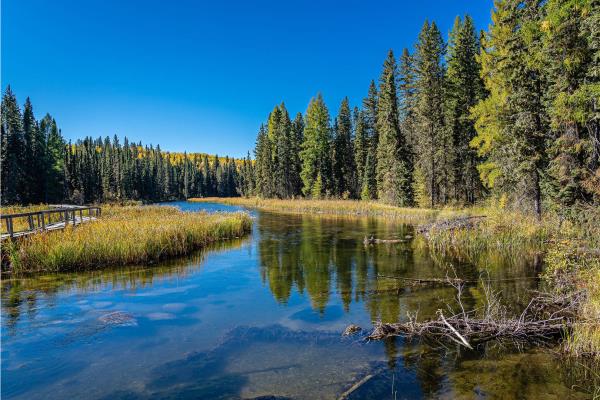
Water yield is an estimate of the amount of renewable freshwater generated in an area. Tracking water yield over time provides information to help understand changes in water resources available for human use and ecosystem needs.
In 2021, 1,225 cubic kilometres (km3) of renewable freshwater was generated in the south of Canada, where most people live. This volume corresponds to an average 0.47 cubic metres (m3) of water per square metre (m2) of area. To put this in perspective, in 2021, Canadian households used a total of 3.2 km3 of water nationally.
Since 1971, the annual water yield for southern Canada has varied from 0.45 to 0.60 m3/m2. However, there are differences in the geographic and seasonal distribution of renewable freshwater resources and in the changes observed over time. These factors can influence water management decisions by governments, public utilities and others.
Contact information
For more information, or to enquire about the concepts, methods or data quality of this release, contact us (toll-free 1-800-263-1136; 514-283-8300; infostats@statcan.gc.ca) or Media Relations (statcan.mediahotline-ligneinfomedias.statcan@statcan.gc.ca).