
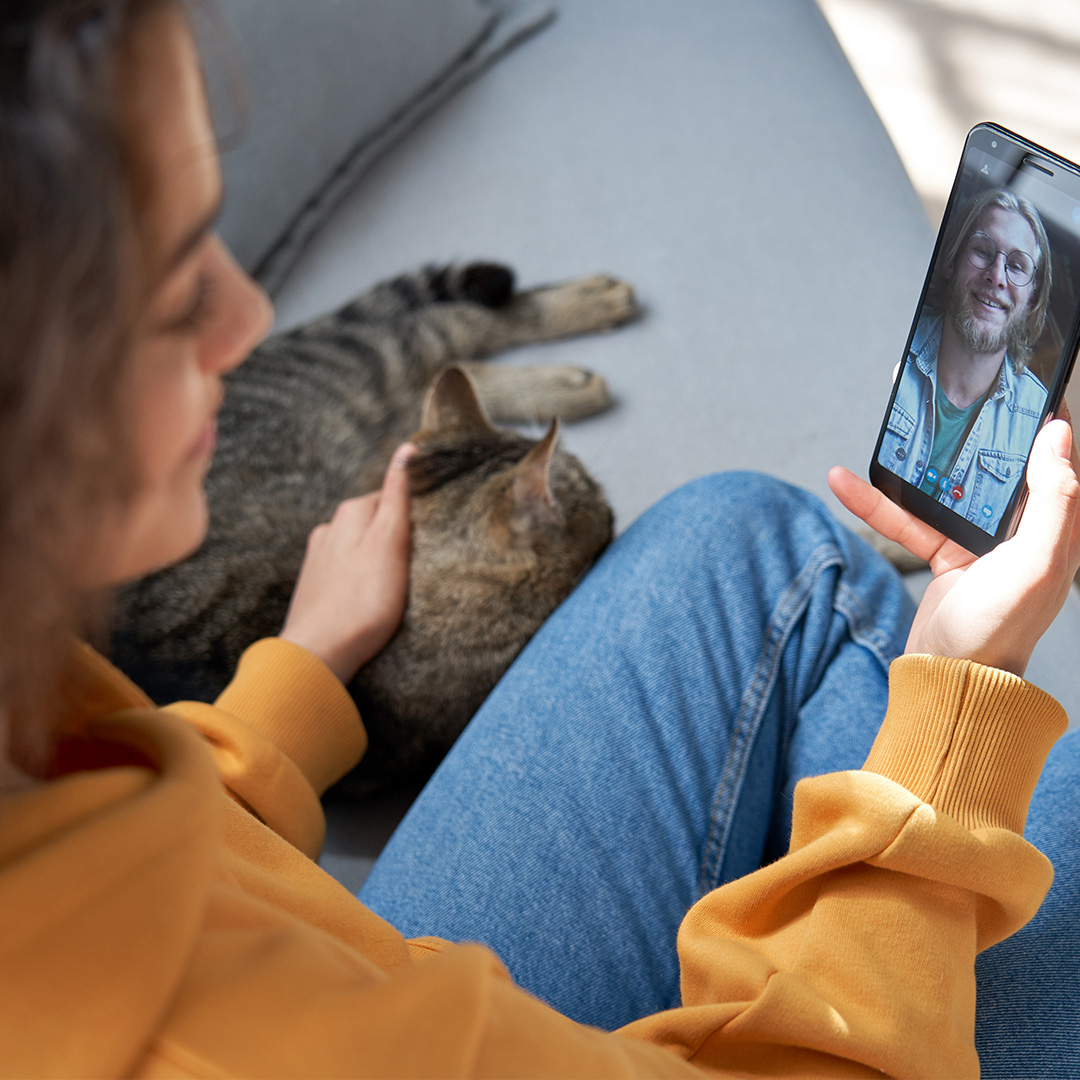
In 2025, fewer Canadians who communicated with friends by virtual means only within the month prior to the Survey on Social Connections – Well-being in Canada (SSC-WC) reported being "satisfied" or "very satisfied" with their friendships (63%) compared with those who communicated both virtually and in-person with their friends (87%).
This release uses data from the newly released SSC-WC, collected from April 11 to June 22, 2025, to provide a picture of the social connections and experiences of people living in Canada. The survey collects information about social networks and well-being, community engagement, and confidence in Canadian institutions.
This release describes how Canadians connected with their friends in 2025 (i.e., in-person, virtually, or a combination of both) and explores how the way that they connect may be linked to satisfaction with friendships.
The majority of Canadians connect with their friends both virtually and in-person
Whether by phone, video call, text, or through social media, Canadians have more ways to connect with friends than ever. The increasing availability of technology has translated into a growth in online communication (i.e., Internet applications). From 2020 to 2022, the Canadian Internet Use Survey found that those who had weekly online communication with friends increased by 4 percentage points, from 73% to 77%. This growth in online communication, along with cellular phones being more commonplace, has led to more widespread virtual communication with friends. For the purpose of this release, virtual communication is defined as any communication using telephone, cellular phone, or online applications.
In 2025, nearly 9 in 10 Canadians (88%) reported that they used a combination of both virtual and in-person communications to socialize with friends during the month preceding the SSC-WC (Table 1). Meanwhile, 1 in 10 (10%) connected with friends through virtual means only, while 2% of Canadians connected with their friends exclusively through in-person encounters.
The finding that most Canadians use a combination of ways to connect with friends was true across all sociodemographic groups studied, including older adults. Roughly 87% of adults aged 65 years and older connected with friends both in-person and virtually, on par with the national average. However, adults aged 65 years and older (4%) were more likely than any other age group to have only in-person interactions with friends.
Household income was also associated with some differences in method of communication with friends. Higher-income households ($150,000 and over) were more likely to report socializing using both virtual and in-person interactions (90%) compared to lower-income households (83%). Additionally, lower-income households (less than $40,000) were more likely to have in-person friendships only (3%) compared to higher-income households (1%). These trends may reflect geographic differences in accessing technology.
Recent immigrants twice as likely as non-immigrants to report communicating with friends exclusively through virtual means
In 2025, individuals who immigrated to Canada in the previous 10 years were more likely to report having friendships through virtual means only (16%), compared to established immigrants (13%) and non-immigrants (8%). Recent immigrants may have left behind friends when they moved to Canada, with virtual communications offering more ways to stay in touch over long distance.
Black Canadians (16%) and South Asian Canadians (15%) were more likely to communicate with friends only online or by phone than non-racialized, non-Indigenous Canadians (9%).
Poorer relationship satisfaction is reported by people who have virtual-only communication with friends
While virtual-only communication may connect friends across distance, it has been associated with a perception of poorer relationship satisfaction. Specifically, in 2025, nearly 9 in 10 Canadians (87%) who connected with friends both virtually and in-person reported they were satisfied or very satisfied with their friendships, a higher proportion than that of Canadians who maintained virtual-only communication with friends (63%).
Having an in-person component to friendships was also associated with being more likely to report having someone to count on. Canadians who had both in-person and virtual contacts with friends were more likely to report always or often having people to depend on (79%) than those who only communicated with friends virtually (61%).
Similarly, Canadians with virtual-only communication with friends also had a greater likelihood of reporting that they always or often felt lonely (24%) compared to those who met friends in-person and virtually (15%). Note that proportions for Canadians who reported having only in-person friendships are not presented, due to small numbers.
It is also important to note that these associations do not imply causation—as it is possible that people who are less satisfied with their friendships may choose to connect with their friends virtually rather than in person.
Note to readers
This release uses data from the Survey on Social Connections - Well-being in Canada (SSC-WC), 2025 (collected from April 11 to June 22, 2025). The SSC-WC aims to provide a picture of the social connections and experiences of people living in Canada. Statistics Canada would like to thank all Canadians who took the time to answer the questions.
The target population for the SSC-WC are those aged 15 years and older living in the 10 provinces of Canada, with a focus on ensuring coverage of racialized groups and immigration status through oversampling. The excluded population includes residents of the three territories, full-time residents of institutions, and residents of First Nations reserves and settlements.
Communication with friends in-person was assessed using the question: "In the past month, how often did you see your friends in person?" Communication with friends virtuallywas assessed using the question: "In the past month, how often did you communicate with any of your friends by telephone or any form of Internet communication?" Respondents who answered that they communicated at least once within the month preceding the survey were considered as having used that method of communication.
In this release, the term "Canadians" refers to residents of Canada, regardless of citizenship status.
Contact information
For more information, or to enquire about the concepts, methods or data quality of this release, contact us (toll-free 1-800-263-1136; 514-283-8300; infostats@statcan.gc.ca) or Media Relations (statcan.mediahotline-ligneinfomedias.statcan@statcan.gc.ca).