


The streets of Toronto will be pulsating with the rhythmic sounds of Caribbean music in the days ahead. To kick off the Toronto Caribbean Carnival, let’s take a look through a musical and trade lens at the 774,510 Canadians who reported being of Caribbean ethnicity in the 2021 Census of Population, with a focus on the six largest Caribbean communities in Canada today.
Looking for some Caribbean vibes?
These are Canada’s most Caribbean cities in terms of population:
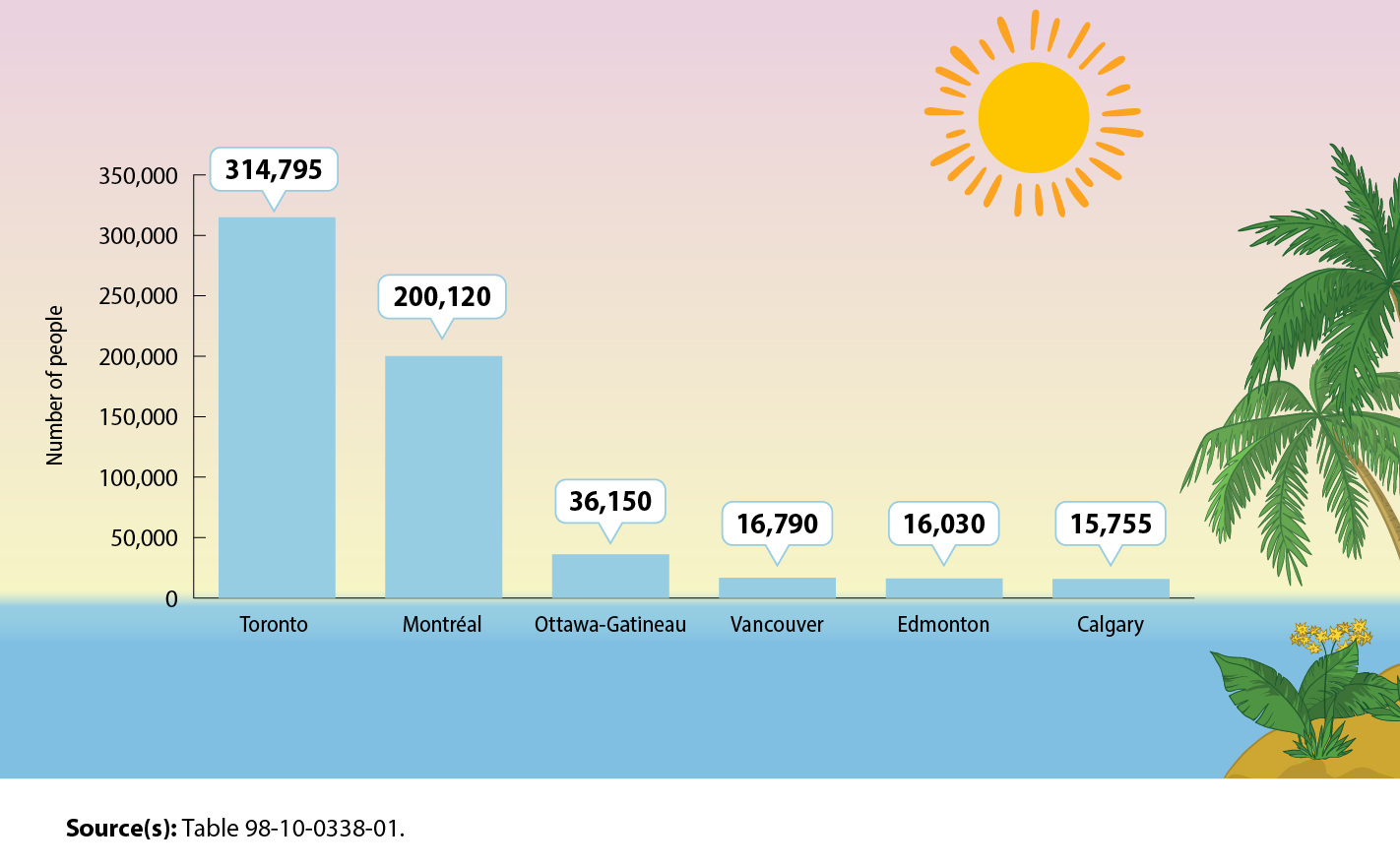
Chart 1: Canadian cities with the largest Caribbean-origin populations in 2021
Description - Chart 1: Canadian cities with the largest Caribbean-origin populations in 2021
The title of the chart is “Canadian cities with the largest Caribbean-origin populations in 2021.”
This is a bar chart. It displays the Canadian cities with the largest Caribbean-origin populations in 2021.
The horizontal axis displays cities Toronto, Montréal, Ottawa-Gatineau, Vancouver, Edmonton and Calgary, from left to right, in order of the highest to lowest Caribbean-origin population.
The vertical axis represents the number of people, from 0 to 350,000, in increments of 50,000.
In Toronto, there were 314,795 people of Caribbean origin.
In Montréal, there were 200,120 people of Caribbean origin.
In Ottawa-Gatineau, there were 36,150 people of Caribbean origin.
In Vancouver, there were 16,790 people of Caribbean origin.
In Edmonton, there were 16,030 people of Caribbean origin.
In Calgary, there were 15,755 people of Caribbean origin.
Source(s): Table 98-10-0338-01.
Reggae, born in Jamaica, has been played in Canada since the early 1970s
Reggae music emerged from Jamaica in the late 1960s, and the first reggae album was released in Canada in 1972 by the “godfather” of Canadian reggae, Jamaican-born Jackie Mittoo.
During the 2021 Census of Population, 249,070 Canadians reported being of Jamaican ethnicity, making Jamaica Canada’s largest source country of immigration from the Caribbean by far.
For many Jamaicans living in Canada today, attending the Toronto Caribbean Carnival should be a relatively easy day trip, with 140,870 Jamaicans living in Toronto in 2021. Indeed, just over four in five Jamaicans (81.1%) living in Canada called Ontario home at the time of the 2021 Census.
Outside of Ontario, the largest Jamaican communities in Canada were in Alberta (15,620 people) and Quebec (11,395).
Jamaican nationals spend more in Canada than Canadians spend in Jamaica, mostly because of education spending and temporary foreign workers
Trade in goods between Canada and Jamaica is fairly balanced. Canada exported $142.5 million worth of goods in 2024, and just over half of these were consumer goods.
Imports of goods from Jamaica to Canada almost doubled (+96.9%) year over year to $131.7 million in 2024, with alumina being the most important import.
Perhaps surprisingly, Canada had a large trade in services deficit (-$95.0 million) with Jamaica in 2024, mostly related to travel spending. However, most of this travel spending was done by Jamaican nationals who were either studying or working in Canada, rather than vacationing.
For example, of the $176 million spent by Jamaican nationals in Canada in 2023, nearly $100 million was education-related spending by students enrolled in Canadian schools, colleges, universities and other institutions.
In 2023, there were also 9,905 temporary foreign workers from Jamaica working in the agricultural sector in Canada, and their spending while here is also included in travel services exports within business travel.
In 2023, exports of services from Canada to Jamaica rose by almost one-quarter (+23.1%) year over year to $261.0 million, which includes not only travel spending but also transportation services, commercial services and government services between the two countries. Education-related travel spending accounted for over one-third of services exports to Jamaica.
Imports of services from Jamaica rose by one-fifth (+20.7%) year over year to $356.0 million in 2023, with tourism spending accounting for just over four-fifths (80.6%) of service imports from Jamaica.
Kompa: A Haitian spin on merengue
Kompa is a fusion of merengue, jazz and Latin music that emerged from Haiti in the 1950s.
You are most likely to hear Kompa in Montréal, which was home to almost four in five of the 178,995 Haitian people living in Canada at the time of the 2021 Census.
There were also smaller Haitian communities in Ontario (17,930 people) and Alberta (2,460).
Canada’s primary export to Haiti is food
Canada exported $103.2 million of goods to Haiti in 2024, down 25.3% from 2023. Farm, fishing and intermediate food products accounted for two-thirds (66.3%) of exports to Haiti.
Imports from Haiti rose 7.3% to $52.8 million in 2024, led by consumer goods, which accounted for 87.6% of imports.
Calypso: The sound of Trinidad and Tobago
Born in Tobago, Macomere Fifi moved to Toronto in the late 1980s and by the mid-1990s had established herself as one of the preeminent Calypso singers in the world, winning Canada’s Calypso Queen laurels seven times.
During the 2021 Census, 77,405 Canadians reported having Trinidadian and Tobagonian roots, with just over three in four living in Ontario. Attending the Toronto Caribbean Carnival should not be a problem for many Trinidadian and Tobagonians in Canada, with over half living in Toronto in 2021.
Quebec (5,665 people), Alberta (4,595 people) and British Columbia (4,125 people) also had sizeable Trinidadian and Tobagonian communities.
Canada exports minerals to Trinidad and Tobago and imports oil
Canada’s exports to Trinidad and Tobago fell by 21.3% year over year to $219.3 million in 2024, with metal ores and non-metallic minerals accounting for just over one-third of total exports.
Imports from Trinidad and Tobago rose by 80.4% to $343.4 million in 2024, with liquified natural gas accounting for just under half of total imports.
Exports in services to Trinidad and Tobago rose 16.1% year over year to $224.0 million in 2023, led by travel spending, which accounted for 40.2% of exports.
Imports in services from Trinidad and Tobago rose 47.8% to $133.0 million in 2023, up 47.8% from 2022. In 2023, transportation and government services accounted for 88.0% of imports from Trinidad and Tobago.
Canada’s $91 million services trade surplus with Trinidad and Tobago in 2023 was mostly due to Canadians spending more on travel to the Caribbean country than Trinidadians and Tobagonians spent in Canada ($90 million versus $13 million).
Barbadian tuk bands
Take one double-headed bass drum, add a triangle, flute and a snare drum and you’ve got what you need for a tuk band. Tuk or rukatuk music is most closely associated with Barbados.
Approximately 31,440 Canadians reported being of Barbadian ethnicity in the 2021 Census. Of the two-thirds of Barbadians who lived in Ontario at the time of the census, 13,070 were living in Toronto.
There were also smaller Barbadian communities in Quebec (4,845) and British Columbia (1,950).
Banking is the biggest trade connection between Barbados and Canada by far
There is not much trade going on between Canada and Barbados when it comes to goods, with Canada exporting $50.6 million of goods to Barbados and importing $19.3 million of goods in 2024. Consumer products were the primary trade goods in both directions.
It is a completely different story when it comes to trade in services, with Canada exporting $347.0 million in services to Barbados in 2023, while importing $1.6 billion. As a result, Canada has a $1.3 billion trade deficit with Barbados, with approximately four-fifths of services trade between the two countries related to commercial banking.
Rumba: A word synonymous with partying in Cuba
Rumba music emerged from the streets of Havana, Cuba, in the late 19th and early 20th century.
During the 2021 Census, 30,065 Canadians reported being of Cuban ethnicity, with just under half living in Ontario (14,780 people).
Quebec (10,280) and Alberta (2,125) had the second and third largest communities of Cubans at the time of the census.
Canada exports food to Cuba, imports metal ores and non-metallic minerals
Canada exported $278.2 million of goods to Cuba in 2024, down 8.8% from 2023. Farm, fishing and intermediate food products accounted for over one-third (37.9%) of exports to Cuba. Imports from Cuba were down by one-fifth year over year to $631.6 million in 2024, with metal ores and non-metallic minerals accounting for 95.2% of imports.
Merengue: Some Spanish flavour from the Dominican Republic
Merengue music and dance is most closely associated with the Dominican Republic.
Canada imports far more from the Dominican Republic than it exports
Exports to the Dominican Republic declined 5.9% year over year to $278.6 million in 2024. Farm, fishing and intermediate food products accounted for 40.5% of exports to the Dominican Republic.
Imports from the Dominican Republic rose by two-thirds year over year to $521.1 million in 2024, with electronic and electrical equipment and parts accounting for just over one-third (34.6%) of the total.
📲 Looking for more? Staying informed has never been easier!
Follow the “Population and demography” subject in the StatsCAN app to receive personalized updates and stay connected with the most recent articles, reports and analyses.
Contact information
For more information, contact the Statistical Information Service (toll-free 1-800-263-1136; 514-283-8300; infostats@statcan.gc.ca) or Media Relations (statcan.mediahotline-ligneinfomedias.statcan@statcan.gc.ca).