

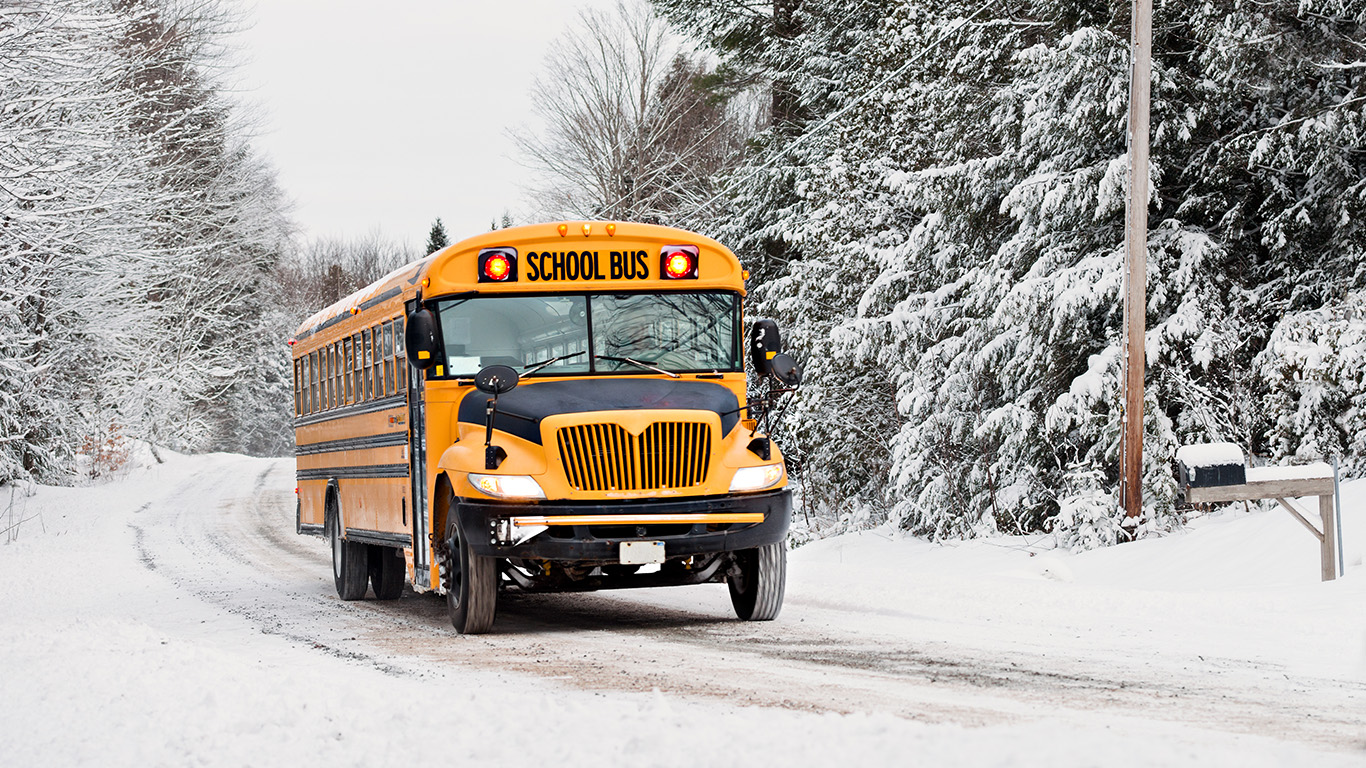
The rumbles beneath your feet that you probably felt a few times earlier this month wasn’t always a snowplow—it might have been a stampede of Canadians headed back to school, the workplace, and other places as the holidays gave way to routines.
And you know that we at Statistics Canada are going to try to count them all…or at least estimate them! On July 1, 2025, the population was estimated at nearly 41.7 million—once a year on that date, we break it down further by age and gender.
Child care, kindergarten, elementary school
On July 1, there were almost 1.9 million children aged 0 to 4 years living in Canada, down slightly (-0.2%) from a year earlier, while the number of children aged 5 to 9 also saw a slight decline (-0.6% to 2.1 million).
Middle and high schoolers, university students, younger workers
The 2.3 million children and teenagers aged 10 to 14 years (+0.9%) and the 2.3 million teens aged 15 to 19 (+0.2%) on July 1 represented slight upticks from a year earlier, while the 2.7 million young adults aged 20 to 24 years (-1.4%) declined over the same period.
Core-aged workforce
The Labour Force Survey defines people aged 25 to 54 as “core-aged” workers. This includes everyone from younger adults starting their careers to those approaching retirement.
On July 1, about 17.1 million core-aged people in Canada were estimated to be in this age group, up from 16.9 million the year before. There were fewer core-aged workers aged 25 to 29, but more aged 30 to 54.
Some stay at home, others are unemployed; older Canadians may be headed back to some volunteering
Although a sizeable chunk of the population is headed back to something, not everyone is—or they may be returning to a home-based routine.
Almost three in five (57.7%) children aged 0 to 5 were in child care in 2025. Of those children, close to two-thirds of their parents and guardians (63.5%) reported location as the reason for using the main child care arrangement, followed by whether the care provider is trustworthy, warm, and nurturing (51.5%), licensed or accredited child care (46.7%), and affordable cost (44.7%).
There were 63,150 children homeschooled in Canada during the 2023/2024 school year, down from a record 83,988 in 2020/2021, when the COVID-19 pandemic forced the closure of classrooms for long stretches.
Many people work over the holidays, including those who cannot afford to take time off. In 2024, just under three-quarters (72.9%) of employed Canadians reported that they were entitled to paid vacation leave.
Although most older Canadians are retired, a considerable number of them still work. A Statistics Canada study from 2024 found that one in five seniors aged 65 to 74 worked in 2022—almost half of them by necessity.
Older Canadians reported volunteering more hours than younger counterparts. On average, Canadians volunteered 173 hours in 2023. Those aged 65 to 74 years volunteered the most hours (283 hours), followed by those aged 55 to 64 years (214) and those aged 75 years and older (204).
Looking ahead to the census!
The 2026 Census of Population will begin in May, with collection in select northern and remote communities beginning earlier, in February. By collecting information like age, education, occupation, commuting, and labour, the census data help Canadians make important decisions that affect their families, their neighbourhoods, and their businesses.

Contact information
For more information, contact the Statistical Information Service (toll-free 1-800-263-1136; 514-283-8300; infostats@statcan.gc.ca) or Media Relations (statcan.mediahotline-ligneinfomedias.statcan@statcan.gc.ca).