

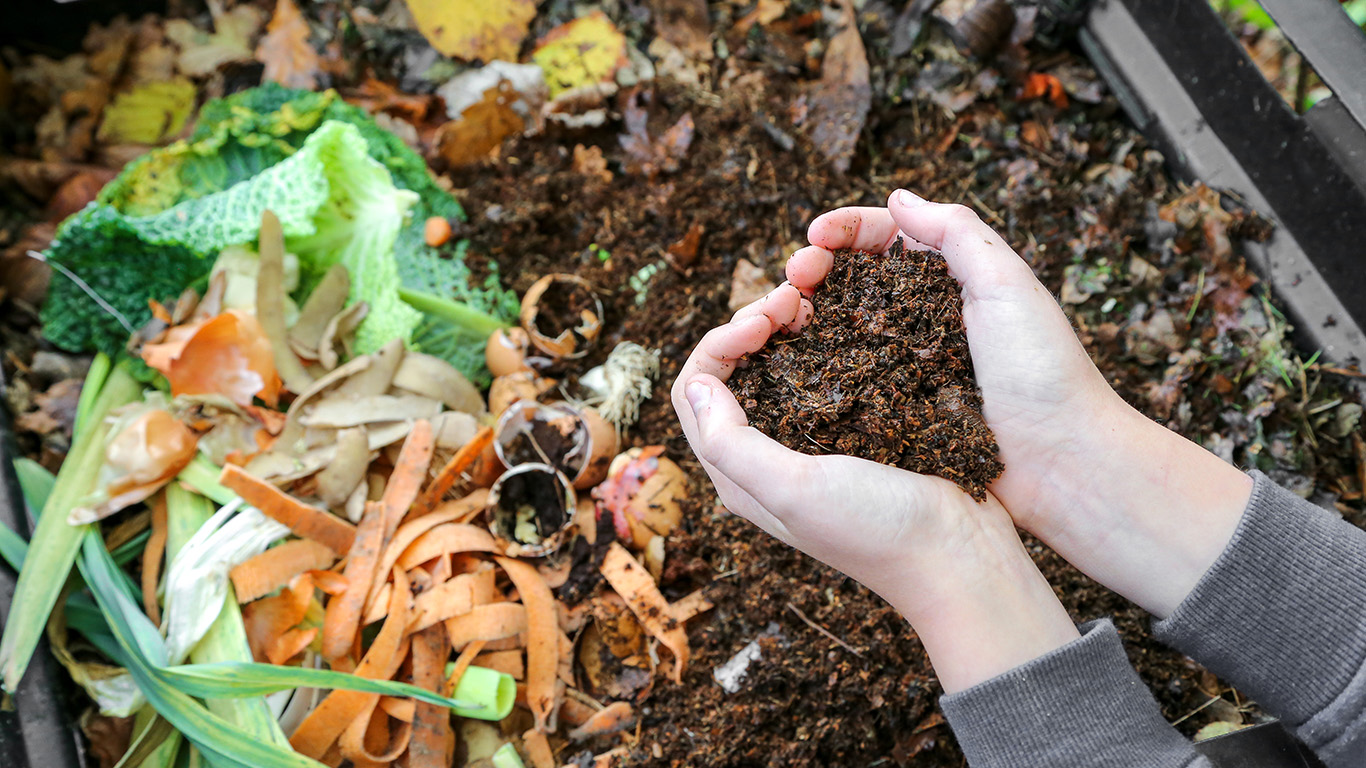
Household organic waste such as potato, apple or carrot peels, grass clippings, raked leaves or other organic household scraps of modern-day life are destined for one of two places: buried in a landfill for hundreds of years, or given new life through composting. Just over 3.1 million tonnes of organic waste were diverted from a landfill in 2024, with Canadian households doing most (80%) of the diverting.
Indeed, Canadian households contributed over four-fifths (84%) of the 1.7 million tonnes of organic food waste diverted from a landfill in 2024. Households also accounted for the lion’s share (90%) of the 1.1 million tonnes of leaf and garden waste diverted from a landfill that year.
Over four in five Canadian households compost
In 2023, we asked Canadian households if they composted kitchen waste, yard waste or compostable bioplastics. Over four in five Canadian households responded yes (85%), compared with 61% in 2009 when we first asked about composting kitchen or yard waste.
Canadian households less likely to compost yard waste at home
While kitchen waste is generated by every Canadian household (even if they don’t compost it), apartment dwellers generally do not have to compost yard waste as they usually do not have yards.
In 2023, 84% of Canadian households with a yard that were not in apartments reported recycling yard waste, up from 81% in 2021 and 69% in 2009, when we first asked the question.
Among households that reported composting waste in 2023, nearly four in five (79%) reported having the garden waste taken away by the city or a private company, up from 62% in 2009.
Conversely, the share of households with a yard that composted in a bin or pile to make garden soil has fallen from approximately one-third (34%) in 2009 to one-fifth (21%) in 2023.
Bioplastics waste composting slowly catching on
Bioplastics have the same general look, feel and function of plastic but are made with biodegradable material, and hence compostable.
In 2023, 60% of households reported composting bioplastics, up slightly from 57% in 2021, the first time we asked the question.
Contact information
For more information, contact the Statistical Information Service (toll-free 1-800-263-1136; 514-283-8300; infostats@statcan.gc.ca) or Media Relations (statcan.mediahotline-ligneinfomedias.statcan@statcan.gc.ca).