

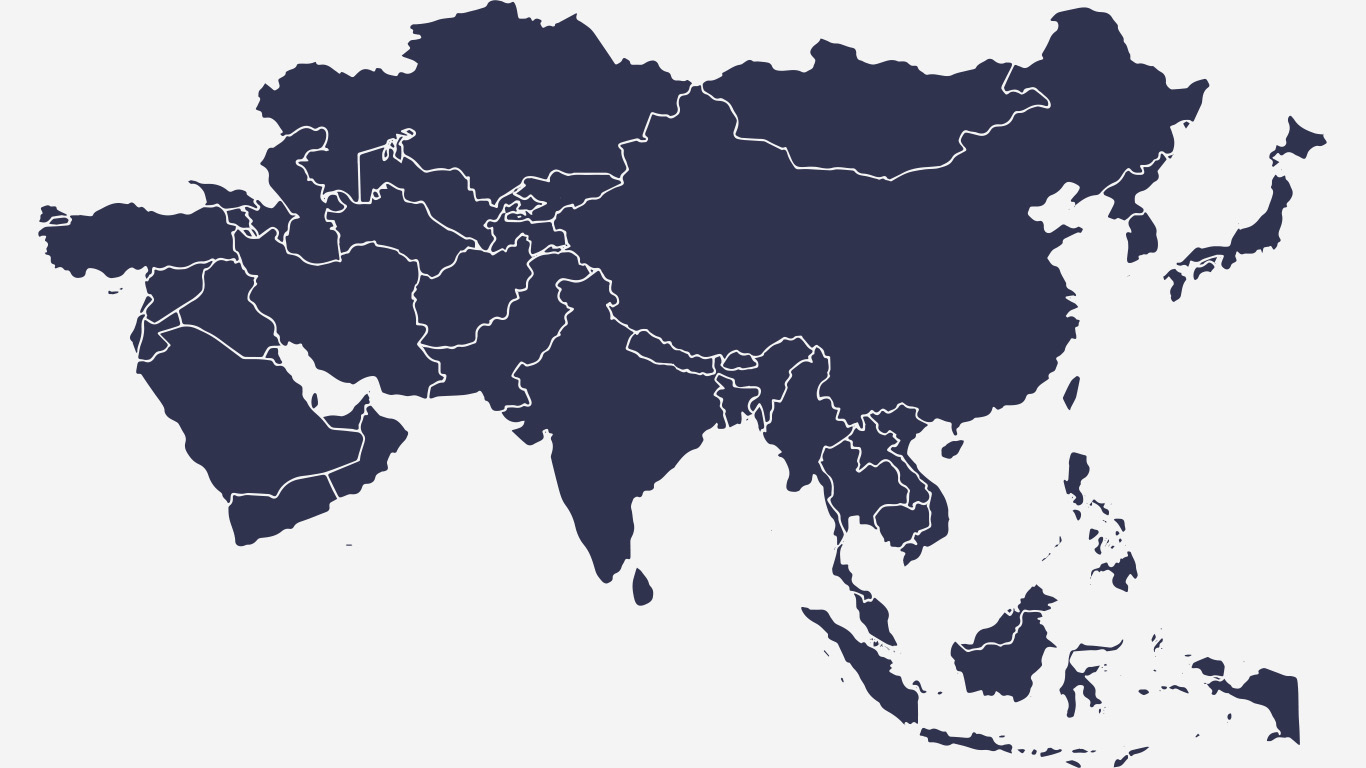
Canada is also a land of immigrants, with many still conversing in the language of their youth as well as in English or French—at home with family and friends, at ethnic community gatherings, and sometimes even at work.
Approximately 10.7 million Canadians spoke a non-official language in 2021. Often, these non-official language speakers add a splash of English or French to the mix.
Over 2 million people living in Canada can speak Punjabi, Hindi or Urdu
There were also large communities of Tamil (238,000), Gujarati (209,000) and Bengali (121,000) speakers in Canada in 2021. The share of these speakers born outside of Canada ranged from 92% of all Hindi speakers to about three in four Urdu, Punjabi and Tamil speakers.
In total, 2.1 million people spoke at least one of these non-official languages, with 571,000 knowing more than one.
Many of these non-official language speakers are newcomers to Canada—with at least 15% of speakers of Hindi, Gujarati and Bengali immigrating to Canada from 2016 to 2021—and over one in six were non-permanent residents at the time of the 2021 Census.
Speakers of these languages are also younger than the overall Canadian population, with an average ranging from 33 years among Punjabi speakers to 36 years among Tamil speakers, compared with the national average of 41 years.
Just over 1.5 million Canadians speak a Chinese language
Mandarin (987,000 speakers) was the most spoken Chinese language in Canada in 2021, followed by Cantonese (725,000), although many Chinese speakers could converse in both languages.
Mandarin speakers were much more likely to be born in another country (85%) than Cantonese speakers (76%), and they were much younger on average (39 years compared with 50 years). This trend reflects an earlier wave of immigration to Canada from those regions in China that speak Cantonese.
Over 1 million Canadians can speak Tagalog or Vietnamese
Tagalog (738,000 speakers)—a language widely spoken in the Philippines—and Vietnamese (233,000) were also widely spoken in Canada at the time of the 2021 Census.
Almost all (93%) Tagalog speakers were born in the Philippines, while 73% of Vietnamese speakers were born in Vietnam.
Over 1 million Canadians can speak an Arabic or Persian language
While Arabic (838,000 speakers) was the fourth most spoken non-official language in Canada in 2021, over half of these speakers were born outside of Asia, in either Canada (20%) or Africa (35%).
There are twice as many Korean speakers as Japanese speakers
Korean (204,000 speakers) was the 17th most spoken non-official language in Canada in 2021, over twice the number of Japanese speakers (98,000).
The importance of family in language retention
When all members of a household are able to converse in the same language, it significantly increases the likelihood that this language will be spoken at home.
In 2021, Korean (98%), Cantonese (96%), Vietnamese (95%) and Tamil (95%) were spoken in almost all households when all household members knew these languages.
Non-official languages at work
English and French overwhelmingly remain the languages most used at work in Canada, but non-official languages are also spoken.
In 2021, nearly 670,000 people used a language other than English or French at work, representing around 1 in 25 workers in Canada.
Among these workers, 546,000 used English or French at work in addition to a non-official language, while over 123,000 used only a non-official language.
In 2021, around 130,000 workers spoke Mandarin at work, 102,000 spoke Punjabi, while 83,000 spoke Cantonese.
Check out these infographics for a worldwide perspective on non-official languages spoken in Canada
Contact information
For more information, contact the Statistical Information Service (toll-free 1-800-263-1136; 514-283-8300; infostats@statcan.gc.ca) or Media Relations (statcan.mediahotline-ligneinfomedias.statcan@statcan.gc.ca).