

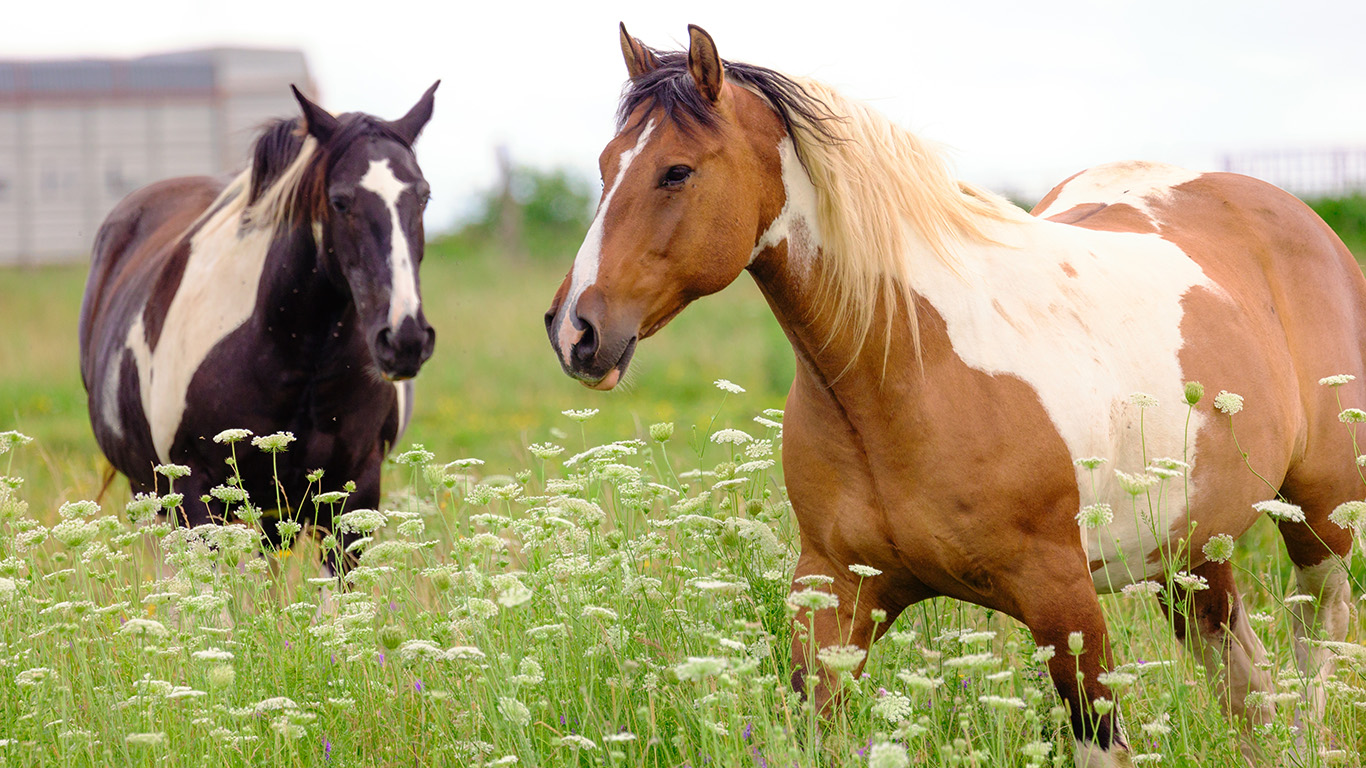
Just over a century ago in Canada, there were millions of working horses across the land, pulling wagons or plows and transporting people, while bison remained on the cusp of extinction. By 2021, there were almost as many bison (149,539) on Canadian farms as horses (183,733).
Horses replaced by horsepower
A century ago, horses were a normal part of everyday life. Indeed, we counted just under 3.5 million horses on 608,272 Canadian farms during the 1921 Census of Agriculture, with undoubtedly many more living and working in towns and cities too.
Today, horses are rarely used for farm work and are almost never seen in big cities. Indeed, horse numbers on Canadian farms fell by 94.7% from 1921 to 183,733 in 2021, while the number of farms with horses fell 96.6% to 20,645 farms.
Over the same period, tractor numbers on Canadian farms rose by 1,289.4% to 659,337.
During the first two decades of the 21st century alone (from 2001 to 2021), horse numbers in Canada have fallen by 60.1%. By way of comparison, bison numbers on Canadian farms rose by 3.1% over that same period.
Fewer horses, fewer farms, but more horses per farm
While there are far fewer horses in Canada today compared with a century ago, the number of horses per reporting farm reached an all-time high.
In 1921, farms with horses reported an average of six horses each. This average fell to 2 horses per farm in the mid-1950s but has trended upward since the late 1990s to reach a record high of 9 horses per farm in 2021. It should be noted that the 2021 Census of Agriculture excludes operations that do not sell agricultural products but are involved solely in horse boarding or riding—horses on these operations were therefore not counted.
Over one-third of Canada’s horses are found on Alberta farms
Perhaps unsurprisingly, over one-third (37.0%) of the 183,733 horses and ponies reported nationally in 2021 were found in Alberta, home of the Calgary Stampede and many large cattle ranches.
Ontario (41,528 horses), Saskatchewan (23,467) and British Columbia (19,260) also had sizeable horse populations.
In contrast, there were 2,462 horses reported on farms in all of Atlantic Canada, ranging from 1,210 horses in Nova Scotia to 19 in Newfoundland and Labrador.
If you’re a farmer, we need to hear from you
Horses are just one part of Canada’s diverse agricultural landscape. As data collection continues for the 2026 Census of Agriculture, we need to hear from all farm operators who have not yet completed their questionnaire—whether they grow strawberries, mushrooms, grains or vegetables, raise livestock, or operate any other type of farm.
In addition to supporting data-driven policymaking, the Census of Agriculture is the sole source of community-level agriculture data in Canada. It can help identify trends and provide information on emerging issues and opportunities. Farm organizations are also heavy users of census data.
The questionnaire covers a wide range of topics such as land use, crops, livestock, labour, equipment, land management practices and finances.
Visit the census website for more information and to complete your questionnaire.
Contact information
For more information, contact the Statistical Information Service (toll-free 1-800-263-1136; 514-283-8300; infostats@statcan.gc.ca) or Media Relations (statcan.mediahotline-ligneinfomedias.statcan@statcan.gc.ca).