

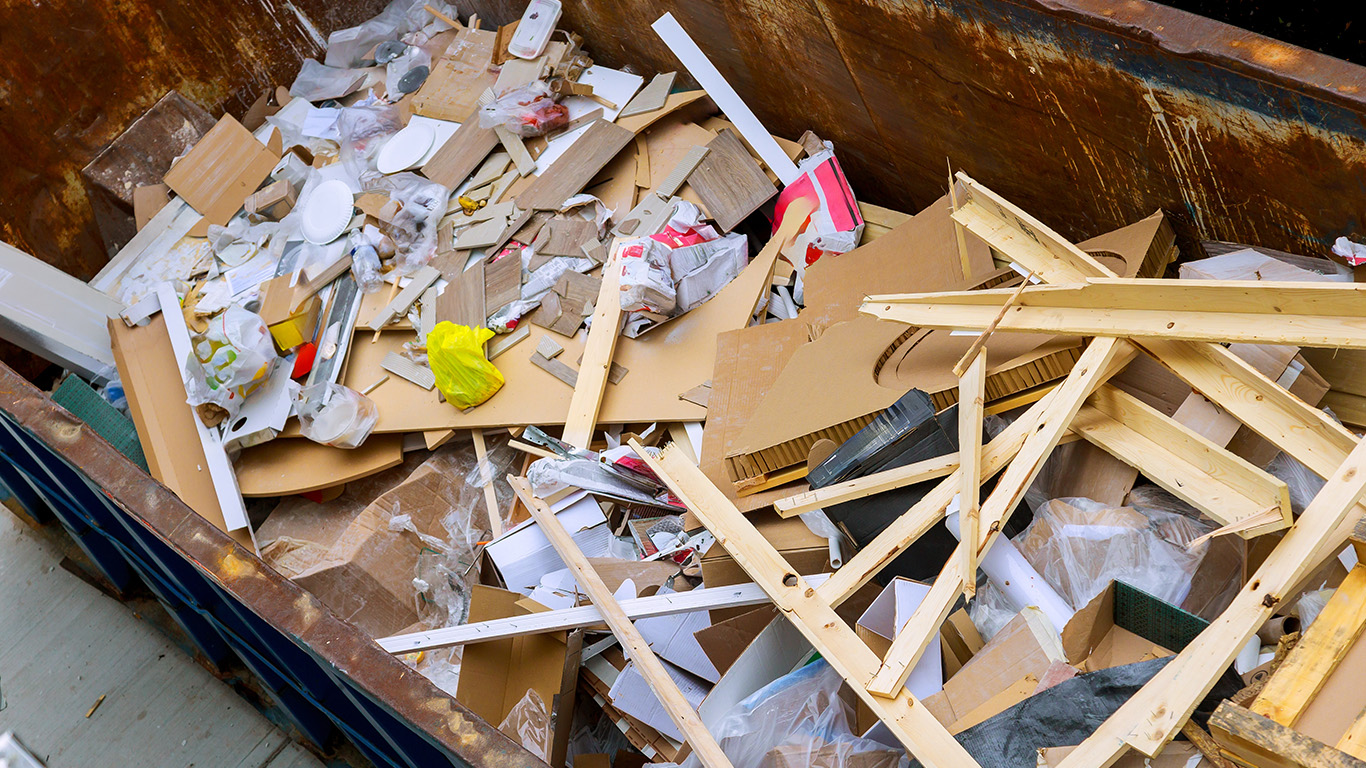
In 2024, there were over 16.4 million tonnes of waste generated from non-residential sources, the highest amount since 2008 (almost 16.6 million tonnes) but still shy of the record in 2006 (over 16.7 million tonnes). (We started tracking waste disposal data every two years starting in 2002 and annually since 2023 for recycling and composting.)
Non-residential sources include waste from institutional facilities and commercial operations and waste generated by construction, demolition and manufacturing.
That the previous high hasn’t been surpassed is thanks in part to continued efforts to divert materials from disposal. In 2024, 7 of the 16 types of materials tracked saw an annual increase in the amount of waste diverted.
Let’s dumpster dive into the data!
Ontario and Alberta contribute most to the increase in waste
Ontario generated almost 7.4 million tonnes of waste from non-residential sources in 2024, up considerably from 2022 (+250 920 tonnes) and driving the nationwide increase over the same period.
In Alberta, more than 2.7 million tonnes were generated in 2024, up by 60 883 tonnes from 2022. Quebec was close behind, with 2.6 million tonnes generated in 2024, though down from two years earlier (-75 048 tonnes).
Elsewhere, Manitoba (+33 398 tonnes), Nova Scotia (+19 149), Saskatchewan (+5 129), Prince Edward Island (+4 359) and New Brunswick (+1 058) all contributed to the nationwide increase, while there were modest decreases in the territories and other provinces.
Record-low diversion of paper fibres countered by increases in organic and construction waste
Nationwide, close to 1.7 million tonnes of paper fibre from non-residential sources were diverted from landfills in 2024. This amount was down considerably from 2023 (-125 595 tonnes)—the lowest amount on record since we started tracking annual diversion data in 2018.
Paper fibre is by far the largest waste diversion category by volume. It’s followed by organic materials, at 623 547 tonnes, up from 2023 (+119 575 tonnes). This increase was driven by an increase in food waste and other materials such as forestry, wood and agricultural waste.
There was an uptick in the diversion of construction, renovation and demolition materials to 561 444 tonnes (+14 337 tonnes) in 2024.
Fewer tonnes of metals, plastics and glass diverted
In 2024, 266 710 tonnes of ferrous metals (such as small scrap parts, strappings and containers but excluding vehicles, machinery, beams and other large construction materials) were diverted, down 17 028 tonnes from 2023. Additionally, 114 373 tonnes of glass (-6 364) and 66 883 tonnes of plastics (-13 952) were diverted, both down from 2023.
The 50 585 diverted tonnes of copper and aluminum (+5 375) and 25 688 tonnes of white goods (such as appliances) (+1 420) were up from 2023, while the 59 727 tonnes of mixed metals (-8 011) were down from 2023.
Relatively smaller amounts of gable top and aseptic containers and textiles were diverted, in line with previous years.
Emissions decline in 2024
Any reduction in waste is better for the environment. There were 23 megatonnes of greenhouse gas (GHG) emissions from the waste sector in 2024, or 3.3% of Canada’s total GHG emissions. Of that total, 19 megatonnes (85%) came from landfills, including waste from both residential and non-residential sources.
From 2005 to 2024, GHG emissions from the waste sector decreased by 4.1%, in part due to efforts such as landfill gas collection (flared or used for energy generation) and oxidization by landfill cover materials.

Contact information
For more information, contact the Statistical Information Service (toll-free 1-800-263-1136; 514-283-8300; infostats@statcan.gc.ca) or Media Relations (statcan.mediahotline-ligneinfomedias.statcan@statcan.gc.ca).