

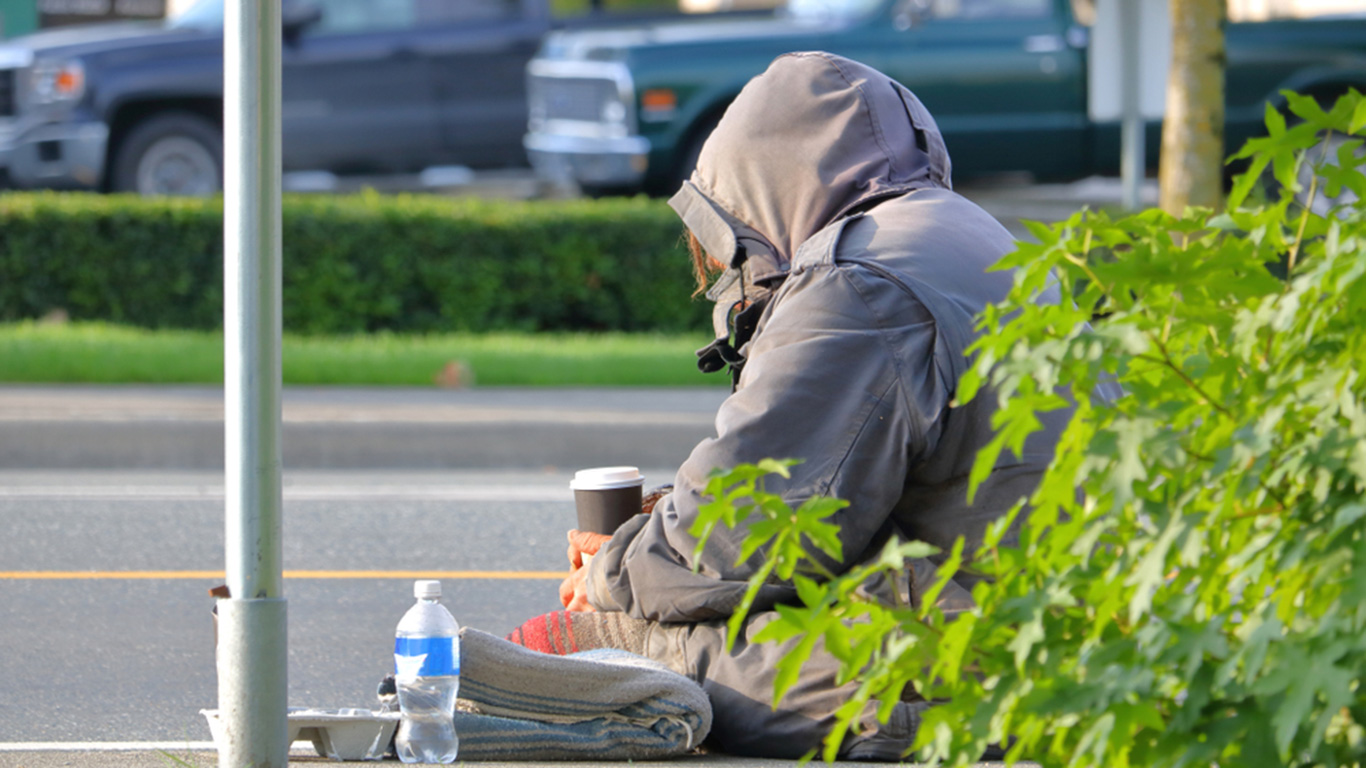
Too many Canadians continue to be homeless, often because of several contributing factors.
A Statistics Canada study released last year estimated that, in 2022, about one in eight households (12.1%) reported experiencing some form of previous homelessness in their lifetime. That rate was more than double the proportion among Indigenous households (27.4%). Forms of homelessness include hidden (those without a permanent address and/or staying temporarily with others), which was the most common form, and visible (unsheltered in public spaces not meant for habitation or emergency sheltered).
Using Canadian Housing Survey (CHS) data, the study examined factors contributing to regaining and maintaining housing.
Financial factors cited most commonly
The study found that, in 2022, almost half of people cited more than one factor that helped them regain and maintain housing, following their most recent sheltered or unsheltered (including streets, alleys, parks and other public places) homelessness experience. Nearly one-quarter cited three or more factors, highlighting the complexity of homelessness.
Financial factors were cited most often, especially income from employment. Access to social services, more affordable housing and non-financial support from family or friends also helped people regain and maintain housing.
Abuse can be a contributing factor to homelessness
There are other factors beyond affordability that can result in various types of homelessness.
In 2024/2025, about 61,500 people resided in shelters for victims of abuse, a form of sheltered homelessness. Most of them were women (57%) and accompanying children (42%).
In addition, almost one-third (32%) of women and nearly one-quarter (24%) of accompanying children residing in shelters on the snapshot date—a predetermined business day selected to represent a typical day of operations for shelters—had a prior history of some form of homelessness, although it is unknown whether that homelessness was because of abuse or other factors.
Affordability: Where are we now?
In the spring of 2025, the Canadian Social Survey found that nearly one in four Canadians (24.1%) reported it being easy or very easy for their household to meet its financial needs, down from nearly one in two Canadians (47.7%) in the summer of 2021.
The CHS found that, in 2024, almost one in four Canadian households (23.2%) lived in housing that was unaffordable to them, up from 22.0% in 2022. Rates were higher for renters (33.7%) than owners (17.4%), a gap that has been stable since the first cycle of this survey in 2018.
In 2024, 690,500 households lived in social and affordable housing (SAH), representing 4.2% of all households, compared with 621,400 households (4.0%) in 2022. There continued to be a demand for further access to SAH, as 301,000 households had at least one member on a SAH waitlist in 2024, of which more than half (59.2%) had been wait-listed for two or more years.
Housing need and suitability
In 2024, CHS data indicated that almost one-tenth (9.1%) of the population was living in core housing need. Rates were higher for Indigenous people, some racialized populations and seniors.
Canada not on track to meet its target for reducing chronic homelessness
More than 39,000 shelter users in Canada experienced chronic homelessness in 2025, up 45.9% from almost 26,900 in 2016, according to data from Housing, Infrastructure and Communities Canada.
This means that there has been a deterioration in progress and movement away from the target of reducing chronic homelessness by 50% from 2016 levels. It is one of the targets in Goal 11 of the Canadian Indicator Framework for the United Nations Sustainable Development Goals, measuring progress towards sustainable cities and communities.
In 2024, the poverty rate was 11.0%, while 5.7% lived in deep-income poverty, which is commonly associated with chronic homelessness. Close to one-third (32.3%) of shelter users experienced chronic homelessness in 2025.
For more information
Visit our Housing Statistics portal and Quality of Life Hub for the latest data and analysis.

Contact information
For more information, contact the Statistical Information Service (toll-free 1-800-263-1136; 514-283-8300; infostats@statcan.gc.ca) or Media Relations (statcan.mediahotline-ligneinfomedias.statcan@statcan.gc.ca).