
On this page
Copyright information
© His Majesty the King in Right of Canada, as represented by the Minister of Industry and Minister responsible for Canada Economic Development for Quebec Regions, 2025
Catalogue Number: 11-628-X2025001
ISSN: 2368-1160
At a glance
This departmental results report details Statistics Canada's actual accomplishments against the plans, priorities and expected results outlined in its 2024-25 Departmental Plan.
Key priorities
Statistics Canada identified the following key priorities for 2024-25:
- Build the next generation of statistical programs and operations.
- Build and adopt a complete enabling infrastructure.
- Shape a healthy, diverse and skilled workforce to meet the current and future needs of Canadians.
These priorities are at the core of all the work carried out across the agency and contribute to ensuring that Statistics Canada remains a world-class statistical office, responsive to changing priorities and data needs.
Highlights for Statistics Canada in 2024-25
- Total actual spending (including internal services): $734,272,655
- Total full-time equivalent staff (including internal services): 6,760
For complete information on Statistics Canada's total spending and human resources, read the Spending and human resources section of its full departmental results report.
Summary of results
The following provides a summary of the results the department achieved in 2024-25 under its main areas of activity, called "core responsibilities."
Core responsibility: Statistical Information
Core responsibility: Statistical Information
- Actual spending (net of respendable revenue): $635,158,874
- Actual full-time equivalent staff: 6,075
Statistics Canada is mandated to produce objective, high-quality statistical information to help Canadians better understand their country and make evidence-based decisions. With more than 450 active surveys and statistical programs, the agency produces trusted, accessible data covering a wide range of topics, including the commercial, industrial, social, economic and environmental aspects of life in Canada. In addition to carrying out its regular activities, the agency continued to innovate and update its economic and social statistics programs in 2024-25—supporting its key priorities while keeping pace with changing technology and evolving data needs—to provide Canadians with relevant information.
In 2024-25, the agency's activities continued to have an impact at home and abroad. The economic statistics program responded to a key emerging issue by launching a webpage featuring information on the socioeconomic relationship between Canada and the United States, and published information on internal trade and labour mobility on the Canadian Internal Trade Data and Information Hub. The social statistics program produced information used to update clinical guidelines on breast cancer screening in Canada. Internationally, Statistics Canada actively contributed to the multi-year update of the 2025 System of National Accounts (the UN-approved standard used to track the country's economic performance), the development of a first-of-its-kind international framework for housing data and the implementation of the Sustainable Development Goals. As a result of these activities, Statistics Canada surpassed its targets for 8 out of the 11 departmental result indicators related to making relevant data available to Canadians.
Statistics Canada continued to modernize its statistical processes by updating the collection and estimation methods used in social surveys, as well as its dissemination system. The agency also invested in new technologies—such as a cutting-edge, open-source platform for managing cloud-based data processing—and developed a machine learning-powered chatbot that will provide 2026 Census respondents with answers to frequently asked questions. These efforts are backed by the agency's new artificial intelligence (AI) and updated cloud strategies. The investments in infrastructure will create a more agile agency that operates more rapidly and efficiently in a data-driven world, delivering deeper insights for Canadians.
In addition to investing in its infrastructure, Statistics Canada focused on ensuring that its employees have the resources and skills they need to meet the current and future data needs of Canadians. The agency continued to implement its multi-year Equity, Diversity and Inclusion (EDI) Action Plan, which increased representation beyond targets for all employment equity groups. The agency also updated its training programs to build the knowledge base and competencies required to meet evolving data needs, identified and addressed accessibility barriers in consultation with employees and bargaining agents, and produced toolkits for managers to support employee wellness.
For more information on Statistics Canada's statistical information read the Results – what we achieved section of its departmental results report.
From the Minister

It is our pleasure to present the 2024–25 Departmental Results Report for Statistics Canada.
In a time characterized by continual and rapid social, economic, and environmental change, reliable data remain crucial for governments, businesses, and communities to make informed choices.
This past year, Statistics Canada focused on strengthening its statistical programs, enhancing data accessibility, and supplying Canadians with key insights to navigate new and evolving circumstances. The agency produced high-quality information in areas that matter most to Canadians, such as affordability, housing, health, and climate, providing the foundation for policy and decision-making, effective public programs, and transparent governance. In addition, the agency's leadership in data stewardship, privacy, and statistical standards continued to guide domestic partners and the international data community in the consistent use of effective and ethical practices.
As Canada moves forward in an increasingly digital and interconnected world, Statistics Canada remains committed to innovation, collaboration, and inclusion. The agency continues to modernize statistical programs and infrastructure, to expand data and increase their availability. These efforts ensure that decision-makers across the country have access to the insights they need to foster economic growth, protect public well-being, and reflect the diversity of our society.
We invite you to read this report to learn more about how the Innovation, Science and Economic Development Portfolio is working with Canadians of all backgrounds and in all regions—urban and rural—to position Canada as a leader in the global economy.
The Honourable Mélanie Joly
Minister of Industry and Minister responsible for Canada Economic Development for Quebec Regions
From the Chief Statistician

I am pleased to present the 2024-25 Departmental Results Report for Statistics Canada, highlighting a year marked by transformation, innovation and collaboration.
As Canada's national statistical office, Statistics Canada is dedicated to delivering critical, objective and high-quality data that support informed decision making. In an increasingly complex and rapidly evolving world, the agency's work helps Canadians to better understand the economic, social and environmental factors shaping their lives. For researchers, policy makers, small businesses and communities alike, Statistics Canada's data and insights remain a trusted and essential resource nationwide.
This past year, the agency made significant progress in advancing its modernization journey through its three strategic priorities:
- building the next generation of statistical programs and operations
- building and adopting a complete enabling infrastructure
- shaping a healthy, diverse, and skilled workforce to meet the current and future needs of Canadians.
These priorities not only guided the agency's activities in 2024-25 but also shaped the planned initiatives for the 2025-26 Departmental Plan. Focusing on these strategic priorities will ensure that the agency continues to respond and adapt to emerging needs and a changing context.
In 2024-25, Statistics Canada continued to innovate across all program areas to provide essential data that support Canada's evolving needs. The agency launched a new webpage highlighting Canada-U.S. socioeconomic relations and introduced the Canadian Internal Trade Data and Information Hub to enhance transparency in labour mobility and trade. The agency expanded access to critical social data through several initiatives, including an interactive tool that explores how Canadians spend their time and statistical information used to update clinical guidelines on breast cancer screening. On the international scene, the agency also led the development of a measurement framework on housing data, encompassing the social, economic and environmental aspects of housing. Statistics Canada's efforts in tracking the adoption of digital health tools and collecting workforce statistics for health care practitioners have generated valuable insights to inform future policy decisions.
The growth of innovative approaches in methodology and dissemination has been equally important to the agency's progress. Statistics Canada modernized its social survey collection and estimation methods, and upgraded its publishing platform to enhance the efficiency, accessibility and usability of its data. Additionally, the introduction of a new open-source, cloud-based data processing platform has strengthened the agency's ability to manage complex datasets efficiently and securely. Preparations for the 2026 Census advanced through the exploration of emerging technologies used to power a chatbot to assist respondents and the transition to the cloud, which will allow for the processing of large volumes of data during peak collection periods. The agency also developed an agency-wide artificial intelligence strategy to stay at the forefront of innovation and updated its cloud strategy to guide the ongoing integration of cloud technologies into its operations.
At the heart of these achievements is the workforce. Statistics Canada continued to invest in its employees by providing tools and training, advancing equity and inclusion, and fostering a supportive environment that promotes both excellence and well-being. Initiatives included implementing new accessibility measures, updating training programs to address emerging needs, and equipping leaders with resources to foster mental health and encourage workplace flexibility.
As Canada faces ongoing economic transformation, climate change and population growth, the demand for timely, relevant, and trustworthy data has never been greater. Statistics Canada remains dedicated to meeting this demand with agility and integrity, and by innovating its programs, operations, infrastructure and workforce. Central to this commitment is the protection of Canadians' privacy and data security. Through robust governance frameworks and resources such as Statistics Canada's Trust Centre, the agency ensures transparency, accountability, and the continued confidence of the public it serves.
I would like to acknowledge the invaluable guidance of the Canadian Statistics Advisory Council, whose advice strengthens Canada's national statistical system. I also extend sincere thanks to the many partners, collaborators and advisory groups who support the agency in maintaining its status as a leading national statistics organization.
With trusted data as our foundation, we will continue to build a more inclusive, resilient and informed Canada for all.
André Loranger
Chief Statistician of Canada
Results – what we achieved
Core responsibilities and internal services
Core responsibility: Statistical Information
In this section
Description
Statistics Canada's core responsibility is to produce objective, high-quality statistical information for the whole of Canada. The statistical information produced relates to the commercial, industrial, financial, social, economic, environmental and general activities and conditions of the people of Canada.
The role of Statistics Canada as Canada's national statistical agency
As Canada's national statistical office, Statistics Canada is required by the Statistics Act to produce statistics for Canada at the national level and for its provinces and territories. With more than 450 active surveys and statistical programs, the agency produces high-quality, accessible and trusted data and statistical insights. These insights help Canadians deepen their understanding of changes and emerging issues related to the country's population, environment, economy, society and culture, and support evidence-based decision making.
Among these programs, the Census of Population, the Census of Agriculture, the System of National Accounts (SNA), the Consumer Price Index (CPI) and the Labour Force Survey (LFS) are of particular significance, providing key insights into population, economic activity, prices and employment. These programs are critical tools for developing effective labour, fiscal and monetary policies, which impact the everyday lives of Canadians. The information produced informs decisions ranging from the placement of new daycare centres, schools and retirement residences to the setting of interest rates.
Census Programs: Statistics Canada is legally required to conduct the Census of Population every five years, with the next census planned for 2026. The Census provides a comprehensive statistical portrait of Canada and its people at a granular geographic level. It covers a wide range of demographic, social and economic characteristics, including data on specific groups such as immigrants, seniors, language and ethnic communities, and First Nations people, Métis and Inuit.
Accurate population counts are required by several laws and programs and are used by all levels of government. Census data are used to develop fiscal policies and funding arrangements and to assess their economic impacts at the individual level. In addition, Census of Population data help define federal electoral districts every 10 years and play a critical role in the constitutional amending formula. As such, Census data are essential for effective planning and policy decisions across all communities and are foundational to Canadian democracy.
Conducted every five years under the Statistics Act, the Census of Agriculture provides a comprehensive picture of the physical, economic, social and environmental dimensions of Canada's agricultural sector. The program collects data on Canada's agriculture sector, including the number of farms and farm operators, farm area, land management practices, types and quantities of agricultural commodities, and total operating expenses and revenues. The resulting data support the economic growth, recovery and sustainability of agricultural businesses. They also inform business planning and support the development and evaluation of agricultural policies that directly affect farmers and rural communities.
System of National Accounts: The Canadian SNA (CSNA) is a comprehensive set of economic statistics based on an internationally agreed-upon framework. It measures the overall performance of the Canadian economy by tracking the production and sale of goods and services, the financial transactions that support them, and the wealth they generate.
The CSNA produces valuable data on the performance of the Canadian economy, including gross domestic product (GDP), national saving, national net worth and household disposable income. As the principal indicator of economic performance, GDP estimates—along with related components such as consumption, investment, saving and sectoral transactions—play a central role in understanding Canada's macroeconomic conditions. These data are used to inform monetary policy and appear in financial stability reports. Elements of the CSNA also contribute to revenue allocation formulas for programs such as the harmonized sales tax and the federal-provincial Equalization Program.
Consumer Price Index: Statistics Canada produces inflation estimates through the CPI, which measures monthly changes in the cost of a representative basket of goods and services. This basket reflects the spending habits of the average Canadian household, and changes in the price of the basket serve as a key indicator of price stability.
The Bank of Canada uses inflation estimates to set interest rates, governments rely on them to adjust policies and benefits, and businesses use them to inform pricing and planning. For individuals, inflation affects daily life—shaping wage adjustments, pension increases, rent agreements, and the real value of savings and loans. By tracking inflation, people and policy makers can make informed financial decisions that protect the purchasing power of Canadians and support long-term economic security.
- Labour Force Survey: The LFS is the cornerstone of Canada's labour market information system. Conducted monthly since 1945, it provides the official unemployment rate and tracks short-term changes in employment, labour shifts across industries, hours worked and labour force participation. These data offer critical insights into labour market conditions that inform job creation strategies, education and training programs, retirement planning, and income support policies.
In addition to the programs noted above, Statistics Canada conducts a range of statistical initiatives related to the economic and social aspects of Canada, including agriculture; construction; energy; manufacturing; mining; science and technology; transportation; trade; travel; environment; crime and justice; education, health; training and learning; and Indigenous people. These initiatives contribute to our understanding of activities that reflect Canada's economic and social diversity, such as housing supply, participation in learning opportunities, energy use and more.
The Federal-Provincial Fiscal Arrangements Act
Statistics Canada provides data and analyses for many important integrated and comprehensive activities across the country. For instance, Statistics Canada plays a critical role in the allocation of nearly $100 billion in federal financial support for social programs and public services under the Federal-Provincial Fiscal Arrangements Act. The agency supplies the data on population, government revenues, tax bases and economic indicators that underpin the calculation of these transfer payments to the provinces and territories.
Statistical standards and practices
Statistical standards provide essential guidelines for collecting, producing and publishing data. Statistics Canada—aligned with the United Nations' Fundamental Principles of Official Statistics (PDF)—adheres to internationally recognized standards to ensure its data are produced using impartial methods and result in clearly defined, unbiased information for decision making. These standards help the agency deliver consistent, coherent information on Canada's economy, society and environment over time.
In 2024-25, Statistics Canada reinforced its commitment to high-quality statistical practices by leading the 2023–2026 Data Strategy for the Federal Public Service. This strategy promotes sound data stewardship across the federal government, supporting the secure, ethical and effective use of data. This work enables the development of evidence-based policies and the delivery of inclusive, equitable, and effective programs and services for Canadians.
As a world-leading national statistical office, Statistics Canada made significant contributions to the international statistical system by
- participating in nearly 200 committees and working groups, including as co-chair of the United Nations Network of Economic Statisticians and chair of the United Nations Committee of Experts on Environmental-Economic Accounting
- actively contributing to the multi-year update of the 2025 SNA and the seventh edition of the Balance of Payments and International Investment Position Manual—which were formally adopted in 2025 at the United Nations Statistical Commission.
- leading as vice-chair, the Bureau of the Conference of European Statisticians, a small group of Chief Statisticians, which advises the United Nations Economic Commission for Europe on statistical priorities, to advance the modernization of official statistics in collaboration with like-minded national statistical offices.
By participating in the development of international standards and statistical classifications, Statistics Canada promotes Canadian values and priorities within these standards. Our participation also ensures consistency across statistical offices, enabling the comparability of international data. This allows Canadians to better measure and understand the international economic, social and environmental issues that shape their lives.
Statistical modernization journey
Statistics Canada continued to advance its modernization agenda to better respond to the evolving data needs of Canadians in a timely and effective manner. The initiative is anchored in three strategic priorities:
- Building the next generation of statistical programs and operations—this includes using advanced methodologies to analyze data and combining existing datasets to create new analytical insights without needing to collect more data.
- Building and adopting a complete enabling infrastructure—this includes implementing modern data storage and data management tools and making better use of cloud technology.
- Shaping a healthy, diverse and skilled workforce to meet the current and future needs of Canadians—this includes creating an inclusive, equitable and respectful workplace and investing in employees' skills.
These priorities guided the agency's new and ongoing projects throughout the year, with the aim of maintaining the relevance of its products and services amid rapidly changing priorities and needs, while increasing its agility and cost-effectiveness.
Quality of life impacts
Statistics Canada plays a key role in providing high-quality, timely data on quality of life in Canada. These data support other departments in planning their activities and reporting on quality of life outcomes. The agency's core responsibility—to provide high-quality statistical information for the whole of Canada—also contributes to the "Good governance" domain of the Quality of Life Framework for Canada and, more specifically, to "Confidence in institutions."
In 2024-25, Statistics Canada conducted and published its first Biennial Review of the Quality of Life Indicators, documenting the performance of the Quality of Life Hub over its first two years and outlining a plan to complete the framework's development. As part of this work, the agency
- published clear definitions for key quality of life concepts
- developed a schedule for future data releases
- improved disaggregation of quality of life indicators by geography.
The agency also continued to modernize the Quality of Life Hub, ensuring that it remains a one-stop shop for policy makers seeking the latest data and insights on quality of life in Canada.
Progress on results
This section details the department's performance against its targets for each departmental result under Core responsibility: Statistical information.
Table 1: High-quality statistical information is available to Canadians
Table 1 shows the target, the date to achieve the target and the actual result for each indicator under high-quality statistical information is available to Canadians in the last three fiscal years.
| Departmental Result Indicators | Target | Date to achieve target | Actual Results |
|---|---|---|---|
| Number of post-release corrections due to accuracy for mission critical programs | 0 | March 31, 2025 |
|
| Percentage of international standards with which Statistics Canada conforms | 90% | March 31, 2025 |
|
| Number of statistical products available on the website | 51,750 | March 31, 2025 |
|
| Number of Statistics Canada data tables available on the Open Data Portal | 9,315 | March 31, 2025 |
|
| |||
Table 2: High-quality statistical information is accessed by Canadians
Table 2 shows the target, the date to achieve the target and the actual result for each indicator under high-quality statistical information is accessed by Canadians in the last three fiscal years.
| Departmental Result Indicators | Target | Date to achieve target | Actual Results |
|---|---|---|---|
| Number of visits to Statistics Canada website | 24,000,000 | March 31, 2025 |
|
| Number of hits on Statistics Canada's Application Programming Interface (API) | 10,802,520 | March 31, 2025 |
|
| Percentage of website visitors that found what they were looking for | 78% | March 31, 2025 |
|
| Number of interactions on social media | 525,000 | March 31, 2025 |
|
| |||
Table 3: High-quality statistical information is relevant to Canadians
Table 3 shows the target, the date to achieve the target and the actual result for each indicator under high-quality statistical information is relevant to Canadians in the last three fiscal years.
| Departmental Result Indicators | Target | Date to achieve target | Actual Results |
|---|---|---|---|
| Number of media citations on Statistics Canada data | 86,000 | March 31, 2025 |
|
| Number of journal citations | 38,000 | March 31, 2025 |
|
| Percentage of users satisfied with statistical information | 80% | March 31, 2025 |
|
| |||
The Results section of the Infographic for Statistics Canada on GC Infobase provides additional information on results and performance related to its program inventory.
Details on results
The following section describes the results for statistical information in 2024–25 compared with the planned results set out in Statistics Canada's departmental plan for the year.
Results achieved
In 2024-25, Statistics Canada continued to adapt and modernize its statistical programs to ensure the delivery of high-quality, timely and relevant data that reflect the evolving needs of Canadians. The agency advanced preparations for the 2026 Census of Population and Census of Agriculture, while also enhancing its economic and social statistics programs to improve responsiveness and policy relevance. The following section highlights
- preparations for the 2026 Census
- advances in economic statistics
- advances in social statistics.
Preparations for the 2026 Census
Preparations for the 2026 Census
In 2024-25, Statistics Canada undertook significant preparations to ensure the successful delivery of the 2026 Census of Population and Census of Agriculture, maintaining its commitment to high-quality, relevant data for Canadians.
- Census of Population: Statistics Canada conducted a mandatory census test with a sample of 222,000 households across the country. This test assessed whether proposed new or revised questions—designed to better address emerging issues—were clearly understood and could be answered accurately. The proposed content was then submitted to cabinet for approval. Final preparations also began on the collection systems and procedures that will be used during the 2026 Census.
- Census of Agriculture: In May 2024, Statistics Canada conducted a voluntary test with a sample of 10,000 farm operations nationwide. The test evaluated the clarity and accuracy of revised questions, as well as the integration of alternative data sources to help reduce response burden. It also assessed the processing capacity for the anticipated volume of responses. On November 27, 2024, the agency published the Census of Agriculture Content Consultation Report, 2026, which summarized stakeholder feedback on emerging data needs and priorities.
Advances in economic statistics
Advances in economic statistics
Economic statistics play a crucial role in Canadian society by providing clear, reliable information about the health of the nation's economy. Statistics Canada administers a comprehensive economic statistics program, offering insights into nearly every facet of Canada's economy. In addition to producing key economic indicators such as GDP and CPI, the agency reports on various sectors of the Canadian economy such as mining, manufacturing, agricultural production, retail trade and services.
In 2024-25, Statistics Canada continued to respond to emerging issues with timely, innovative and relevant data products. These efforts supported Canadians, businesses and policy makers in understanding and making informed decisions on
- the economic relationship between Canada and the United States
- the adoption of emerging technologies
- affordability
- internal trade
- labour productivity.
1. The economic relationship between Canada and the United States
Trade barriers introduced in 2025 between Canada and the United States generated significant interest from Canadians wanting to better understand their economic impact. In response, Statistics Canada released a series of resources, including educational content on understanding the Canadian international merchandise trade balance and new perspectives on country attribution in Canadian international merchandise trade statistics. To support ongoing engagement, the agency also launched a dedicated web page—Focus on Canada and the United States—bringing together the latest data and insights on this critical bilateral relationship. Notably, Statistics Canada responded to 76% more trade-related inquiries in 2024–25 compared to the previous year, highlighting its commitment to meeting Canadians' growing information needs on this topic.
2. The adoption of emerging technologies
Technological developments such as artificial intelligence (AI), quantum computing, cyber security and clean technology are reshaping Canada's economy and society. They are creating opportunities for innovation, productivity and growth. To better understand these changes, Statistics Canada developed the Technology Measurement Framework, which will guide future data development and analysis.
In 2024-25, the agency released several analytical products on innovation and technology adoption by Canadian businesses, including on
- Canadian business contributions to emerging technologies
- the impact of cybercrime on Canadian businesses
- the use of AI by businesses in Canada
- exposure to AI in Canadian jobs.
3. Affordability
Affordability remained a top concern for Canadians in 2024-25, particularly in the context of inflation. Statistics Canada produces a variety of data to inform different aspects of affordability such as the CPI, the Distribution of Household Economic Accounts (DHEA) and Producer Price Indexes (PPI).
- The Consumer Price Index: The CPI plays a key role in helping Canadians and policy makers understand how prices are changing and which goods and services are driving affordability challenges. To ensure the CPI reflects current consumer behaviour, the agency updates the CPI basket annually. In 2024-25, Statistics Canada conducted a range of outreach activities, including podcasts, Reddit Ask Me Anything events and presentations, to help educate the public about the CPI and inflation. The agency also maintained and promoted several online tools to help Canadians understand how inflation affects them. The Personal Inflation Calculator is an interactive tool that allows users to explore their personal rate of inflation based on their spending habits, while the Food Price Data Hub serves as a central source of information on food prices in Canada.
- The Distribution of Household Economic Accounts: The DHEA offer a detailed view of the financial health of Canadian households, producing quarterly estimates of household income, consumption, saving and wealth by province and territory, and various sociodemographic characteristics. These data help users better understand income inequality and the financial pressures faced by different types of households. The agency also continued to update the Distributions of Household Economic Accounts, Wealth: Interactive tool, enabling users to explore the distribution of various types of wealth by different demographic characteristics.
- Producer Price Indexes: PPI offer a unique perspective on inflation by tracking price changes from the producer's point of view, helping businesses make informed financial decisions. Statistics Canada produces a number of PPI, such as the Building Construction Price Index and the Raw Materials Price Index. In October 2024, the agency increased the frequency of the Machinery and Equipment Price Index from quarterly to monthly, providing more frequent and timely data to support decision making. The agency also continued to provide comprehensive data and analysis through the Producer Price Indexes Portal.
4. Internal Trade
In the wake of the COVID-19 pandemic and ongoing international trade challenges, issues related to supply chain integrity and internal trade have gained importance across Canada. In 2024-25, Statistics Canada partnered with several federal departments to produce data and analysis that support key priorities in these areas.
- Internal trade data strategy: As part of the Federal Action Plan to Strengthen Internal Trade, Statistics Canada partnered with the Privy Council Office to launch the Canadian Internal Trade Data and Information Hub (CITH) in April 2024. The CITH provides precise and reliable information on labour mobility, internal trade, and the challenges businesses face when operating across provincial and territorial lines. Key features of the CITH include
- an interactive data platform that allows provinces, businesses and business associations to upload and integrate their data with existing CITH datasets
- insights from the Canadian Survey on Interprovincial Trade, highlighting the barriers businesses face when engaging in interprovincial commerce and hiring individuals with out-of-province certifications or licences.
- Strengthening supply chain statistics: To address concerns related to supply chain disruptions—such as shortages of inputs,port congestion and extreme weather events—Statistics Canada collaborated with Transport Canada as part of a five-year plan to enhance transportation supply chain data. Key developments in 2024-25 included
- enhanced information on origin-destination commodity flows
- the Survey of Marine Vessel Operators, which closed a 15-year data gap in financial and operational information for this industry
- the revised Canadian Transportation Economic Account, which now includes own-account transportation services—transportation services performed by households and companies in non-transportation industries to support their own activities
- progress on a new Supply Chain Services Price Index, scheduled for release in 2025-26
- a proof of concept for a Supply Chain Resiliency Index.
5. Labour productivity
Labour productivity—a measure of the value produced by workers per hour—impacts a nation's economic growth, living standards and international competitiveness. Statistics Canada's quarterly labour productivity program provides estimates of labour productivity and labour costs for the Canadian business sector, broken down by sector and selected industry groups. In June 2024, the agency released Labour productivity measurement at Statistics Canada, which summarizes the labour productivity data currently published by Statistics Canada. This publication is a valuable resource for anyone seeking to monitor, analyze and interpret trends in Canadian labour productivity.
Advances in social statistics
Advances in social statistics
Statistics Canada's social statistics programs deliver vital information on demographics, health, education, employment and other key areas that affect the everyday lives of Canadians. The agency is committed to continually improving these programs to keep pace with the changing needs of society. In 2024-25, efforts focused on
- addressing housing affordability
- informing health care
- supporting the well-being of Canadians
- leveraging disaggregated data
- understanding immigration trends.
1. Addressing housing affordability
Housing affordability remains a top concern for Canadians and all levels of government. In 2024-25, Statistics Canada
- collaborated with Housing, Infrastructure and Communities Canada (formerly Infrastructure Canada) to enhance information on the housing stock and the pace of home construction
- partnered with the Canada Mortgage and Housing Corporation to conduct the Canadian Housing Survey, gathering data on topics such as housing affordability, housing aspirations, forced moves and experiences of homelessness
- contributed to the creation of the first international framework for housing statistics, led by the United Nations Statistical Commission; the new framework covers the social, economic and environmental aspects of housing, and will support the development of internationally comparable housing statistics to inform a multifaceted response to housing challenges.
2. Informing health care
Improving health care and health outcomes remains a top priority for Canadians. Statistics Canada supports these efforts by providing timely, high-quality data to inform policy, service delivery and public understanding. In 2024-25, the agency contributed to several health-related initiatives, including updates to breast cancer screening guidelines, the expansion of data on digital health tools, and more frequent reporting on the health and well-being of children and youth.
- Collaborative research on breast cancer in Canada: Statistics Canada supported the Canadian Task Force on Preventive Health Care in reviewing and updating its 2018 breast cancer screening guidelines. In collaboration with researchers from the University of Ottawa, the agency published the article Breast cancer incidence and mortality, by age, stage and molecular subtypes, by race/ethnicity in Canada. The findings informed the draft guidelines released in May 2024 and made a significant contribution to the academic literature and clinical practice. The agency also completed four additional research projects exploring disparities in breast cancer incidence, screening participation and survival.
- Digital health tools and improving health workforce indicators: Understanding how digital technologies are adopted and how the health workforce is evolving is essential to improving access to care. Statistics Canada conducted the Survey on the Use of Digital Technologies by Health Care Providers, which measured the adoption of digital tools and the digital literacy of health care providers. Additional questions on the Canadian Community Health Survey and the Canadian Health Survey on Children and Youth (CHSCY) examined Canadians' access to electronic health records and digital health literacy. The agency also produced statistics and analyses on workforce dynamics, including entry and exit patterns among nurses, nurse practitioners and family physicians.
The Canadian Health Survey on Children and Youth: Statistics Canada continued to enhance the CHSCY in support of the federal Working Together Plan, which aims to strengthen collaboration with provinces and territories on shared health priorities. With new funding in place through 2027-28, the agency increased the frequency of the CHSCY from an occasional to an annual cycle.
In 2024-25, the survey was reviewed and updated in consultation with federal, provincial and territorial partners, as well as researchers, to ensure it continued to meet evolving data needs. It collected detailed information on topics such as chronic conditions, mental health, unmet care needs, access to primary care, substance use and child maltreatment. Results are available at the national, provincial and territorial levels, supporting a clearer understanding of health trends and disparities affecting children and youth.
3. Supporting the well-being of Canadians
Statistics Canada's programs and initiatives address many of the underlying factors that contribute to the well-being of individuals and communities across Canada. In 2024-25, the agency advanced work in several areas, including safety, outcomes in the justice system, adult competencies, fire-related deaths and more.
- Safety in public and private spaces: Statistics Canada launched data collection for the second cycle of the Survey of Safety in Public and Private Spaces. Data from this survey contribute to a deeper understanding of gender-based violence in Canada. They also support the federal Gender-based Violence Strategy, which aims to prevent gender-based violence; support victims, survivors and their families; and promote a responsive justice system.
Outcomes in the justice system: Statistics Canada worked in partnership with Public Safety Canada (PSC) and the Department of Justice Canada to improve understanding of access to justice; judicial outcomes for Indigenous, Black and other racialized groups; and pathways through the criminal justice system. This work aims to promote greater fairness and improve outcomes for all Canadians.
In June 2024, the agency released the Criminal Justice Relational Database through the Canadian Research Data Centre Network in collaboration with PSC. This marked the first time integrated, anonymized, national-level criminal justice data were made available in Canada. The database links criminal justice and social data sources, enabling analyses of demographic and socioeconomic factors associated with recontact with the criminal justice system.
Additionally, in partnership with the Department of Justice Canada, the agency analyzed differences in adult criminal court outcomes between Indigenous and White accused, examining the extent to which outcomes differ between these groups.
- Assessment of adult competencies: The Programme for the International Assessment of Adult Competencies (PIAAC) is an initiative of the Organisation for Economic Co-operation and Development designed to assess key adult skills. Statistics Canada conducted the PIAAC in partnership with Employment and Social Development Canada and the Council of Ministers of Education, Canada. The results provide insights into workforce readiness, economic growth and social inclusion. The agency released data on the literacy, numeracy and adaptive problem-solving skills of Canadian adults, along with a public use microdata file to support further research and analysis.
Fire-related deaths among Indigenous people: In Canada, fire-related mortality and morbidity are significantly higher among Indigenous people compared with non-Indigenous people. Statistics Canada collaborated with the National Indigenous Fire Safety Council to better understand the factors contributing to this disparity. The agency published Circumstances surrounding fire-related deaths among Indigenous people in Canada, 2011 to 2020. This article provides valuable insights to support community-led efforts to develop effective and culturally relevant fire safety strategies—both for today and for future generations.
The National Indigenous Fire Prevention Leadership Award
Statistics Canada received the National Indigenous Fire Prevention Leadership Award in recognition of its collaboration with the National Indigenous Fire Safety Council. As part of this honour, the agency was gifted an eagle feather—a profound symbol of respect and trust among Indigenous people and a meaningful acknowledgment of the agency's ongoing journey and contributions in support of Indigenous communities.
4. Leveraging disaggregated data
Disaggregated data help uncover variations across regions and population groups, offering a more detailed understanding of Canadians' diverse lived experiences. As part of the Disaggregated Data Action Plan (DDAP), Statistics Canada produces data that are broken down for smaller geographic areas and for subpopulations such as women, Indigenous people, racialized populations and persons with disabilities. These data enable more precise, inclusive, and evidence-based policy and program development.
Implementing the Disaggregated Data Action Plan: Data produced under the DDAP support national efforts to address gender gaps, racism and other systemic barriers. In 2024-25, Statistics Canada collaborated with the Treasury Board of Canada Secretariat to establish new Government of Canada data reference standards for gender and sex at birth, helping improve data consistency and inclusivity across departments.
Key releases under the DDAP in 2024-25 included
- the Disaggregated Data Action Plan Accomplishments Report 2023-2024: An Evolving Mosaic, showcasing the breadth of work the agency has undertaken in providing detailed data to derive insights on diverse population groups in Canada
- data from the Survey Series on People and their Communities, supporting analysis on topics such as discrimination and racism in sports and the impact of the rising cost of living on immigrants
- The Diversity of the Black Populations in Canada, 2021: A Sociodemographic Portrait—the first of a portrait series developed to inform Canada's Anti-Racism Strategy.
Leveraging disaggregated data to address social issues: In 2024-25, Statistics Canada released disaggregated data to inform a range of social issues. The agency launched the Survey Series on Accessibility (SSA) to support the Federal Data and Measurement Strategy for Accessibility, which aims to identify, remove and prevent barriers to accessibility in Canada. Several analytical products were released based on SSA data, including an interactive dashboard, analytical reports and a sign language video highlighting results from the SSA.
The agency also published results from the 2022 Time Use Survey, providing insights into well-being, the impact of telework on daily routines and how parents share child care responsibilities. These data were used to create a new interactive tool that allows users to explore how people spend their time. Additionally, Statistics Canada conducted the 2024 Survey on Family Transitions, which explores how Canadian families navigate key life stages and transitions.
Small area estimates of labour force characteristics: The LFS traditionally produces employment and labour force estimates for various geographic areas across Canada by weighting survey responses. However, in small communities and rural areas, these estimates can be imprecise because of limited sample sizes.
As part of the DDAP, Statistics Canada developed a small area estimation methodology to produce more reliable estimates in areas with small sample sizes. This method uses modelling techniques that combine LFS data with Employment Insurance statistics and demographic population projections to produce more accurate estimates of employment and unemployment in areas where the LFS sample sizes are too small for direct estimation.
5. Understanding immigration trends
Statistics Canada produces data on non-permanent residents (NPRs) to better understand the impacts of immigration on Canada's population, society and economy. This work is carried out in partnership with Immigration, Refugees and Citizenship Canada (IRCC), which provides key administrative data. In 2024-25, the agency released a new data table on NPRs—developed with IRCC—based on an updated methodology. Improvements were also made to the data and concepts related to asylum claimants, enhancing the overall quality and reliability of demographic estimates. Additionally, Statistics Canada provided projection scenarios to IRCC to support evidence-based decisions related to Canada's immigration plan, including considerations related to francophone immigration.
Key risks
Proactive risk monitoring enables Statistics Canada to stay alert to changes in its environment that could affect its performance. Early risk identification enables swift, strategic responses that minimize the impact on the agency's operations and Canadians' trust. In 2024-25, the agency addressed risks and strengthened its resilience by modernizing its infrastructure, adopting new technologies and investing in employee training.
Statistics Canada identified the following corporate risks for 2024-25:
- Public trust: Maintaining public trust is essential for Statistics Canada to ensure that Canadians continue to share their information and rely on the agency as the source of official statistics. The agency fosters trust by upholding scientific integrity and ethical standards, communicating transparently through its Trust Centre, and proactively disclosing error corrections. It also continually enhances its infrastructure and methodologies to better serve Canadians with reliable, high-quality statistics.
- Organizational resilience: Organizational resilience involves retaining a competent, expert workforce and maintaining a functioning physical and digital workspace. In 2024-25, the agency addressed the following two aspects of this risk:
- Empowering workforce excellence: Statistics Canada fostered a positive work environment by continuing to invest in employee learning, upskilling and well-being.
- Operational resiliency: The agency invested in updated physical and digital infrastructure, creating modern workspaces and equipping employees with new, high-performing technologies to support innovation.
- Privacy and confidentiality: Maintaining privacy and confidentiality is a top priority for Statistics Canada given the sensitive data entrusted to the agency. The agency used its cloud infrastructure to implement advanced access controls and promoted the use of de-identified data for analysis, further strengthening data security.
- Financial management: Effective budget management is essential for Statistics Canada to sustain the statistical programs Canadians rely on. The agency ensured prudent financial oversight by providing managerial training and aligning investments with strategic priorities. It also leveraged cutting-edge technologies to increase productivity and deliver additional insights to data users without incurring additional costs.
- Relevance: To remain relevant, Statistics Canada must adapt to Canadians' evolving needs. In 2024-25, the agency responded to emerging data needs on international trade, housing affordability and health care by introducing innovative methods to generate new data insights. It also developed new products to effectively communicate these insights to the public.
- Accuracy: Statistics Canada is modernizing its programs by leveraging new data sources and technologies. To maintain data accuracy and public confidence, all new methods introduced in 2024-25 were tested before implementation. The agency also continued to track, investigate and communicate published errors, thereby enhancing trust in the statistical system.
Resources required to achieve results
Table 4: Snapshot of resources required for Statistical Information
Table 4 provides a summary of the planned and actual spending and full-time equivalents required to achieve results.
| Resource | Planned | Actual |
|---|---|---|
| Spending (net of respendable revenue) | 654,143,413 | 635,158,874 |
| Full-time equivalents | 6,228 | 6,075 |
The Finances section of the Infographic for Statistics Canada on GC Infobase and the People section of the Infographic for Statistics Canada on GC Infobase complete financial and human resources information related to its program inventory.
Related government priorities
This section highlights government priorities that are being addressed through this core responsibility.
Gender-based Analysis Plus
Gender-based Analysis Plus
In 2024-25, Statistics Canada continued to integrate the Government of Canada's Gender-based Analysis Plus (GBA Plus) approach within statistical programs and products, using disaggregated data to reflect the diverse experiences of Canadians. The agency's data and analyses informed a number of initiatives including the Federal 2SLGBTQI+ Action Plan, Canada's Anti-Racism Strategy and the National Action Plan to End Gender-Based Violence. Results were regularly released through the Gender, Diversity and Inclusion Statistics Hub. In addition, information on persons with disabilities was made available in the Accessibility Statistics Hub. Statistics Canada also published quarterly indicators on hate crime in Canada and used a GBA Plus lens to release analytical products on
- The poverty rate and low-income situation of older persons in Canada: An intersectional analysis
- Contraception use among sexually active women wanting to avoid pregnancy
- Closing the gap? Assessing the labour market outcomes of unpartnered mothers in Canada
- Family and household characteristics of 2SLGBTQ+ people in Canada
- The role of the Canada Emergency Response Benefit in alleviating the impact of the COVID-19 pandemic on the employment income of racialized workers
- Sources of income of racialized individuals 65 years and over in Canada, 2020.
United Nations 2030 Agenda for Sustainable Development and the Sustainable Development Goals
United Nations 2030 Agenda for Sustainable Development and the Sustainable Development Goals
In 2024-25, Statistics Canada continued to play a key role in helping Canada implement the 2030 Agenda for Sustainable Development and the Sustainable Development Goals (SDGs). The agency supported international efforts to advance the SDG agenda through its participation in the Inter-agency and Expert Group on SDG Indicators and as a member of the United Nations Economic Commission for Europe (UNECE). These contributions helped shape the revised Global Indicator Framework for the SDGs and supported their implementation in UNECE countries.
Statistics Canada continued to report on the Global Indicator Framework and the Canadian Indicator Framework. The agency published Canada's data on the Sustainable Development Goals to the interactive Open SDG platform, making more disaggregated data and additional years of data available to users. The agency also improved its measure of progress toward SDG achievement by adopting a new model that more accurately reflects meaningful progress, even when achievement levels are already high. The agency demonstrated leadership by supporting the implementation of the updated progress measure on the Open SDG platform, making it available to all users.
More information on Statistics Canada's contributions to Canada's Federal Implementation Plan on the 2030 Agenda and the Federal Sustainable Development Strategy can be found in our Departmental Sustainable Development Strategy.
Innovation
Innovation
In today's rapidly evolving world, there is a growing abundance of available data coupled with rising privacy concerns. Innovation enables the agency to leverage new types of data and produce more information with fewer resources, while ensuring Canadians' data remain private, secure and confidential. In 2024-25, the agency focused its innovation efforts on
- modernizing statistical processes
- promoting data-driven processes
- enhancing cloud-enabled services
- leveraging AI and machine learning
- strengthening cyber security and privacy.
These efforts directly support the agency's strategic priorities to build the next generation of statistical programs and operations and to adopt a complete supporting infrastructure.
1. Modernizing statistical processes
Statistical processes are part of every stage of delivering high-quality data. Statistics Canada is modernizing its entire statistical process—from identifying information needs to collecting, analyzing and sharing information. By updating its sampling and analytical methods, as well as its publishing system, the agency is improving efficiency and keeping pace with a fast-changing data environment.
- Leading-edge methodological processes: In 2024-25, Statistics Canada undertook several methodological enhancements to strengthen the infrastructure that supports survey operations.
- The agency developed and implemented new collection and estimation methods—such as the concurrent multi-mode estimator—for its social survey programs. This allowed for more targeted data collection strategies and reduced collection costs. Leveraging these methods resulted in more precise and accurate estimates for the Canadian Social Survey without increasing costs.
- Statistics Canada improved the Statistical Building Register—a list of Canada's residential and non-residential buildings for selecting survey samples. The agency continued to develop methods and data infrastructure to enable person-level sampling of participants in surveys such as the General Social Survey. These enhancements allowed the agency to conduct more efficient sampling and improve data quality despite having smaller sample sizes.
- Statistics Canada made significant progress in updating several of its general statistical processing systems to incorporate open-source tools and machine learning techniques to strengthen data processing capabilities and generate efficiencies. This included a system used for correcting data errors and replacing missing values with informed estimated values. In this way, Statistics Canada applied modern methods to enhance its data processing efficiency and accuracy.
- New retirement income microsimulation model: In April 2024, Statistics Canada released the first version of PASSAGES, a new open-source microsimulation model for retirement income. (Microsimulation models are modelling programs used by researchers and analysts to evaluate the potential impacts that proposed programs and policies might have on individuals and businesses in Canada.) Developed in partnership with Employment and Social Development Canada and the Retirement and Savings Institute at HEC Montréal, PASSAGES allows users to explore how potential changes to Canada Pension Plan (CPP) policy and demographic trends might impact employment, earnings and CPP outcomes. In March 2025, the agency released an updated version of the model that contains algorithms for Old Age Security and the Guaranteed Income Supplement.
- A more user-centric publishing system: Statistics Canada is modernizing its publishing system to enhance storytelling, improve accessibility and better engage with Canadians. In 2024-25, the agency completed development on key components of its upcoming Official Release Publishing System. These components are
- a user-centric design with a more streamlined and engaging layout
- enhanced search functions and centralized content
- an upgraded web module to highlight key data products
- greater data availability at detailed geographic levels
- improved data visualizations for clearer communication.
2. Promoting data-driven processes
Statistics Canada is harnessing new technologies to embed data-driven processes into all aspects of its work. At the program level, the agency is updating its social data processing system to enhance productivity and avoid duplication. At the agency level, it is developing cutting-edge, agile, open-source tools and platforms, laying the groundwork for greater efficiency, flexibility and collaboration.
- Analytical diversification: In 2024-25, Statistics Canada advanced its transition to open-source tools through the Analytical Diversification Initiative. This shift is transforming the agency's operations, resulting in more agile production of official statistics while using flexible, high-performance tools like R and Python. These open-source tools will unlock new possibilities, enhance Statistics Canada's capabilities and reinforce its standing as an innovative statistical agency. The agency also continued to develop its secure, open-source platform for data processing. As of 2024-25, 65% of intended users were using the platform, marking a major step away from reliance on proprietary software.
- Improving social data processing: In line with Canada's Digital Ambition, the agency began designing a new social data processing system in 2024-25. Built with open-source tools, the new system will streamline how data are ingested, stored and processed across multiple social statistical programs. It will also enhance data integration, helping the agency generate new insights without collecting more data. These upgrades will allow the agency to deliver information more efficiently to support evidence-based policy development that improves outcomes for Canadians.
3. Enhancing cloud-enabled services
Statistics Canada transitioned to the cloud in alignment with the Government of Canada Cloud Adoption Strategy and continued to make improvements to its cloud use strategy. Using the cloud allows the agency to access networks of powerful computers to deliver high-quality, cost-effective data services for Canadians. In 2024-25, the agency updated its cloud strategy and simplified cloud data management to reduce costs and optimize efficiency.
- Cloud strategy: The updated cloud strategy focused on improving data analytics capabilities and streamlining digital infrastructure. It supported a modern roadmap to consolidate the agency's digital holdings, enabling a more flexible and efficient statistical program. This expands the agency's capabilities to provide data to better meet the changing needs of Canadians.
- Cloud-based solutions: Leveraging the cloud allows Statistics Canada to deliver programs that are more responsive and scalable. These solutions drive cost efficiencies and increase innovation, resulting in better and quicker service for Canadians.
- The agency migrated key collection and processing systems for the 2026 Census to the cloud, allowing the program to scale easily and perform more effectively during peak collection periods.
- In 2024-25, the agency made significant progress redesigning the system used to process business tax data by transitioning it to cloud infrastructure, improving processing speed and accuracy. This benefits a number of key programs across the agency such as the Census of Agriculture, the SNA and the Business Register, which rely on this system to support their critical work.
4. Leveraging artificial intelligence and machine learning
AI and machine learning have the potential to fundamentally change how Statistics Canada operates by enabling the automation of repetitive tasks and the efficient processing of large datasets. In 2024-25, the agency advanced its use of AI by developing a comprehensive strategy, launching the new Centre for Artificial Intelligence Research and Excellence (CAIRE), and expanding machine learning applications across its programs.
- Artificial Intelligence Strategy: Statistics Canada developed an agency-wide AI Strategy to guide the secure and responsible use of AI. The strategy provides a clear framework to ensure that AI adoption preserves privacy, safeguards confidentiality and maintains public trust while enhancing program delivery and operational efficiency.
- The Centre for Artificial Intelligence Research and Excellence: The agency launched CAIRE to accelerate the use of AI, machine learning and other modern technologies to generate efficiencies and optimize processes. The centre supports innovation and promotes best practices in responsible AI across the agency, helping teams explore and implement emerging technologies more effectively.
- Machine learning: The agency automated several processes across its economic and social statistics programs to reduce resource-intensive, manual tasks and support the efficient processing of large volumes of data.
- The agency updated its machine-learning models to automate the coding of key labour market classifications on the LFS and the Job Vacancy and Wage Survey. These models were also applied to historical data to ensure continuity and comparability over time.
- Automation was used to improve several operational tasks related to survey collection, including employee onboarding, shipment tracking and post office return tracking. These improvements enhanced the efficiency and reliability of field operations.
- The agency enhanced the performance of machine learning models used to correct reported data on Canada's merchandise trade statistics. These models were applied specifically to refine import quantities and unit values, improving the quality and consistency of trade data.
- Statistics Canada created a machine learning-powered chatbot to support the 2026 Census of Population and Census of Agriculture by providing respondents with answers to frequently asked questions and offering a pathway to a live agent, if needed. The tool was successfully piloted during the 2024 Census Test, with a total of 2,174 chat sessions recorded.
- Further artificial intelligence developments: Statistics Canada undertook other key AI initiatives in 2024-25 to support the modernization of its programs and data delivery.
- The agency established a secure digital platform to provide a safe space for statistical programs to experiment with AI technologies. This initiative encourages responsible AI adoption while maintaining data security and privacy standards.
- It conducted a pilot test of Microsoft Copilot with 300 users to evaluate its potential for enhancing employee productivity. This initiative is part of ongoing efforts to explore modern tools that support digital efficiency in the workplace.
- It applied AI to improve the classification of data collected as part of the Annual Survey of Manufacturing and Logging Industries and the Capital Expenditures Survey. Combined with new survey methods, this innovation increased operational efficiency and enabled the agency to produce the same high-quality statistics while reducing by thousands the number of questionnaires sent in 2024.
- It conducted applied research to embed more modelling and AI techniques into its statistical programs. Several areas such as automated classification, survey design, data integration and privacy were included. Advances were also made in the development of a quality assurance process that supports automated updates of the Business Register.
5. Strengthening cyber security and privacy
Protecting Canadians' privacy and the confidentiality of their personal information remains a top priority for Statistics Canada. As an ongoing commitment to data security, the agency continually updates its methods, technologies and processes to uphold a secure environment for the information entrusted to its care.
- Enhancing cyber security: In 2024-25, Statistics Canada leveraged cloud-based tools to strengthen risk management and automate the identification of cyber threats, following guidance from the Canadian Centre for Cyber Security. The agency conducted many simulations to test and improve its incident response program, enhancing its ability to respond effectively to cyber incidents. It also joined the Government of Canada's enterprise initiative to bolster cyber security across cloud environments.
- Fortifying privacy measures: In 2024-25, Statistics Canada implemented enhanced methods for data de-identification—removing or separating personal identifiers from other data—to ensure information used for research and analysis cannot be traced back to individuals. The agency also updated its internal policies to promote a consistent approach to de-identification and delivered training to staff on how and when to apply these techniques.
Program inventory
Statistical information is supported by the following programs:
- Economic and Environmental Statistics
- Socio-economic Statistics
- Censuses
- Cost-recovered Statistical Services
- Centres of Expertise.
Additional information related to the program inventory for statistical information is available on the Results section of the Infographic for Statistics Canada on GC Infobase.
Internal services
In this section
Description
Internal services refer to the activities and resources that support a department in its work to meet its corporate obligations and deliver its programs. The 10 categories of internal services are:
- Management and Oversight Services
- Communications Services
- Legal Services
- Human Resources Management
- Financial Management
- Information Management
- Information Technology
- Real Property
- Materiel
- Acquisitions
Progress on results
This section presents details on how the department performed to achieve results and meet targets for internal services.
Internal services provide vital support for the agency's employees, information technology and administrative functions. They equip the workforce with the knowledge, tools and leadership capabilities required to deliver timely, reliable and relevant data to meet the needs of Canadians. In 2024-25, Statistics Canada continued to make progress in
- building a healthy, diverse and inclusive workforce anchored in values and ethics
- investing in capacity building
- promoting digital leadership
- expanding the agency's northern presence.
1. Building a healthy, diverse and inclusive workforce anchored in values and ethics
Statistics Canada advanced its commitment to fostering a healthy, diverse and inclusive workforce grounded in strong values and ethics. In 2024-25, the agency continued to implement its multi-year EDI Action Plan—aligned with the Call to Action on Anti-Racism, Equity, and Inclusion in the Federal Public Service. This resulted in an increase in representation beyond targets for all employment equity groups and raised self-identification rates to 83%. Statistics Canada also updated its code of conduct, which safeguards the agency's reputation and ensures that Canadians can continue to rely on it as a respected and trustworthy institution. In addition, the agency addressed accessibility barriers, reducing the processing time for accommodation requests from 43 days in 2022-23 to 30 days by the end of 2024-25.
2. Investing in capacity building
Statistics Canada continued to expand its training and learning tools and resources to support employees. The agency created a new learning framework and roadmaps to strengthen skills in data analysis, open-source technologies and AI best practices. The agency also focused on leadership development, mandatory Government of Canada training and official language training. In 2024-25, 390 learners participated in training programs to build data analysis skills, while close to 2,000 learners took open-source training.
Awards and recognition
In 2025, Statistics Canada was recognized as one of the National Capital Region's Top Employers, one of Canada's Top Employers for Young People and one of Canada's Best Diversity Employers. This recognition resulted from the agency's efforts to promote workplace diversity and inclusiveness, foster a supportive work environment, and create employment opportunities for young people.
3. Promoting digital leadership
Digital leadership is crucial for Statistics Canada to maintain an efficient, cost-effective digital infrastructure that delivers trusted data, statistical services and insights to Canadians. In 2024-25, the agency created a digital transformation roadmap to guide the future development of its business processes and leveraged Government of Canada resources to find the qualified employees needed to carry out these initiatives.
- Target Enterprise Architecture: Statistics Canada developed a digital transformation roadmap, known as the Target Enterprise Architecture (TEA), which provides a framework for the evolution of the agency's digital ecosystem to make it more adaptive, faster and more secure. This will ensure that agency operations are efficient, scalable and responsive to future data needs. Modernization efforts were aligned with the TEA to ensure they supported the desired future state of the agency.
- Digital talent: Statistics Canada followed the Treasury Board of Canada Secretariat's Directive on Digital Talent to efficiently identify and hire the strong and diverse digital workforce required to deliver modern digital services, drive innovation and adapt to rapidly evolving technological demands. Staff consulted the digital talent tool—a centralized database of qualified digital talent—and leveraged other digital talent initiatives such as the IT Apprenticeship Program for Indigenous Peoples to identify potential candidates. Thanks to this program, Statistics Canada welcomed its first apprentice in the first quarter of 2025.
4. Expanding the agency's northern presence
Statistics Canada expanded its regional presence by opening its first office in Yellowknife, Northwest Territories—marking a significant milestone that enhances its capacity to serve diverse local communities and address the unique data needs of northern residents and businesses. This office plays a vital role in supporting day-to-day data collection and facilitating future censuses, while actively promoting inclusion and equity. By providing a localized hub, it helps ensure that the voices, needs, and perspectives of Indigenous populations and other northern communities are more accurately represented and integrated into Canada's official statistics.
Resources required to achieve results
Table 5: Resources required to achieve results for internal services this year
Table 5 provides a summary of the planned and actual spending and full-time equivalents required to achieve results.
| Resource | Planned | Actual |
|---|---|---|
| Spending | 82,496,920 | 99,113,781 |
| Full-time equivalents | 595 | 685 |
The Finances section of the Infographic for Statistics Canada on GC Infobase and the People section of the Infographic for Statistics Canada on GC Infobase provide complete financial and human resources information related to its program inventory.
Contracts awarded to Indigenous businesses
Government of Canada departments are required to award at least 5% of the total value of contracts to Indigenous businesses every year.
To support this objective, the agency has taken proactive steps to encourage and motivate Indigenous suppliers to participate in competitive procurement processes. The agency established a 5.1% target for 2024-25.
Statistics Canada results for 2024-25:
Table 6: Total value of contracts awarded to Indigenous businessesTable 6 - Footnote 1
As shown in Table 6, Statistics Canada awarded 11.21% of the total value of all contracts to Indigenous businesses for the fiscal year.
| Contracting performance indicators | 2024-25 Results |
|---|---|
| Total value of contracts awarded to Indigenous businessesTable 6 - Footnote 2 (A) | $3,415,995.15 |
| Total value of contracts awarded to Indigenous and non‑Indigenous businesses (B) | $73,139,145.06 |
| Value of exceptions approved by deputy head (C) | $42,679,177.49 |
| Proportion of contracts awarded to Indigenous businesses [A / (B−C) × 100] | 11.21% |
| |
There was an exclusion of $32 million for cloud services in 2024-25 as the cloud services framework did not include an Indigenous-owned supplier. There was also an exclusion for software licensing because a specific suite of tools is needed and is not easily interchangeable. These commodities represented a substantial monetary value, contributing to the achievement of the target.
Statistics Canada has met and exceeded its established targets and remains committed to fostering Indigenous participation in federal contracting. The agency will continue to promote inclusion by inviting Indigenous-owned businesses to participate in competitive processes, including the use of conditional set-aside opportunities. Additionally, teams across the organization will collaborate to share challenges, successes and best practices, further strengthening efforts to enhance Indigenous representation in procurement activities.
In its 2025-26 Departmental Plan, Statistics Canada estimated that it would award 5.52% of the total value of its contracts to Indigenous businesses by the end of 2024-25.
Spending and human resources
In this section
Spending
This section presents an overview of the department's actual and planned expenditures from 2022-23 to 2027-28.
Refocusing Government Spending
In Budget 2023, the government committed to reducing spending by $14.1 billion over five years, starting in 2023-24, and by $4.1 billion annually after that.
As part of meeting this commitment, Statistics Canada identified the following spending reductions.
- 2024-25: $4,194,288
- 2025-26: $5,889,036
- 2026-27 and after: $8,208,865
During 2024-25, Statistics Canada worked to realize these reductions through the following measures:
- implementing cost-saving efficiency measures, including the modernization of business processes
- streamlining communications and dissemination activities
- optimizing resources for the statistical collection organizational structure.
Budgetary performance summary
Table 7: Actual three-year spending on core responsibilities and internal services (dollars)
Table 7 shows the money that Statistics Canada spent in each of the past three years on its core responsibilities and on internal services.
| Core responsibilities and internal services | 2024-25 Main Estimates | 2024-25 total authorities available for use | Actual spending over three years (authorities used) |
|---|---|---|---|
| Statistical Information | 774,143,413 | 804,605,580 |
|
| Internal services | 82,496,920 | 99,181,795 |
|
| Total gross | 856,640,333 | 903,787,375 |
|
| Respendable revenue | -120,000,000 | -128,407,475 |
|
| Total net | 736,640,333 | 775,379,900 |
|
Analysis of the past three years of spending
Statistics Canada is funded by two sources: direct parliamentary appropriations and cost-recovery activities. It has the authority to generate respendable revenue related to two streams: statistical surveys and related services, and custom requests and workshops.
In recent years, respendable cost-recovery revenue has contributed $128 million to $159 million annually to the agency's total resources. A large portion of this respendable revenue comes from federal departments to fund specific statistical projects. Respendable revenue increased in 2022-23 because of additional work associated with extra demands following the slowdown during the pandemic and with the 2021 Census.
The increase in total authorities available in 2024-25 is partly the result of resources for new initiatives from Budget 2024, including funding for the flood risk awareness digital resource and Canada's Action Plan on Combatting Hate. Also included in the increase are transfers for the Clean Technology Data Strategy and compensation for the ratification of collective agreements.
The difference between 2024-25 actual spending and 2024-25 total authorities available for use is largely attributable to how the agency strategically manages its investments. The agency leverages the operating budget carry-forward mechanism to manage the cyclical nature of program operations and investments in the agency's strategic priorities.
Internal services spending in 2022-23 includes resources from temporary funding approved in 2018-19 to migrate the agency's infrastructure to the cloud. The peak in spending during 2022-23 is attributed to the completion of the workload migration initiative to the cloud. Following the migration, cloud-related spending is now allocated to all programs. Additionally, in 2024-25, Statistics Canada invested in accessibility initiatives, the modernization of its offices across the country and the replacement of information technology (IT) equipment.
The Finances section of the Infographic for Statistics Canada on GC Infobase offers more financial information from previous years.
Table 8: Planned three-year spending on core responsibilities and internal services (dollars)
Table 8 shows Statistics Canada's planned spending for each of the next three years on its core responsibilities and on internal services.
| Core responsibilities and internal services | 2025-26 planned spending | 2026-27 planned spending | 2027-28 planned spending |
|---|---|---|---|
| Statistical Information | 848,582,988 | 1,106,278,364 | 724,030,308 |
| Internal services | 99,325,542 | 93,405,369 | 92,692,974 |
| Total gross | 947,908,530 | 1,199,683,733 | 816,723,282 |
| Respendable revenue | -120,000,000 | -120,000,000 | -120,000,000 |
| Total net | 827,908,530 | 1,079,683,733 | 696,723,282 |
Analysis of the next three years of spending
Spending will continue to ramp up and peak in 2026-27 when the 2026 Census of Population and 2026 Census of Agriculture are conducted. This is typical for the agency because of the cyclical nature of the Census Program.
Reflected in planned spending are resources for new initiatives, including funding to support Canada's Action Plan on Combatting Hate, funding for the Clean Technology Data Strategy, and funding to modernize and enhance the collection and dissemination of housing data to support Canada's Housing Plan.
After successfully transitioning the agency's IT infrastructure from data centres to the cloud, funding to continue operating in the cloud is not included in the planned spending starting in 2026-27, as an enterprise-wide funding model is pending.
The Finances section of the Infographic for Statistics Canada on GC Infobase offers more detailed financial information related to future years.
Table 9: Budgetary actual gross spending summary (dollars)
Table 9 reconciles gross planned spending with net spending for 2024-25.
| Core responsibilities and internal services | 2024-25 actual gross spending | 2024-25 actual revenues netted against expenditures | 2024-25 actual net spending (authorities used) |
|---|---|---|---|
| Statistical Information | 763,566,349 | -128,407,475 | 635,158,874 |
| Internal services | 99,113,781 | 0 | 99,113,781 |
| Total | 862,680,130 | -128,407,475 | 734,272,655 |
Analysis of budgetary actual gross spending summary
In 2024-25, Statistics Canada generated $128 million in respendable revenue from the sale of statistical products and services.
The Finances section of the Infographic for Statistics Canada on GC Infobase offers information on the alignment of Statistics Canada's spending with Government of Canada's spending and activities.
Funding
This section provides an overview of the department's voted and statutory funding for its core responsibilities and for internal services. Consult the Government of Canada budgets and expenditures for further information on funding authorities.
Graph 1: Approved funding (statutory and voted) over a six-year period
Graph 1 summarizes the department's approved voted and statutory funding from 2022-23 to 2027-28.
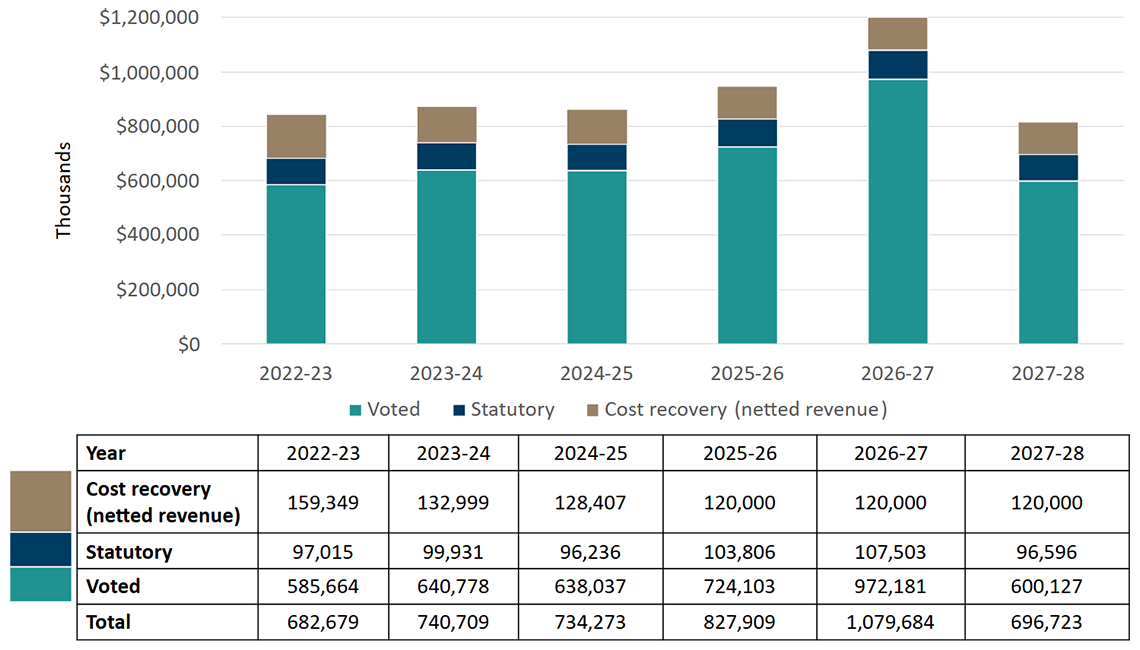
Text version of graph 1
Graph 1 includes the following information in a bar graph:
| Fiscal year | Cost recovery (netted revenue) | Statutory | Voted | Total |
|---|---|---|---|---|
| 2022-23 | 159,349 | 97,015 | 585,664 | 682,679 |
| 2023-24 | 132,999 | 99,931 | 640,778 | 740,709 |
| 2024-25 | 128,407 | 96,236 | 638,037 | 734,273 |
| 2025-26 | 120,000 | 103,806 | 724,103 | 827,909 |
| 2026-27 | 120,000 | 107,503 | 972,181 | 1,079,684 |
| 2027-28 | 120,000 | 96,596 | 600,127 | 696,723 |
Analysis of statutory and voted funding over a six-year period
Spending fluctuations between the years shown in the graph and table above are mainly caused by the Census Program. Spending will continue to ramp up through 2025-26 and will peak in 2026-27, when the 2026 Census of Population and 2026 Census of Agriculture are conducted. This is followed by a significant spending decrease in subsequent years as these activities wind down. This pattern is typical for the agency because of the cyclical nature of the Census Program.
Consult the Public Accounts of Canada for further information on Statistics Canada's departmental voted and statutory expenditures.
Financial statement highlights
Statistics Canada's Financial Statements (Unaudited) for the Year Ended March 31, 2025.
Table 10: Condensed Statement of Operations (unaudited) for the year ended March 31, 2025 (dollars)
Table 10 summarizes the expenses and revenues for 2024-25 which net to the cost of operations before government funding and transfers.
| Financial information | 2024-25 actual results | 2024-25 planned results | Difference (actual results minus planned) |
|---|---|---|---|
| Total expenses | 964,678,418 | 1,017,500,551 | -52,822,134 |
| Total revenues | 128,238,953 | 120,000,000 | 8,238,953 |
| Net cost of operations before government funding and transfers | 836,439,464 | 897,500,551 | -61,061,087 |
Analysis of expenses and revenues for 2024-25
The 2024-25 planned results information is provided in Statistics Canada's Future-Oriented Statement of Operations and Notes 2024-25. The assumptions underlying the forecasts were made before the end of 2023-24.
The difference between actual and planned net costs for 2024-25 is $61.1 million (6.8%). Expenses were $52.8 million lower than anticipated. This variance is largely explained by the agency's use of the operating budget carry-forward mechanism to manage the cyclical nature of program operations and investments. Additional contributors are lower-than-estimated accommodation costs for the Census Program, as well as vacation pay and severance payout allowances. The decrease in expenses is partially offset by additional spending for new initiatives from Budget 2024, including spending on the flood risk awareness digital resource and Canada's Action Plan on Combatting Hate, and from other transfers for the Clean Technology Data Strategy and compensation for the ratification of collective agreements. Revenues and related spending were $8.2 million higher than anticipated.
For more information on the distribution of expenses by program and type, please see the two charts below.
Graph 2: Gross expenditures by core responsibility
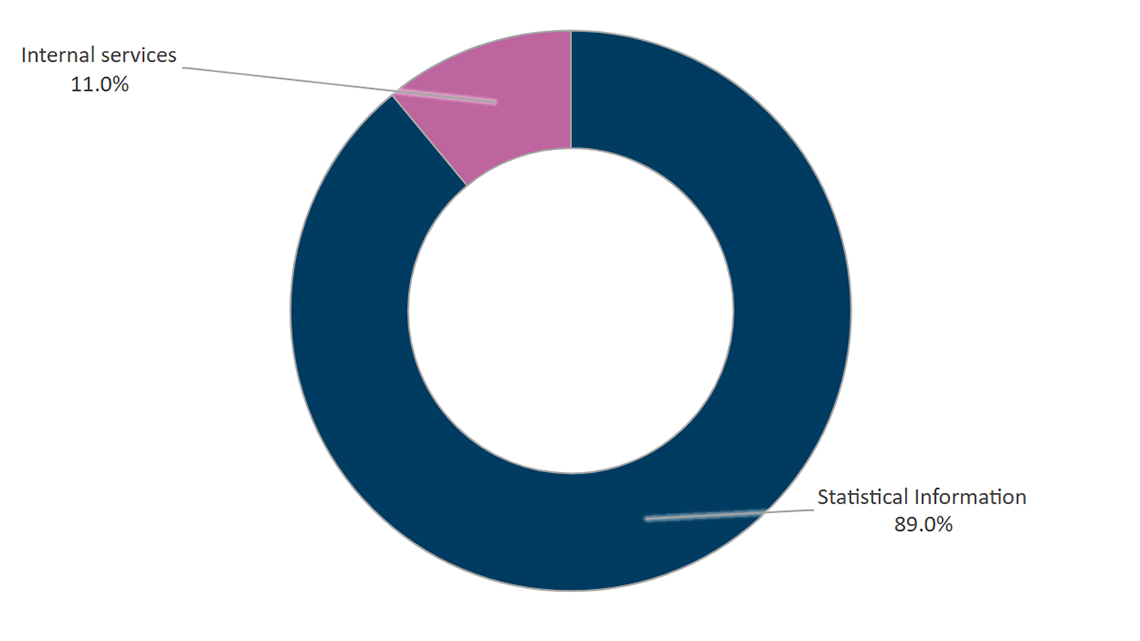
Text version of graph 2
| Core responsibility | Percentage of total gross expenditures |
|---|---|
| Statistical Information | 89% |
| Internal services | 11% |
Total expenses, including services provided without charge by federal government departments, were $964.7 million in 2024-25. These expenses comprised $858.9 million (89%) for Statistical Information and $105.8 million (11%) for internal services.
Graph 3: Gross expenditures by type
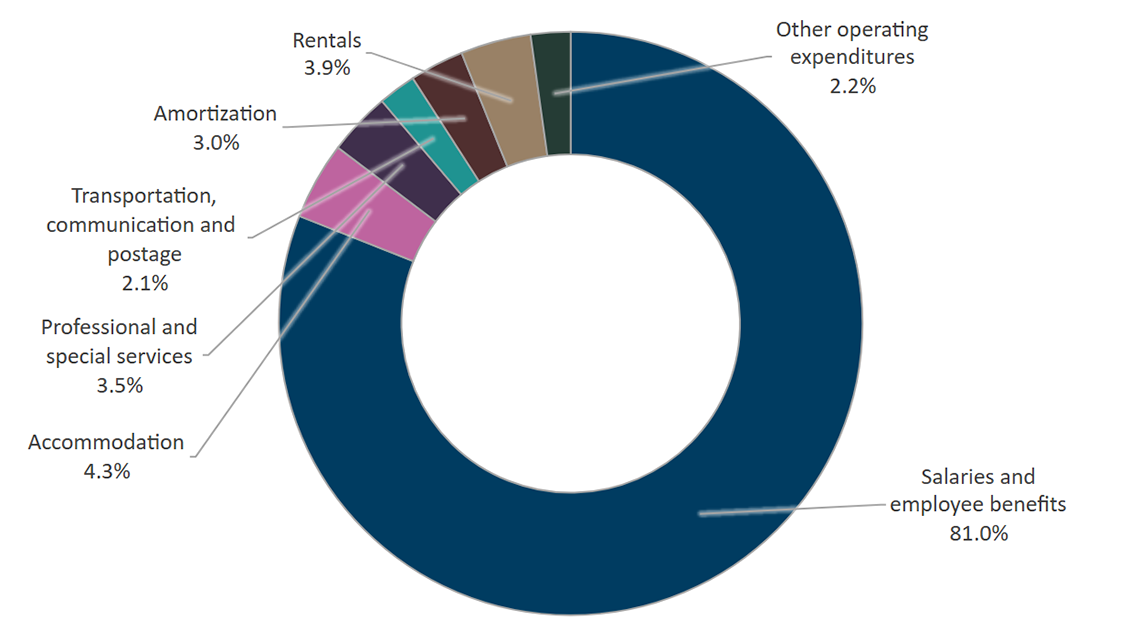
Text version of graph 3
| Type of expenditure | Percentage of total gross expenditures |
|---|---|
| Salaries and employee benefits | 81.0% |
| Accommodation | 4.3% |
| Professional and special services | 3.5% |
| Rentals | 3.9% |
| Amortization | 3.0% |
| Transportation, communication and postage | 2.1% |
| Other operating expenditures | 2.2% |
Statistics Canada spent $964.7 million in 2024-25. These expenses mainly comprised $781.4 million (81.0%) for salaries and employee benefits; $33.6 million (3.5%) for professional and special services; $41.2 million (4.3%) for accommodation; $37.6 million (3.9%) for rentals; $28.6 million (3.0%) for amortization; and $20.3 million (2.1%) for transportation, communication and postage. Other operating expenditures comprised $22.0 million (2.2%) for information, repairs and maintenance, materials and supplies, etc.
Table 11: Condensed Statement of Operations (unaudited) for 2023-24 and 2024-25 (dollars)
Table 11 summarizes actual expenses and revenues and shows the net cost of operations before government funding and transfers.
| Financial information | 2024-25 actual results | 2023-24 actual results | Difference (2024-25 minus 2023-24) |
|---|---|---|---|
| Total expenses | 964,678,418 | 990,293,746 | -25,615,328 |
| Total revenues | 128,238,953 | 135,764,923 | -7,525,969 |
| Net cost of operations before government funding and transfers | 836,439,464 | 854,528,823 | -18,089,359 |
Analysis of differences in expenses and revenues between 2023-24 and 2024-25
The net cost of operations before government funding and transfers was $836.4 million, a decrease of $18.1 million (2.1%) from $854.5 million in 2023-24, mainly attributable to spending in 2023-24 for retroactive pay and signing bonuses in relation to the ratification of collective agreements. This is offset by an increase in the agency's activities related to the 2026 Census.
Revenues increased in 2022-23 because of additional work associated with extra demands following the slowdown during the pandemic and with the 2021 Census. They have been decreasing in the following years, gradually returning to pre-pandemic levels.
Table 12: Condensed Statement of Financial Position (unaudited) as at March 31, 2025 (dollars)
Table 12 provides a brief snapshot of the amounts the department owes or must spend (liabilities) and its available resources (assets), which helps to indicate its ability to carry out programs and services.
| Financial information | Actual fiscal year (2024-25) | Previous fiscal year (2023-24) | Difference (2024-25 minus 2023-24) |
|---|---|---|---|
| Total net liabilities | 147,116,377 | 163,055,684 | -15,939,307 |
| Total net financial assets | 75,762,161 | 91,420,582 | -15,658,421 |
| Departmental net debt | 71,354,216 | 71,635,102 | -280,886 |
| Total non-financial assets | 131,653,553 | 138,349,701 | -6,696,148 |
| Departmental net financial position | 60,299,336 | 66,714,599 | -6,415,263 |
Analysis of department's liabilities and assets since last fiscal year
The agency's net financial position was $60.3 million at the end of 2024-25, a decrease of $6.4 million from $66.7 million in 2023-24.
Total net liabilities
The decrease in total liabilities of $15.9 million is mainly attributable to a decrease in accounts payable and accrued liabilities related to employer contributions to employee benefit plans, offset slightly by an increase in employee future benefits related to severance benefits.
Total net financial assets
The decrease in total net financial assets of $15.7 million is mainly attributable to a decrease in the amount due from the Consolidated Revenue Fund to discharge accounts payable and accrued liabilities.
Total non-financial assets
The decrease in total non-financial assets of $6.7 million is mainly attributable to the ongoing amortization of tangible capital assets.
For more information on the distribution of the balances in the statements of financial position, please see the two charts below.
Graph 4: Assets by type
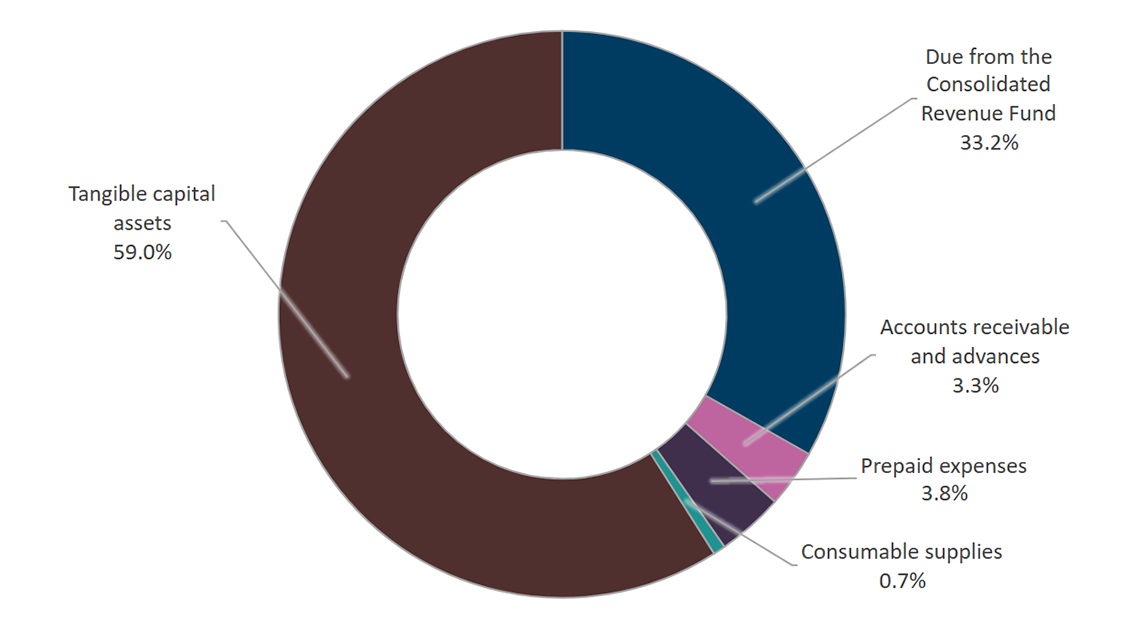
Text version of graph 4
| Type of asset | Percentage of total assets |
|---|---|
| Tangible capital assets | 59.0% |
| Due from the Consolidated Revenue Fund | 33.2% |
| Accounts receivable and advances | 3.3% |
| Prepaid expenses | 3.8% |
| Consumable supplies | 0.7% |
Total assets, including financial and non-financial assets, were $207.4 million at the end of 2024-25. Tangible capital assets represented the largest portion of assets, at $122.2 million (59.0%). They consisted of informatics software ($72.1 million), software under development ($32.1 million), leasehold improvements ($12.0 million) and other assets ($6.0 million). The remaining portion comprised $68.9 million (33.2%) for amounts due from the Consolidated Revenue Fund, $7.9 million (3.8%) for prepaid expenses, $6.9 million (3.3%) for accounts receivable and advances, and $1.5 million (0.7%) for consumable supplies.
Graph 5: Liabilities by type
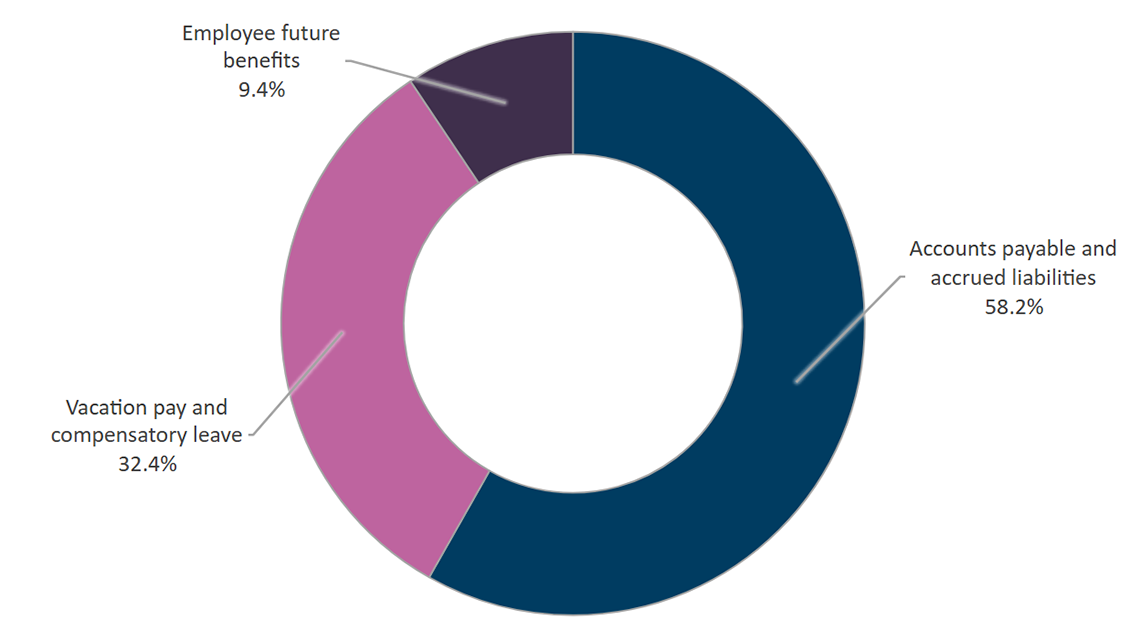
Text version of graph 5
| Type of liability | Percentage of total liabilities |
|---|---|
| Accounts payable and accrued liabilities | 58.2% |
| Vacation pay and compensatory leave | 32.4% |
| Employee future benefits | 9.4% |
Total liabilities were $147.1 million at the end of 2024-25. Accounts payable and accrued liabilities made up the largest portion of liabilities, at $85.6 million (58.2%). They consisted of accrued salaries and wages ($40.6 million), accounts payable to external parties ($34.9 million), and accounts payable to other federal government departments and agencies ($10.1 million). The next largest portion was vacation pay and compensatory leave, at $47.6 million (32.4%), and employee future benefits made up $13.9 million (9.4%).
Human resources
This section presents an overview of the department's actual and planned human resources from 2022-23 to 2027-28.
Table 13: Actual human resources for core responsibilities and internal services
Table 13 shows a summary in full-time equivalents of human resources for Statistics Canada's core responsibilities and for its internal services for the previous three fiscal years.
| Core responsibilities and internal services | 2022-23 actual full-time equivalents | 2023-24 actual full-time equivalents | 2024-25 actual full-time equivalents |
|---|---|---|---|
| Statistical Information | 7,005 | 6,291 | 6,075 |
| Internal services | 833 | 619 | 685 |
| Total gross | 7,838 | 6,910 | 6,760 |
| Respendable revenue | -1,795 | -1,373 | -1,267 |
| Total net | 6,043 | 5,537 | 5,493 |
Analysis of human resources for the last three years
Respendable revenue in 2022-23 included resources for full-time equivalents for additional work associated with extra demands following the slowdown during the COVID-19 pandemic, as the easing of restrictions allowed the collection of statistical information to resume. It was also associated with an increase in demands related to the 2021 Census.
Resource fluctuations in internal services are largely attributable to how the agency strategically manages its investments. The agency leverages the operating budget carry-forward mechanism to manage the cyclical nature of program operations and investments in the agency's strategic priorities. For instance, in 2022-23, internal services included resources from temporary funding related to an initiative approved in 2018–19 to migrate the agency's infrastructure to the cloud. Additionally, in 2024-25, Statistics Canada allocated resources to support its investments in accessibility initiatives, the modernization of its offices across the country and the replacement of information technology equipment.
Table 14: Human resources planning summary for core responsibilities and internal services
Table 14 shows the planned full-time equivalents for each of Statistics Canada's core responsibilities and for its internal services for the next three years. Human resources for the current fiscal year are forecast based on year to date.
| Core responsibilities and internal services | 2025-26 planned full-time equivalents | 2026-27 planned full-time equivalents | 2027-28 planned full-time equivalents |
|---|---|---|---|
| Statistical Information | 6,762 | 7,091 | 6,149 |
| Internal services | 718 | 690 | 682 |
| Total gross | 7,480 | 7,781 | 6,831 |
| Respendable revenue | -1,169 | -1,169 | -1,169 |
| Total net | 6,311 | 6,612 | 5,662 |
Analysis of human resources for the next three years
Overall, Statistics Canada is expecting to maintain its capacity for delivering ongoing statistical programs in future years. Similar to trends seen in planned spending, changes in full-time equivalents from year to year are largely explained by the cyclical nature of the Census Program. Activity will continue to ramp up through 2025-26 and will peak in 2026-27, when the 2026 Census of Population and 2026 Census of Agriculture are conducted. This is followed by a significant spending decrease in subsequent years as these activities wind down. This pattern is typical for the agency because of the cyclical nature of the Census Program.
Human resources for the next three years include planned full-time equivalents for several new initiatives, including funding to support Canada's Action Plan on Combatting Hate, funding for the Clean Technology Data Strategy, and funding to modernize and enhance the collection and dissemination of housing data to support Canada's Housing Plan.
Resource fluctuations in internal services are largely attributable to how the agency strategically manages its investments. The agency leverages the operating budget carry-forward mechanism to manage the cyclical nature of program operations and investments in the agency's strategic priorities.
Supplementary information tables
The following supplementary information tables are available on Statistics Canada's website:
Federal tax expenditures
The tax system can be used to achieve public policy objectives through the application of special measures such as low tax rates, exemptions, deductions, deferrals and credits. The Department of Finance Canada publishes cost estimates and projections for these measures each year in the Report on Federal Tax Expenditures. This report also provides detailed background information on tax expenditures, including descriptions, objectives, historical information and references to related federal spending programs as well as evaluations and GBA Plus of tax expenditures.
Corporate information
Departmental profile
Departmental profile
Appropriate minister:
The Honourable Mélanie Joly, P.C., M.P.
Institutional head:
André Loranger
Ministerial portfolio:
Innovation, Science and Economic Development
Enabling instruments:
Year of incorporation / commencement:
The Dominion Bureau of Statistics was established in 1918. In 1971, with the revision of the Statistics Act, the agency became Statistics Canada.
Other:
Under the Statistics Act, Statistics Canada is required to collect, compile, analyze, abstract and publish statistical information relating to the commercial, industrial, financial, social, economic and general activities and condition of the people of Canada.
Statistics Canada has two primary objectives:
- provide statistical information and analysis on the economic and social structure and functioning of Canadian society, as a basis for developing, operating and evaluating public policies and programs; for public and private decision making; and for the general benefit of all Canadians
- promote the quality, coherence and international comparability of Canada's statistics through collaboration with other federal departments and agencies and the provinces and territories, in accordance with sound scientific standards and practices.
Statistics Canada's head office is located in Ottawa. There are regional offices across the country in Halifax, Sherbrooke, Montréal, Toronto, Sturgeon Falls, Winnipeg, Edmonton, Vancouver and Yellowknife. There are also 35 research data centres located throughout the country in academic institutions. In addition, there are five secure rooms available for access by employees of federal departments and selected provincial ministries. These centres provide researchers with access to microdata from population and household survey programs in a secure setting. Canadians can follow the agency on Facebook, Instagram, LinkedIn, Reddit, X (Twitter) and YouTube.
Departmental contact information
Departmental contact information
Mailing address:
Statistics Canada
150 Tunney's Pasture Driveway
Ottawa, Ontario
K1A 0T6
Telephone:
Toll-free: 1-800-263-1136
International: 1-514-283-8300
TTY:
1-800-363-7629
Fax:
1-514-496-4879
Email:
Website:
Definitions
List of terms
appropriation (crédit)
Any authority of Parliament to pay money out of the Consolidated Revenue Fund.
budgetary expenditures (dépenses budgétaires)
Operating and capital expenditures; transfer payments to other levels of government, departments or individuals; and payments to Crown corporations.
core responsibility (responsabilité essentielle)
An enduring function or role of a department. The departmental results listed for a core responsibility reflect the outcomes that the department seeks to influence or achieve.
Departmental Plan (plan ministériel)
A report that outlines the anticipated activities and expected performance of an appropriated department over a 3-year period. Departmental Plans are usually tabled in Parliament in spring.
departmental priority (priorité ministérielle)
A plan, project or activity that a department focuses and reports on during a specific planning period. Priorities represent the most important things to be done or those to be addressed first to help achieve the desired departmental results.
departmental result (résultat ministériel)
A high-level outcome related to the core responsibilities of a department.
departmental result indicator (indicateur de résultat ministériel)
A quantitative or qualitative measure that assesses progress toward a departmental result.
departmental results framework (cadre ministériel des résultats)
A framework that connects the department's core responsibilities to its departmental results and departmental result indicators.
Departmental Results Report (rapport sur les résultats ministériels)
A report outlining a department's accomplishments against the plans, priorities and expected results set out in the corresponding Departmental Plan.
Full-time equivalent (équivalent temps plein)
Measures the person years in a departmental budget. An employee's scheduled hours per week divided by the employer's hours for a full-time workweek calculates a full-time equivalent. For example, an employee who works 20 hours in a 40-hour standard workweek represents a 0.5 full-time equivalent.
Gender-based Analysis Plus (GBA Plus) (analyse comparative entre les sexes plus [ACS Plus])
An analytical tool that helps to understand the ways diverse individuals experience policies, programs and other initiatives. Applying GBA Plus to policies, programs and other initiatives helps to identify the different needs of the people affected, the ways to be more responsive and inclusive, and the methods to anticipate and mitigate potential barriers to accessing or benefitting from the initiative. GBA Plus goes beyond biological (sex) and socio-cultural (gender) differences to consider other factors, such as age, disability, education, ethnicity, economic status, geography (including rurality), language, race, religion, and sexual orientation.
government priorities (priorités gouvernementales)
For the purpose of the 2024–25 Departmental Results Report, government priorities are the high-level themes outlining the government's agenda as announced in the 2021 Speech from the Throne.
horizontal initiative (initiative horizontale)
A program, project or other initiative where two or more federal departments receive funding to work collaboratively on a shared outcome usually linked to a government priority, and where the ministers involved agree to designate it as horizontal. Specific reporting requirements apply, including that the lead department must report on combined expenditures and results.
Indigenous business (entreprise autochtones)
For the purposes of a Departmental Result Report, this includes any entity that meets the Indigenous Services Canada's criteria of being owned and operated by Elders, band and tribal councils, registered in the Indigenous Business Directory or registered on a modern treaty beneficiary business list.
non‑budgetary expenditures (dépenses non budgétaires)
Net outlays and receipts related to loans, investments and advances, which change the composition of the financial assets of the Government of Canada.
performance (rendement)
What a department did with its resources to achieve its results, how well those results compare to what the department intended to achieve, and how well lessons learned have been identified.
performance indicator (indicateur de rendement)
A qualitative or quantitative measure that assesses progress toward a departmental-level or program-level result, or the expected outputs or outcomes of a program, policy or initiative.
plan (plan)
The articulation of strategic choices, which provides information on how a department intends to achieve its priorities and associated results. Generally, a plan will explain the logic behind the strategies chosen and tend to focus on actions that lead to the expected result.
planned spending (dépenses prévues)
For Departmental Plans and Departmental Results Reports, planned spending refers to the amounts presented in Main Estimates. Departments must determine their planned spending and be able to defend the financial numbers presented in their Departmental Plans and Departmental Results Reports.
program (programme)
An Individual, group, or combination of services and activities managed together within a department and focused on a specific set of outputs, outcomes or service levels.
program inventory (répertoire des programmes)
A listing that identifies all the department's programs and the resources that contribute to delivering on the department's core responsibilities and achieving its results.
result (résultat)
An outcome or output related to the activities of a department, policy, program or initiative.
statutory expenditures (dépenses législatives)
Spending approved through legislation passed in Parliament, other than appropriation acts. The legislation sets out the purpose and the terms and conditions of the expenditures.
target (cible)
A quantitative or qualitative, measurable goal that a department, program or initiative plans to achieve within a specified time period.
voted expenditures (dépenses votées)
Spending approved annually through an appropriation act passed in Parliament. The vote also outlines the conditions that govern the spending.