

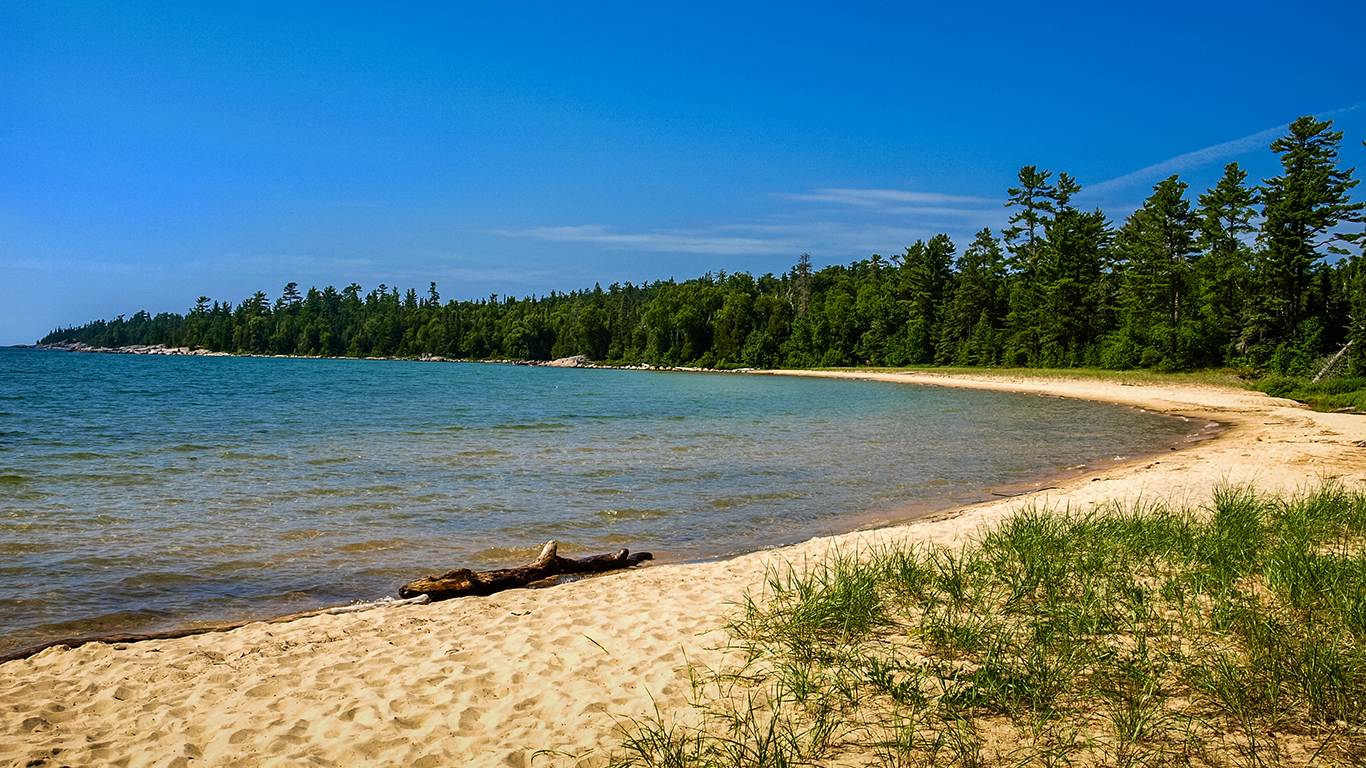
The numerous destinations in Canada’s most populous province also attract many visitors—both from within Ontario and elsewhere in Canada.
The National Travel Survey (NTS) collects detailed visit data by province of origin of the trip, length, main trip purpose, and other breakdowns. The most recent annual numbers are from 2024, so let’s take a data drive back through Ontario, as we continue our series of travel stories!
Nearly 120 million visits, mostly for pleasure and shorter in duration
Canadians made 119.6 million visits to Ontario in 2024, and the main trip purposes for most of these visits were to see friends or relatives (44.6%); for holidays, leisure or recreation (37.2%); or other reasons, such as shopping or other personal reasons (11.9%).
More than one in seven visits (14.8%) involved children, while more than one-third (37.4%) were by one adult only.
Around two-thirds of visits in Ontario (66.1%) were same-day, while similar proportions involved stays of either one night (12.2%) or two nights (11.5%). Relatively smaller proportions of visits were 3 (4.6%) or 4 (2.0%) nights in duration, or from 5 to 10 nights (3.1%).
Main trip purpose, location and cost are possible factors in visit length
Given that just under one in six Ontario visits (16.2%) in 2024 involved one or more nights spent at the home of a friend or relative—the most common accommodation type reported—it’s possible that many travellers simply didn’t want to overstay their welcome! This is one possible factor in deciding how many nights to stay.
A considerably smaller proportion of visits involved a stay at a hotel (6.6%) or motel (0.7%), and cost could be a factor. As demand increased coming out of the COVID-19 pandemic, prices for traveller accommodation in Ontario rose by more than half (+52.0%) from 2021 to 2024, with the bulk of that increase happening from 2021 to 2022. There were also increased hits to the wallet for the operation of passenger vehicles (+16.5%) and use of inter-city transportation (+5.4%) from 2021 to 2024.
Ontario residents made up the vast majority (93.5%) of Ontario visits, so it’s possible that many travellers were within a short enough distance of their destination that a lengthy stay wasn’t needed or preferred. Out-of-province visits were most likely to come from neighbouring Quebec (3.7%), while the remaining provinces accounted for under 1% each.
Majority of visits in Toronto and surrounding tourism regions
In 2024, about 7 in 10 Ontario visits were under 320 km in distance from origin to destination. Visits ranging from 40 to 79 km (29.5%) were the most common, followed by 80 to 159 km (25.8%) and 160 to 319 km (15.0%).
By tourism region, the Greater Toronto Area (GTA) accounted for 17.5% of Ontario visits in 2024. Combined, the GTA and eight nearby tourism regions—stretching from Niagara Falls and Wine Country in the southeast to Muskoka, Parry Sound and Algonquin Park in the north—accounted for roughly four in five visits province-wide.
The GTA and these eight regions are all close enough to one another that a visit by car can be done in less than a day, giving further insight into why travellers may opt for shorter visits and perhaps more frequent ones. Cottage-goers may opt for the same.
Southeastern Ontario, Ottawa and Countryside, and the Haliburton Highlands to the Ottawa Valley were destinations for most other visitors in 2024.
Most travel by car or truck
Given the convenient driving distance, it’s probably not a surprise that 9 in 10 visits to Ontario (90.0%) were made by car or truck in 2024, followed by bus or train (4.6%), commercial airline (2.6%) and camper or recreational vehicle (RV) (0.4%). However, proportions varied by region.
For example, more than half of those travelling by bus or train visited the GTA, given the multiple options and routes. Twice as many visits to Niagara Falls and Wine Country than to Ottawa and Countryside were by bus and train, probably due to the added presence of regional rail and bus routes.
One-third of visit expenditures go to transportation; most visits cost under $600
Travellers spent $24.8 billion on their Ontario visits in 2024. Just over one-third, or $8.7 billion, was spent on transportation, including $4.8 billion on vehicle operation (including gas and repairs), and $2.8 billion on commercial transportation (train, bus, flights, etc.).
Another $6.6 billion was spent on food and beverages (in both restaurants and stores), followed by accommodation ($4.9 billion), recreation ($1.2 billion) and entertainment ($1.2 billion).
Travellers spent less than $200 on almost two-thirds of visits (62.5%), $200 to $399 on 15.4% of visits, and $400 to $599 on 7.0% of visits.
Looking ahead
The NTS will release data for the second quarter of 2025 on December 2, 2025, in the Daily. Data for the first quarter of 2025 for both the NTS and the Visitor Travel Survey are now available.
Note to readers
The data in this story are based on a custom tabulation of detailed provincial-level National Travel Survey (NTS) data from 2024. Stay tuned for more StatsCAN Plus articles on tourism in the eastern and central parts of the country using these detailed data.
Detailed data for 2025 will be released in mid-2026.
For more information, visit the NTS survey information page.

📲 Looking for more? Staying informed has never been easier!
Follow the "Travel and tourism" subject in the StatsCAN app to receive personalized updates and stay connected with the most recent articles, reports and analyses.
Contact information
For more information, contact the Statistical Information Service (toll-free 1-800-263-1136; 514-283-8300; infostats@statcan.gc.ca) or Media Relations (statcan.mediahotline-ligneinfomedias.statcan@statcan.gc.ca).