

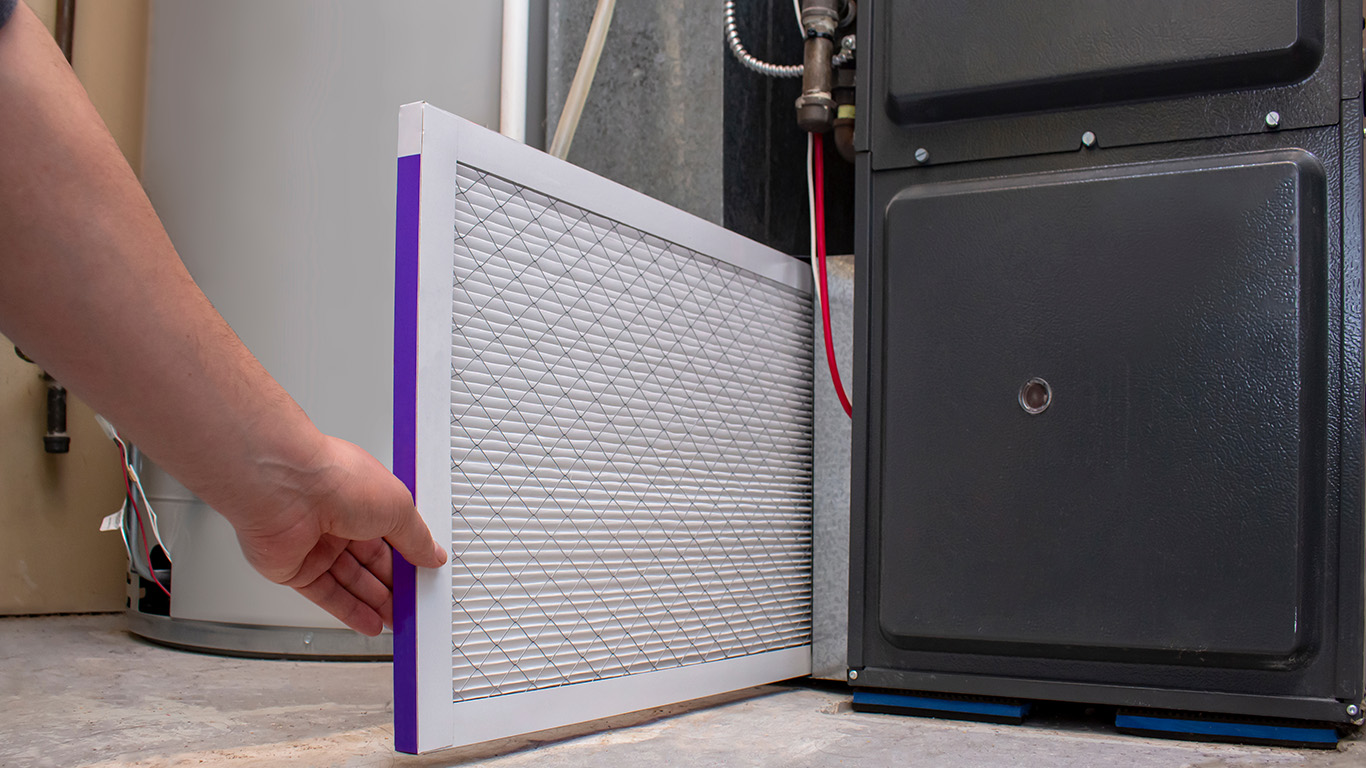
The weather’s getting cooler, which is nature’s way of reminding you to check your furnace to make sure you’re not left out in (rather, inside with) the cold!
As you’ve probably experienced in a past service call, many of these contractors are small businesses. More than half of the contractors reported staff numbers, and the largest proportion of them (57%) had one to four employees. Almost one in five (19.3%) had 5 to 9 employees on staff, while 12% reported having 10 to 19. Contractors that did not report staff numbers could range from sole proprietors to larger companies.
You might not get a service call right away, however! In the second quarter of 2025, there were over 1,200 job vacancies nationwide for heating, refrigeration and air conditioning mechanics, most of them full-time positions. However, vacancies have decreased by almost two-thirds (-63.0%) from the recent peak in the third quarter of 2022, when almost 3,300 vacancies were recorded.
Some business costs are up
The Machinery and Equipment Price Index provides estimates of price changes on the industrial side and can give us some insight into the cost of doing business.
Prices also increased for electric motors and generators (+11.2%), metal valves and pipe fittings (+3.6%) and other electrical equipment and components (+4.7%), and they were little changed for rubber and plastic hoses and belts (-1.4%).
For businesses that need a new vehicle, prices for light-duty trucks, vans and sport utility vehicles (+2.1%) increased modestly.
Price increases for maintenance, electricity and fuel
Aside from the consumer carbon levy removal in April, any heat-related price changes in 2025 have been mostly minimal and subject to seasonal movements. On a year-over-year basis in September 2025, prices ticked up slightly for electricity (+1.8%), but at a faster pace for fuel oil and other fuels (+8.0).
There were also increases for homeowners’ maintenance and repairs (+1.8%) and tenants’ maintenance, repairs and other expenses (+2.4%). In recent months, increases have generally been slower compared with increases seen a few years ago, when the overall inflation rate was at a 40-year high.
The heat is on—it’s on your street
In 2023, 46% of households in Canada had a forced air furnace as their primary heating system, according to the latest findings from the Households and the Environment Survey. Other types of primary heating systems reported by households included electric baseboard heaters (23%), heat pumps (8%) and mini-split heat pumps (1%).
Heat pumps continue to gain in popularity as an energy-efficient option for households. In 2023, households in the Maritimes were most likely to have one, including more than one-third (36%) of those in Prince Edward Island, followed by New Brunswick (27%) and Nova Scotia (25%).
Where we live impacts how much energy we consume
In 2021, the average energy consumption of single-detached households was 108.7 gigajoules (GJ), higher than the average of all dwelling types (85.4 GJ), while low-rise (44.3 GJ) and high-rise (43.2 GJ) apartments consumed the least.
Most of the energy consumed in 2021 came directly from natural gas (51.5%) or electricity (45.8%). Natural gas was the main energy source in Ontario and the western provinces, while electricity accounted for a larger share of energy consumption in Quebec and the Atlantic provinces. Heating oil, which accounted for a small share (2.7%) of Canada’s overall household energy consumption, was most frequently used in Prince Edward Island, Nova Scotia and Newfoundland and Labrador.
(For reference, 1 GJ is enough power to vacuum your house for 230 hours, run a typical fridge for 30 weeks or wash over 100 loads of laundry.)
For tips on how to save energy, and for more information on potential grants and rebates for heat pumps or other retrofits for your home, visit Energy efficiency for homes—courtesy of our colleagues at Natural Resources Canada.

📲 Looking for more? Staying informed has never been easier!
Follow the “Prices and price indexes” subject in the StatsCAN app to receive personalized updates and stay connected with the most recent articles, reports and analyses.
Contact information
For more information, contact the Statistical Information Service (toll-free 1-800-263-1136; 514-283-8300; infostats@statcan.gc.ca) or Media Relations (statcan.mediahotline-ligneinfomedias.statcan@statcan.gc.ca).