

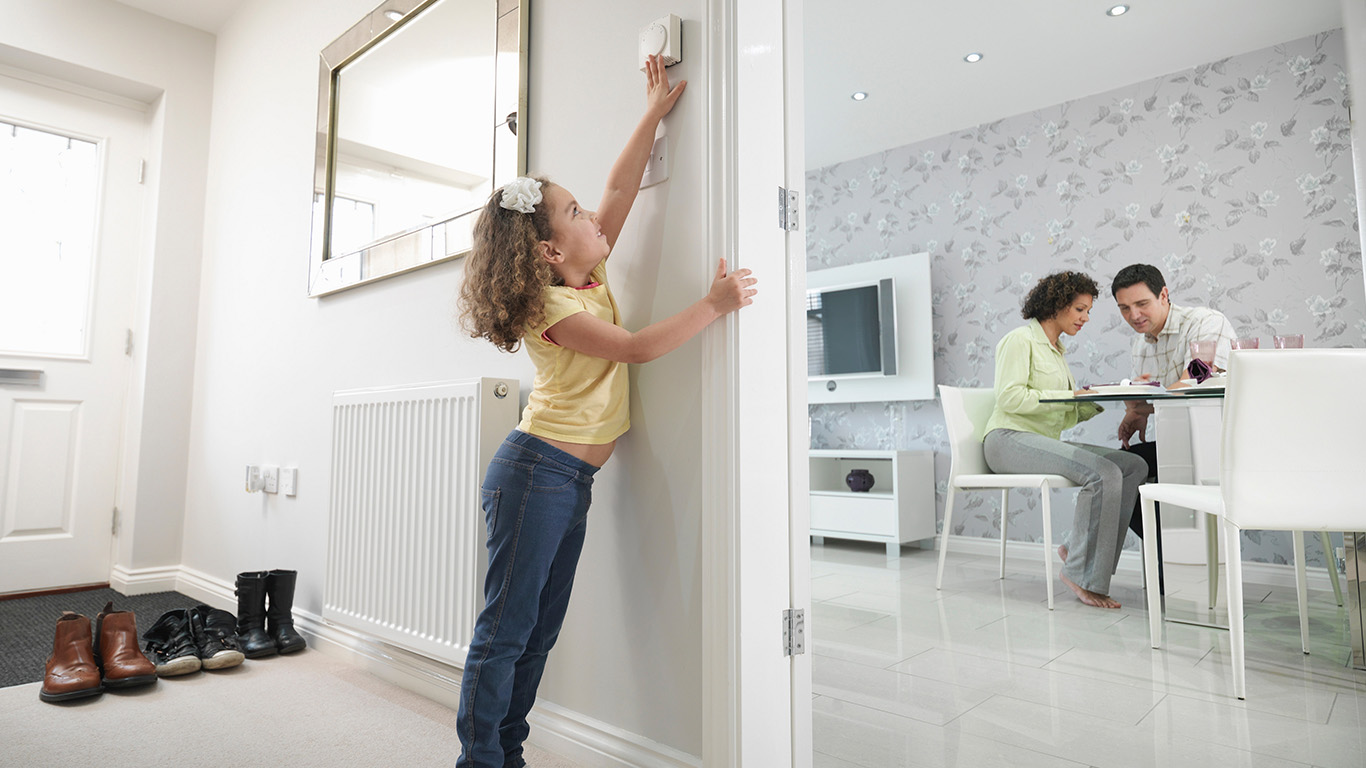
Many of you reading that headline have probably heard a parent say that, followed by, “I’m not paying to heat the whole neighbourhood!”
And, since we’re deep into January, what better time to talk about thermostats? Every two years, the Households and the Environment Survey asks Canadian households in the provinces about thermostat usage.
Our most recent data are from 2023 and were released last month, so let’s take the temperatures of Canadian households (and what may contribute to debates around setting them!).
More than one-third of Canadian households with thermostats had multiple thermostats
Just over 9 in 10 (91%) households in Canada had at least one thermostat in 2023. Of those households, almost three in five (59%) had one thermostat, while more than one-third (37%) of those households had more than one—perhaps setting the stage for many temperature-setting battles from different rooms.
Just over half (51%) of households with a thermostat lowered the temperature in winter when asleep, compared with 43% who kept it the same, and 2% who raised it during the night. With an extra blanket, a winter sleep doesn’t have to be a weighty ghost!
Of households with a thermostat, just over three in five (61%) reported having a programmable main thermostat in 2023, up considerably from 2007 (42%), the year we started surveying Canadians on this topic.
More than three in five (62%) households with a programmable main thermostat in 2023 lowered the winter temperature at night, while one-third (33%) kept it the same.
Households in Newfoundland and Labrador most likely to have multiple thermostats
By province, households in Newfoundland and Labrador (82%) were most likely to have multiple thermostats in 2023 among those that had one, followed by Quebec (76%) and New Brunswick (72%). Households in Saskatchewan (12%), Ontario (14%), and Alberta (16%) were least likely.
Households in Newfoundland and Labrador were also most likely to lower the temperature in winter when asleep (57%), followed by Alberta (56%) and Saskatchewan (55%). However, households in every province were less likely to do this in 2023 than in 2007.
More than half of households in New Brunswick (55%) kept the temperature unchanged during the night in 2023. Only households in Manitoba (50%) came close to that proportion, while those in British Columbia (35%) were least likely to keep the temperature unchanged during the night.
The price tag
Parents have a point about keeping the temperature lower, and spoiler alert: it has to do with the price tag.
Of course, the bill also depends on the type of heat source, as well as the size and condition of the dwelling. Our colleagues at Natural Resources Canada have some tips on keeping the heat in.
With all that said, we won’t take a side—staying neutral comes with the job at Canada’s national statistical agency—but we wish all households a data-informed debate on their temperature settings.

Contact information
For more information, contact the Statistical Information Service (toll-free 1-800-263-1136; 514-283-8300; infostats@statcan.gc.ca) or Media Relations (statcan.mediahotline-ligneinfomedias.statcan@statcan.gc.ca).