

We’re inundated by advertising and other promotions every day—on radio or TV, online, on social media, and sometimes even in our mailboxes.
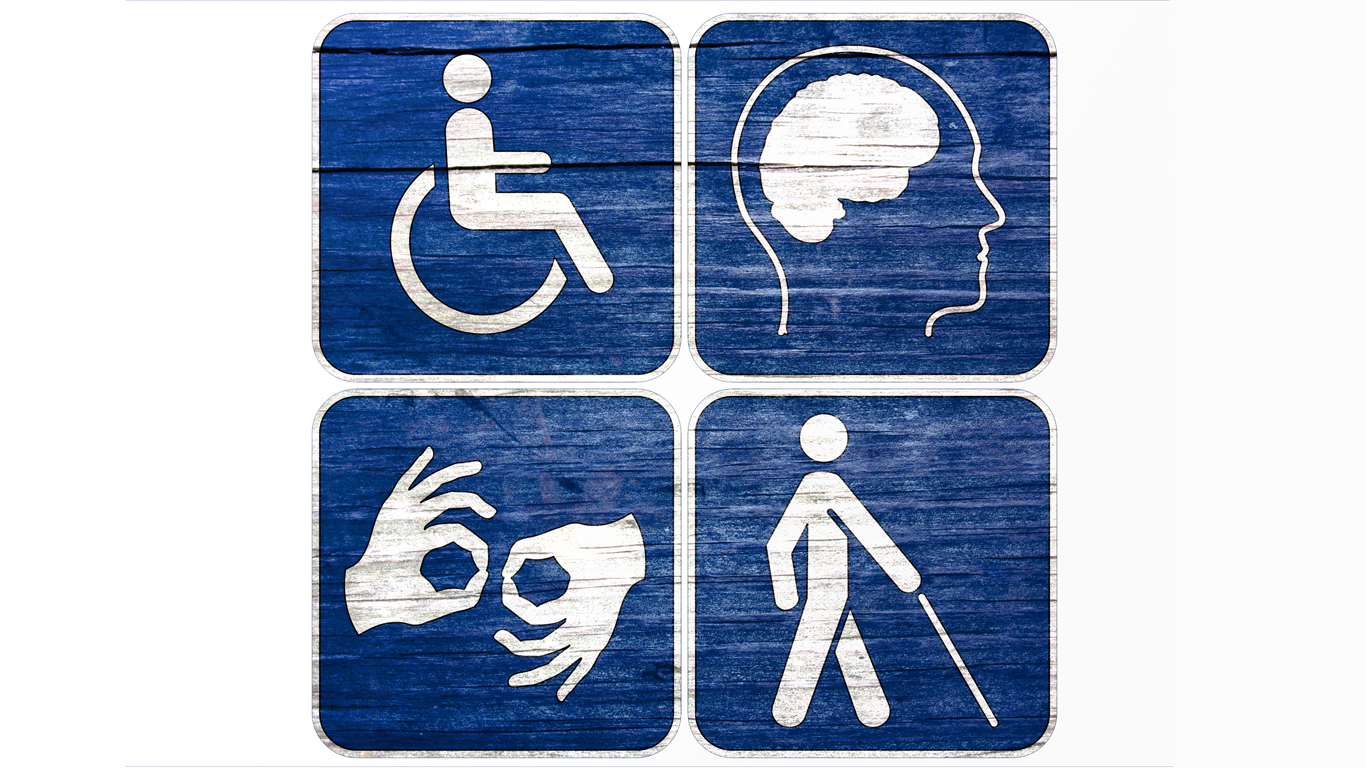
While advertising and information are widespread, they are not always accessible to persons with disabilities. Depending on their accessibility needs, persons with disabilities may face barriers when receiving messages or communicating with a business or organization.
The Canadian Survey on Business Conditions recently asked businesses and organizations about their use of accessibility features that enable people with disabilities to interact with websites, documents, and services. Accessibility features include things like captions on videos, alt text for images, large-print materials, and screen-reader-friendly documents.
Accessibility features, by type
In the fourth quarter of 2025, almost four in five (79.5%) businesses or organizations used communication in person or over the phone. Over two-thirds (67.4%) used virtual communication; a slightly lesser proportion used social media (62.5%); and just over two in five (41.0%) distributed printed materials.
More than one-third (37.0%) of businesses or organizations using social media in the fourth quarter of 2025 provided accessibility features for it in the 12 months prior to the survey. This compared with 34.0% for printed materials, 26.7% for virtual communication, and 22.1% for communication in person or over the phone.
Among businesses and organizations that did not provide accessibility features, relatively few (2.5% to 3.8%, depending on the type of communication) said they planned to do so in the next 12 months, while a majority (ranging from 72.5% to 73.6%) said there were no plans to provide them.
Non-profit organizations and certain sectors are more likely to provide accessibility features
In the fourth quarter of 2025, non-profit organizations were more likely to provide accessibility features than private-sector businesses. For example, almost half (49.9%) of non-profit organizations provided them for printed materials, compared with just over one-third (31.8%) of private sector businesses. The difference ranged from 6.4 to 12.6 percentage points for the other forms of communication.
Certain sectors had higher rates than others. For example, almost half (48.5%) of businesses and organizations in accommodation and food services offered accessibility for printed materials, while a similar proportion of those in retail trade (46.4%) provided them for social media.
Conversely, smaller businesses and organizations were generally less likely than larger ones to provide accessibility features and to plan for them.
Majority of businesses and organizations who did not offer accessibility features did not see benefit in them
In the fourth quarter of 2025, roughly two-thirds (66.2%) of businesses and organizations who did not provide accessibility features in the 12 months prior to the survey said that it would not benefit them.
Others said they had no time or resources available for accessibility features (17.9%); that they were unsure how or where to find them (15.1%); that they were too expensive or had a high program or service cost (13.0%); or had features that could not be adapted (6.0%). An unspecified reason was cited by 12.7%.
There were some notable differences by sector. For example, more than one-quarter (27.7%) of businesses and organizations in health care and social assistance cited cost, while roughly 3 in 10 (30.5%) of those in accommodation and food services said they had no time or resources.
The point of view from persons with disabilities—barriers and unmet needs
The 2022 Canadian Survey on Disability found that more than one in four Canadians (27%) aged 15 years and older had one or more disabilities that limited them in their daily lives.
More than 1 in 8 (13%) persons with disabilities in Canada experienced barriers when using the Internet for online access to government information, services or supports. Around 1 in 10 experienced barriers when booking for appointments, services or reservations online (11%), or while banking or shopping online (9%).
In 2022, 2.4 million Canadians with disabilities required communication-related supports (such as screen readers, hearing aids, or large-print reading materials), and of those, more than 3 in 10 (31.1%) had unmet needs.
Correction
On March 12, 2026, sections of this article were removed due to weighting errors in the Canadian Survey on Business Conditions, fourth quarter 2025. The affected sections were republished with the correct data on March 20, 2026.

Contact information
For more information, contact the Statistical Information Service (toll-free 1-800-263-1136; 514-283-8300; infostats@statcan.gc.ca) or Media Relations (statcan.mediahotline-ligneinfomedias.statcan@statcan.gc.ca).