

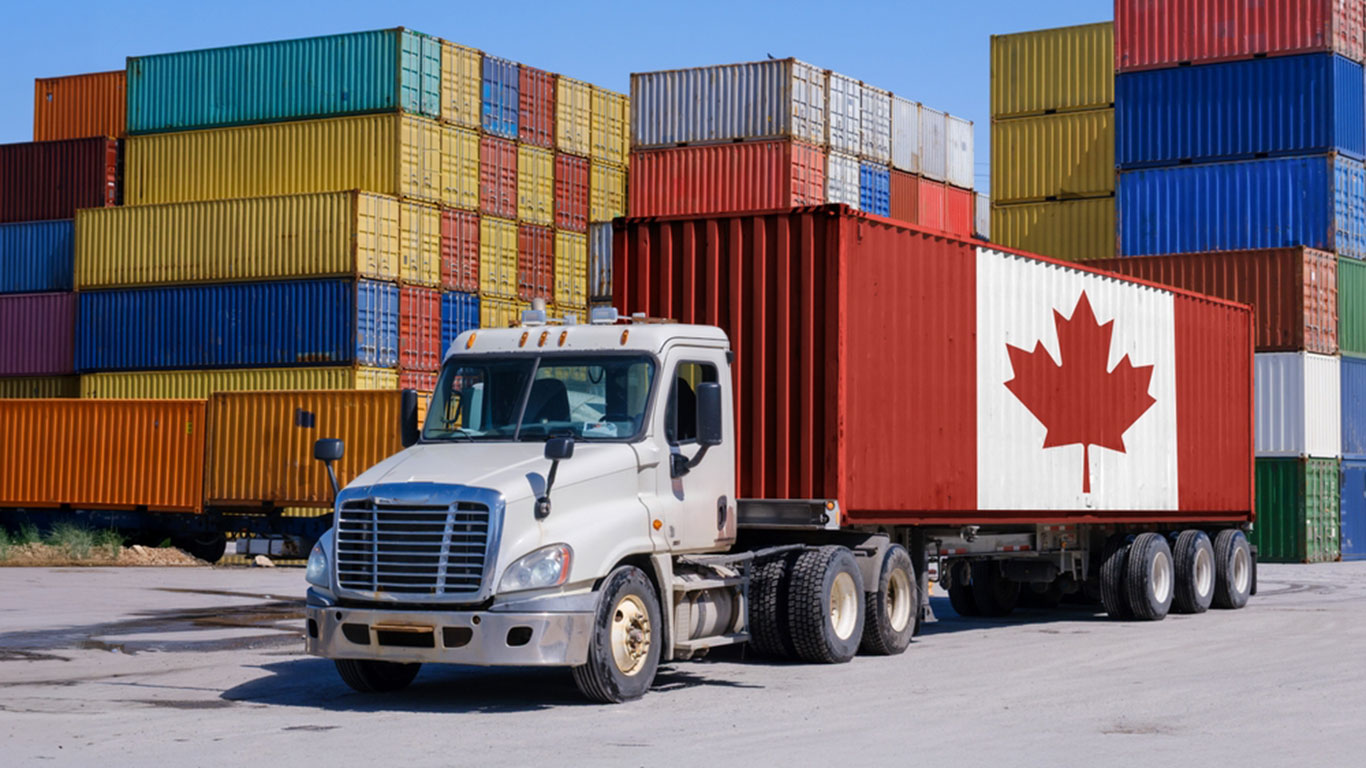
Most goods need to be transported before reaching the consumer. Higher energy costs can have a significant effect on getting these goods to market, whether they move through wholesalers, warehouses or other points in the supply chain before ending up on a store shelf.
Recently, energy prices—and, in turn, fuel prices—increased sharply and remained elevated in the weeks following the beginning of the conflict in the Middle East at the end of February.
The Canadian Survey on Business Conditions (CSBC) recently asked a number of questions to businesses across all sectors, including questions about input costs.
Let’s have a look at that data, as well as the latest data from our producer and transportation price indexes, to get a sense of how energy prices—while certainly not the only factor—might be affecting other prices.
One-third of transportation and warehousing businesses expect input costs to be an obstacle
The transportation and warehousing sector includes all modes of passenger and freight transportation as well as storage and support activities.
The results of the CSBC for the second quarter of 2026 indicated that approximately one-third (33.7%) of businesses in the sector expected the cost of inputs to be an obstacle over the next three months.
The input costs most commonly cited by businesses in the transportation and warehousing sector as likely obstacles over the next three months were the cost of energy (65.8%), labour (43.1%), capital (19.0%) and raw materials (14.7%).
Price increases expected across the supply chain
In the second quarter, almost one in four (23.2%) transportation and warehousing businesses expected to raise prices for their services in the next three months, roughly in line with all businesses (25.2%).
Several sectors that rely on the transportation and warehousing sector also reported plans to raise prices: accommodation and food services (42.0%), retail trade (39.7%) and wholesale trade (39.5%).
Fuel prices rise sharply
Prices paid to producers for diesel rose between 35.4% and 76.1%, depending on the region, from May 2025 to May 2026, as measured by the Industrial Product Price Index. Increases ranged from 33.0% to 85.0% for jet fuel, and from 43.1% to 56.8% for finished motor gasoline.
The bulk of those increases occurred from February to March 2026, coinciding with the effects of the conflict on energy markets.
Capacity reductions and fuel surcharges were among the measures taken in April by airlines.
Prices to transport goods rise across the supply chain
StatCan also tracks the change in prices charged by providers to transport goods. In some cases, recent increases have been significant, and any fuel surcharges introduced by providers would generally be reflected in the data.
The truck transportation subsector includes both general and specialized freight trucking. In March 2026, prices charged by businesses in the subsector rose by 4.4% from a year earlier. From February to March 2026 alone, prices for long-distance general freight trucking rose 4.5%, perhaps an early indication of the effects of fuel prices. Local trucking services increased relatively less.
The latest data for freight rail services are from May, when prices rose 11.6% from a year earlier. Intermodal (containers) rose the most (+16.9%) among modes of transportation, followed by petroleum and chemicals (+14.1%).
As for the final leg of delivery: couriers (+16.9%) and local messengers and local delivery (+5.4%) charged more in April than they did a year earlier. From March to April alone, couriers upped their prices by 10.7%.

Contact information
For more information, contact the Statistical Information Service (toll-free 1-800-263-1136; 514-283-8300; infostats@statcan.gc.ca) or Media Relations (statcan.mediahotline-ligneinfomedias.statcan@statcan.gc.ca).