

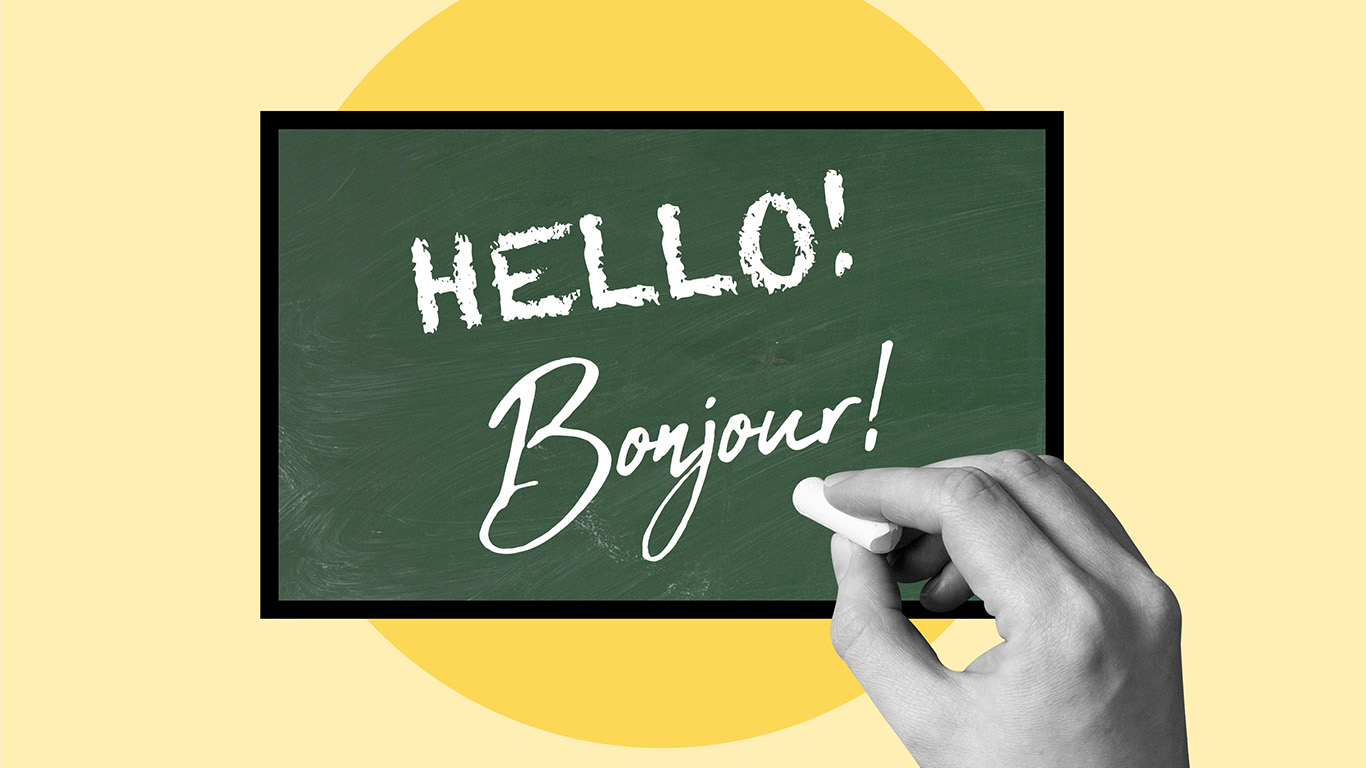
The theme of this year’s official Languages Day is “Two Voices in Harmony.” At Statistics Canada, every day is Official Languages Day.
Our commitment to bilingualism
In every table, chart and paper we release to the public, we strive to describe our country through data in English and French in perfect harmony.
Simply put, whether you read The Daily in English or Le Quotidien in French, or one of our social media posts online, the message, the spirit and, of course, the data will be in perfect harmony in both official languages.
Bilingualism data
Nationally, just under one in five Canadians (18.0%) reported that they were able to converse in both English and French in 2021. This marked the highest level of English-French bilingualism captured during a census, albeit the rate was little changed from 2001.
However, English-French bilingualism is by no means universal across Canada. For example, almost half (46.4%) of the residents of Quebec reported they were able to converse in both official languages, compared with approximately 1 in 10 Canadians living outside of Quebec (9.5%).
Children learning official languages at school
The best time to learn a language is when you are young and your mind is nimble.
In 2021, 304,000 children were eligible for instruction in English in Quebec and 593,000 children were eligible for instruction in French in Canada outside Quebec. Nearly half of these eligible children were living in the urban centres of Montréal, Toronto and Ottawa–Gatineau, while more than one-third of children in New Brunswick were eligible.
Two-thirds of children eligible for instruction in the minority official language received instruction in that language.
French immersion programs outside of Quebec also play an important role in promoting bilingualism. In 2021, one in six school-aged children living outside of Quebec whose mother tongue was not French was or had been in French immersion.
Digging deeper in bilingualism data
A recent paper looked at adult minority official language speakers, that is, English-language speakers in Quebec and French speakers outside of Quebec. It found that those who can conduct a conversation in their second official language consider their oral proficiency in that language to be high or very high.
The study also found that most minority official language speakers who have English and French as their mother tongues learned both languages in childhood and are from linguistically mixed families.
That said, schooling plays a greater role in explaining why people become bilingual in English and French.
For instance, outside Quebec, 61% of people who attended or had attended a French-language school or a French immersion program were bilingual in 2021, compared with 4% of people who were never schooled in French.
More language data on its way
In May, Canadian households received a census questionnaire, which included questions on the knowledge of official languages, the first language learned in childhood and still understood, and the language(s) spoken at home.
The planned release date for the 2026 Census language data is September 8, 2027.
Contact information
For more information, contact the Statistical Information Service (toll-free 1-800-263-1136; 514-283-8300; infostats@statcan.gc.ca) or Media Relations (statcan.mediahotline-ligneinfomedias.statcan@statcan.gc.ca).