

It’s summer in Canada, which means many of us need options to cope with those really hot days.
Not only is extreme heat difficult, but it can also be deadly. Our analysis from 2024 found that there have been excess deaths related to heat from 2000 to 2020, and that considerable proportions of vulnerable populations either did not have air conditioning or lacked easy access to cooling centres in 2017.
In 2025, just over two-thirds (68%) of Canadian households reported using an air conditioner or similar cooling equipment (i.e., heat pumps) to offset the summer heat, according to recent data from the Canadian Social Survey.
Rates differed by region and by household type. For example, households in Ontario (with its generally warmer climate) were more likely to have an air conditioner than those in British Columbia, and homeowners were more likely than renters to have one.
Some Canadians might cool off in their (or their neighbours’) new pool! In 2024, more than 11,500 permits were issued nationwide for the construction of residential inground swimming pools. From January to April 2025, approximately 3,000 permits were issued.
With this in mind, let’s take a look at some data related to beating the heat away from home.
Cooling off in the water or public indoor spaces
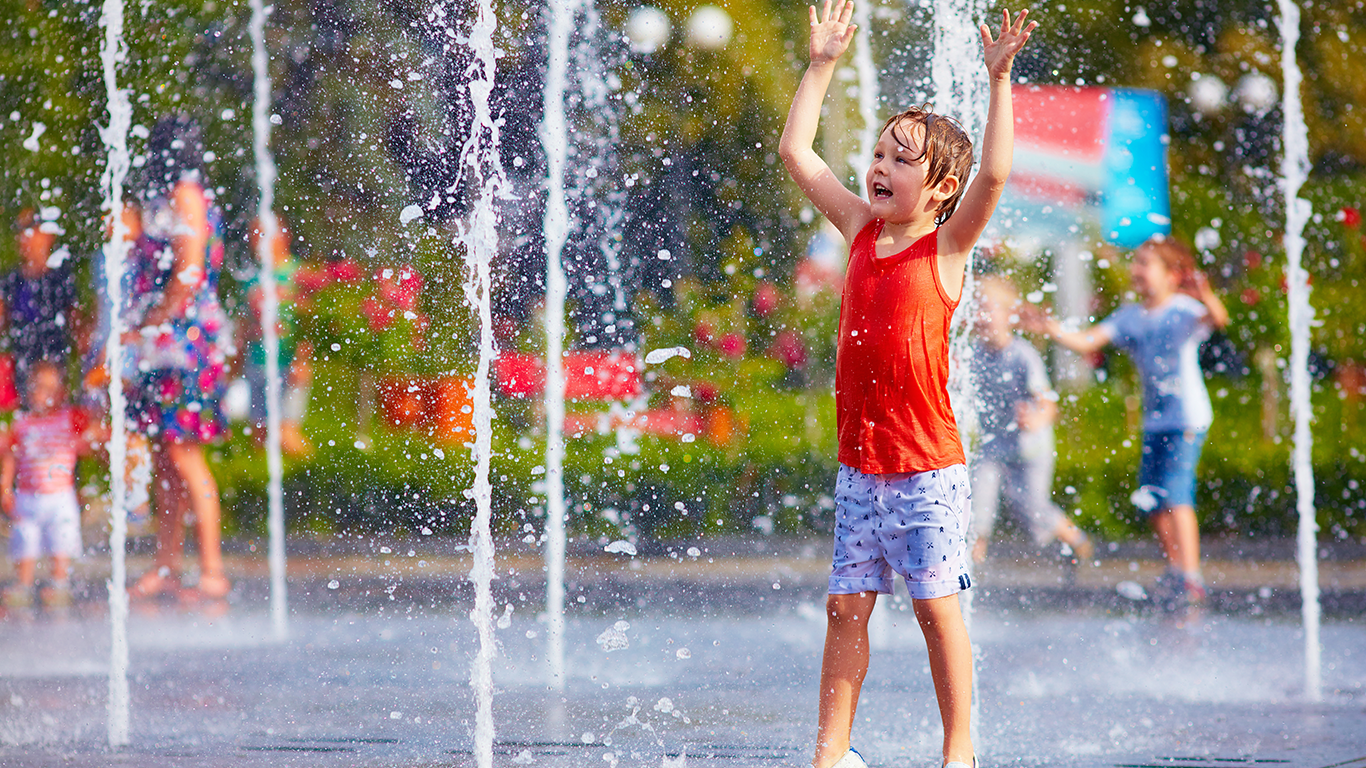
In 2022, there were 5,291 publicly owned aquatic amenities nationwide, including 1,012 outdoor pools, 948 indoor pools, as well as 3,330 outdoor spray parks, splash pads and wading pools. About three in four of these amenities were in urban municipalities.
There were also 5,376 publicly owned arts and culture facilities, 4,798 community centres and 5,018 multi-purpose culture, recreation and sports buildings, which could offer air-conditioned respite.
There’s nothing like a summer movie, a trip to the arcade or perhaps a water park! As of December 2024, there were 710 business locations nationwide in the motion picture and video exhibition industry, which includes cinemas and drive-in theatres. There were also 740 amusement parks and arcades.
How close by are they?
Analysis of spatial accessibility measures based on Census of Population data found that, in 2021, most Canadians had access to these types of facilities. More specifically, about two-thirds of Canadians had access by public transit (during peak and off-peak hours) to cultural and art facilities (65%) and sports and recreational facilities (68%) within 90 minutes of travel.
Canadians also had access within 30 minutes to cultural and art facilities by walking (60%) and cycling (85%) and to sports and recreational facilities by walking (80%) and cycling (89%).
Persons with disabilities may experience barriers to access
Even though these types of facilities may be close by—and that the majority of households owned a car in 2021—persons with disabilities could still face difficulty in access or perhaps not have a caregiver to assist as needed.
The 2022 Canadian Survey on Disability found that more than one in four Canadians aged 15 years and older (27%), or 8.0 million people, had one or more disabilities that limited them in their daily activities.
Additionally, almost 6 in 10 persons with disabilities experienced barriers related to accessing indoor and outdoor public spaces.
Finding some shade or water
For people who are able to venture out from home in search of relief from the heat, how far you have to go may depend on where you live.
On average, vegetation covered a larger proportion of ground in the large urban ecosystems of the Atlantic provinces (47%) from 2019 to 2024, compared with Quebec (41%), British Columbia (39%), Ontario (38%) and the Prairies (32%). Vegetation cover includes all areas where vegetation—including trees, shrubs and grass—covers the Earth’s surface.
In 2021, 91% of households in Canada reported having a park or green space that was close to their home. Most (85%) of those households visited one, and of those households, 11% visited one every day.
Nearly 8 in 10 households (78%) also participated in outdoor activities close to their home. Of those households, 21% reported swimming, going to the beach, surfing, scuba diving or snorkelling.
Looking ahead
On September 22, 2025, the Households and Environment Survey will release new data for 2023, including on proximity to parks and green spaces and participation in outdoor activities. Other topics will include homegrown fruit, vegetables and flowers.

📲 Looking for more? Staying informed has never been easier!
Follow the “Environment” subject in the StatsCAN app to receive personalized updates and stay connected with the most recent articles, reports and analyses.
Contact information
For more information, contact the Statistical Information Service (toll-free 1-800-263-1136; 514-283-8300; infostats@statcan.gc.ca) or Media Relations (statcan.mediahotline-ligneinfomedias.statcan@statcan.gc.ca).