

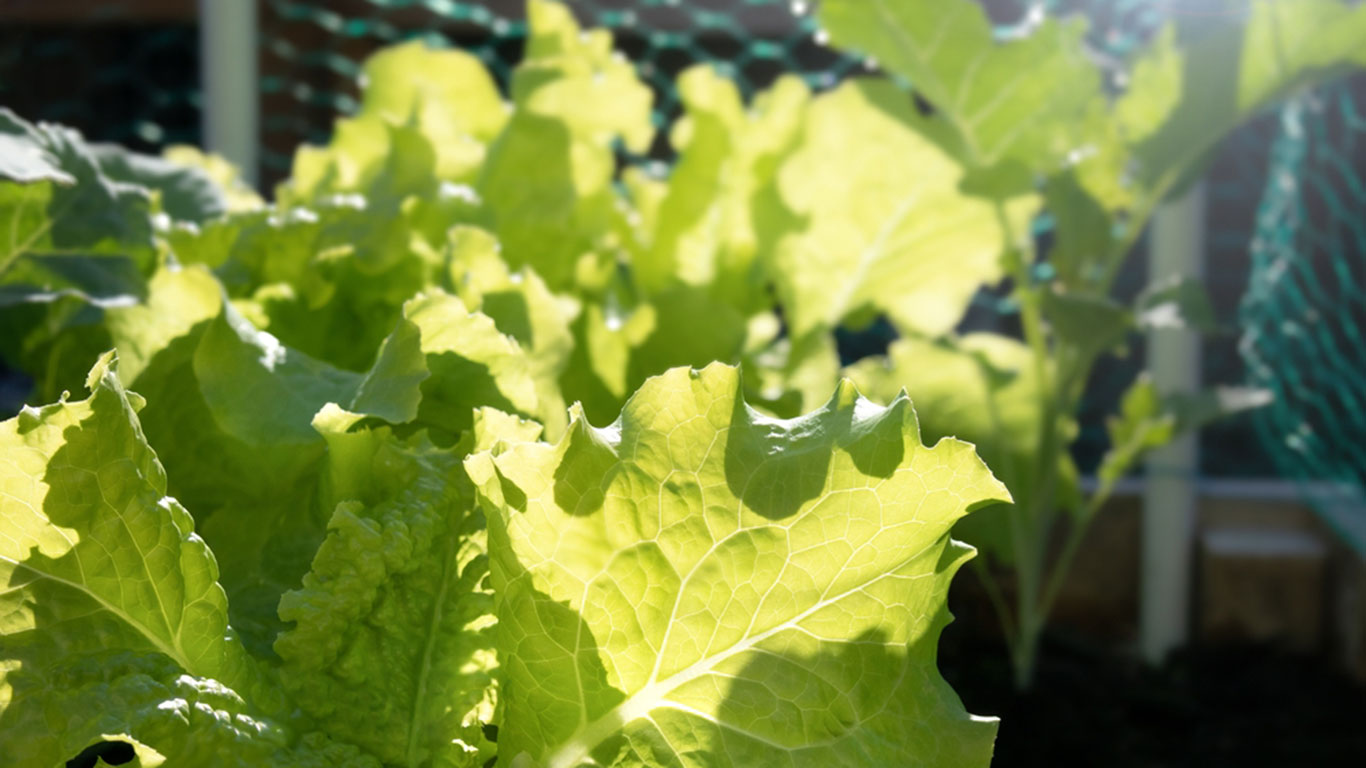
If you find yourself looking forward to that next summer salad, burger or anything in between, enjoy some fresh lettuce on it because you’re in luck—Canada grows lots of that leafy green vegetable.
Marketed production of fresh lettuce totalled 84 343 tonnes in 2025, up for the second year in a row. This was the highest haul since 2019, when production totalled 84 896 tonnes. However, it was down considerably from 96 085 tonnes in 1997, the highest level on record since the current data series began in 1996.
Production is trending upward due to growing conditions and at least in part due to the seeded area. The 4 201 hectares planted in 2025 is the largest area planted since 2010 (4,677) and considerably more than what was planted in 1997 (3 331), which marked a record haul.
Most of the lettuce planted (88.1%) and produced (89.0%) in 2025 was in Quebec, which typically produces most of the nationwide haul in any given year. The rest of it was produced mostly in Ontario and British Columbia.
Greenhouse lettuce production five times higher than in 2011
Provincially, Quebec farm operators also led greenhouse-grown lettuce in 2025, producing almost three-fifths (58.5%) of the 24.6 million kilograms (kg) harvested from 414 073 square metres in greenhouses nationwide.
Greenhouse production of fresh lettuce in Canada has risen steadily over the years and was five times higher in 2025 (+401.4%) than it was in 2011, the year we started tracking lettuce production data in tonnes.
Availability declines slightly
Our annual food availability series measures the amount of food physically present for consumption in Canada on a per capita basis. In 2025, there were 7.24 kg of lettuce available per Canadian, down slightly from 2024 (7.66 kg).
We started tracking these data in 1960 (5.19 kg), and the all-time high was reached in 2002 (11.70 kg).
Prices continue to sprout, while imports decrease
On an average annual basis, increases in lettuce prices at the grocery store slowed from a sharp increase in 2022 (+19.3%)—marked by unfavourable growing conditions and supply disruptions due to the COVID-19 pandemic—to lesser increases in 2023 (+3.2%), 2024 (+0.2%) and 2025 (+5.2%).
More recently, however, lettuce prices increased by just over one-tenth (+10.7%) from May 2025 to May 2026, which was a main factor in a faster increase for vegetable prices in May compared with April.
One factor contributing to consumer prices is the cost of imported lettuce, especially during the off-season. In 2025, Canada imported 148.3 million kg of fresh lettuce (not organic), valued at $374.5 million. This was down from 2024 (155.2 million kg; $383.5 million).
In 2025, the quantities imported were highest in April and May, while in 2024, they peaked in March and May. So far in 2026, imports were up in January and February compared with the same months in 2025, and declined in March, April and May.
If you’re a farmer, we need to hear from you
The 2021 Census of Agriculture counted 2,398 farms that reported growing lettuce, up from 2016 (2,360 farms) and 2011 (1,753).
As collection continues for the 2026 Census of Agriculture, we need to hear from all farm operators who have not yet completed their questionnaire—whether they grow lettuce, mushrooms, grains, fruit, raise livestock or operate any other type of farm.
In addition to supporting data-driven policymaking, the 2026 Census of Agriculture is the sole source of community-level agriculture data in Canada. It can help identify trends and provide information on emerging issues and opportunities. Farm organizations are also heavy users of census data.
The questionnaire covers a wide range of topics such as land use, crops, livestock, labour, equipment, land management practices and finances.
Visit the census website for more information and to complete your questionnaire.

Contact information
For more information, contact the Statistical Information Service (toll-free 1-800-263-1136; 514-283-8300; infostats@statcan.gc.ca) or Media Relations (statcan.mediahotline-ligneinfomedias.statcan@statcan.gc.ca).