
In Inuktitut, the day is known as "Inuit Upluani" and written in Inuktitut syllabics as ᐃᓄᐃᑦ ᐅᑉᓗᐊᓂ.
Celebrated on November 7, this day of note was first established 20 years ago to honour the birth of Eben Hopson Sr., the organizer of the first Inuit Circumpolar Conference.
It’s an opportunity to celebrate the distinct heritage of Inuit, whose shared circumpolar homeland of Inuit Nunaat stretches across northern Canada, Alaska, Greenland and Chukotka, Russia, while recognizing the many Inuit who live elsewhere around the world.
Over 70,000 Inuit live across Canada
Most (69%) of the Inuit population in Canada resides in Inuit Nunangat, the homeland of Inuit in Canada. It is made up of four regions that together contain more than 40% of Canada’s land area and more than 72% of its coastline (link available in English only): the Inuvialuit Settlement Region (Northern Yukon and Northwest Territories), Nunavut, Nunavik (northern Quebec) and Nunatsiavut (northern Labrador).
Nearly 44% (30,865 people) of the total Inuit population in Canada resided in Nunavut in 2021, with a further 18% (12,595) living in Nunavik, 4% (3,145) in the Inuvialuit region and 3% (2,095) living in Nunatsiavut. Outside of Inuit Nunangat, a sizable proportion of Inuit lived in urban regions such as Ottawa–Gatineau (1,730 people), Edmonton (1,290) and Montréal (1,130).
In 2021, 42,800 people reported that they could speak Inuktut
While there are several Inuit languages or dialects in Canada—including Inuvialuktun, Innuinaqtun and Inuktitut—they can be collectively referred to under the umbrella term of Inuktut.
Inuktut is part of the official languages of both the Northwest Territories and Nunavut. Nunavut stood out for its highest rate of bilingualism among the provinces and territories in 2021. Notably, nearly three in four Inuit (72%) could conduct a conversation in both Inuktitut and English. The region of Nunavik is also notable, where close to all Inuit reported speaking Inuktitut.
The 2022 Indigenous Peoples Survey (IPS) collects socioeconomic data on Indigenous peoples, with the sixth cycle of the survey featuring the inclusion of Indigenous children and their families.
Nearly three-quarters (73%) of Inuit children aged 6 to 14 years could speak or understand at least a few words of an Indigenous language. This proportion is much higher for those living in Inuit Nunangat (92%) than those living outside (32%), underscoring the importance of language exposure in daily life such as in the home, the community and in schools.
About two-thirds (65%) of younger Inuit children aged 1 to 5 years reported daily exposure to an Indigenous language in their home. A similar proportion of Inuit children aged 6 to 14 years reported being taught an Indigenous language—presumably Inuktut—at school (66%), including 96% in Nunatsiavut and the Inuvialuit region, 95% in Nunavik and 90% in Nunavut. Indeed, the parents of 93% of Inuit children living inside Inuit Nunangat and 51% of parents of Inuit children living outside Inuit Nunangat strongly agreed that their school supports Indigenous culture.
Passing on traditions
Handcrafted goods, including clothing, footwear, carvings, drawings and jewellery, are important expressions of Inuit culture and continue to be created today. The 2022 IPS asked Inuit whether they had made clothing or footwear, including accessories, or produced carvings, drawings, jewellery or other artwork in the past 12 months. In 2022, over one in five Inuit aged 15 years and older (22%) made clothing or footwear in the past 12 months, and a similar 21% made carvings, drawings, jewellery or other kinds of artwork in the past 12 months. Nearly two in five Inuit women (37%) made clothing or footwear in the past 12 months.
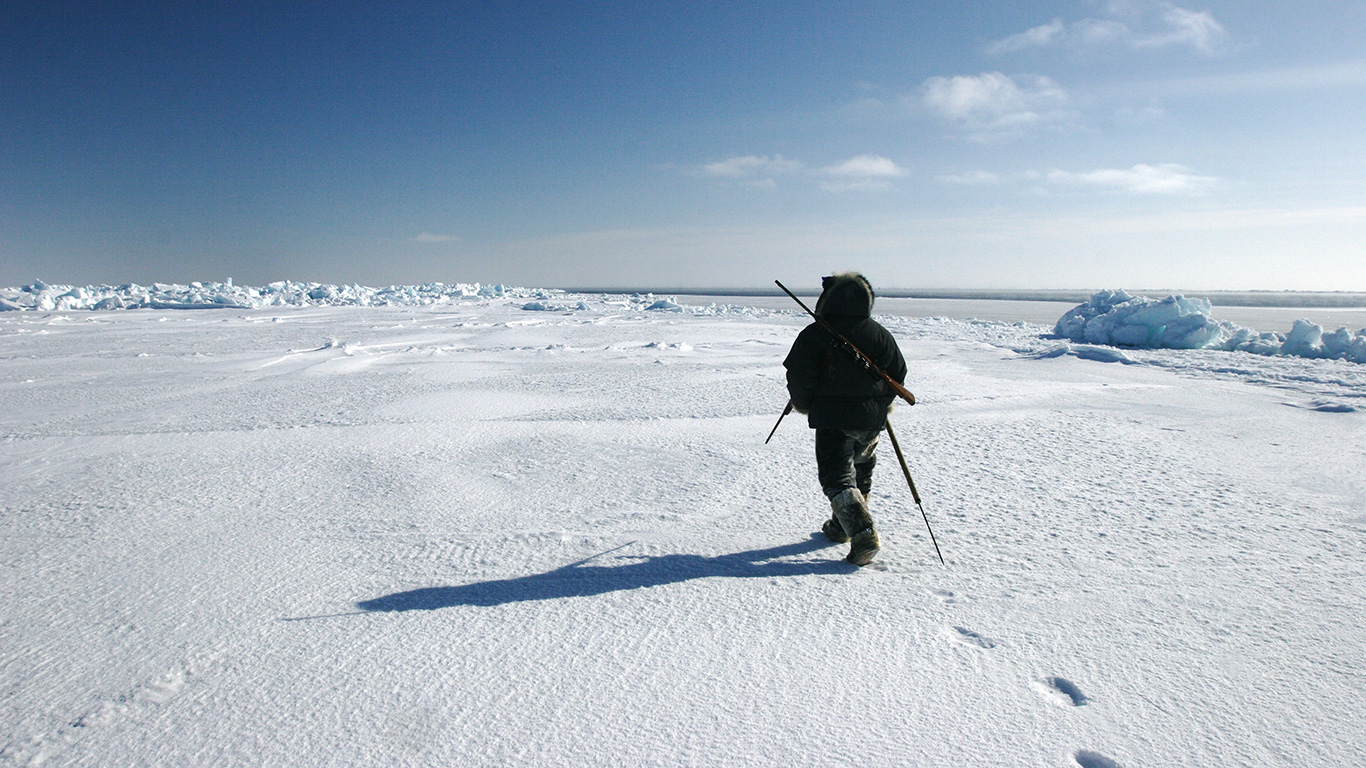
Country food is a term used for traditional Inuit foods harvested from the land, sea and ice. Harvesting and sharing country food are closely connected to Inuit culture, identity, well-being and relationships with the environment. In 2022, 49% of Inuit aged 15 years and older reported hunting, fishing or trapping in the previous 12 months, while 40% reported gathering wild plants. Of those who hunted, fished or trapped, 51% reported doing so to share with their community.
Participation in cultural activities was also high among Inuit children in 2022: around one in three children aged 6 to 14 years (32%) participated in cultural events and ceremonies at least monthly, and nearly two in five (39%) made carvings, drawings, jewellery or other art.
Further information
Discover the Celebrating Indigenous Artists 2026 Census soundtrack, featuring performances by Inuit artists singing in Inuktut.
Looking ahead, updated Indigenous Peoples data from the 2026 Census are scheduled to be released on September 28, 2027, providing new insights into the Inuit population across Canada.

Contact information
For more information, contact the Statistical Information Service (toll-free 1-800-263-1136; 514-283-8300; infostats@statcan.gc.ca) or Media Relations (statcan.mediahotline-ligneinfomedias.statcan@statcan.gc.ca).