Love sports, will travel
Canadians don’t need the World Cup as an excuse to travel to see a sporting event—we do it all the time. Canadians took 10.5 million domestic trips that included attending a sports event as a spectator in 2025.


Canada Day is just around the corner. Let’s celebrate by looking at a few stats where Canada leads the world.
Statistics Canada's look at the week.
In current dollars, total capital expenditures in the health care and social assistance sector grew from $13.5 billion in 2022 to $20.7 billion in 2026, representing an average annual growth of 7.4%.
Canada is the host country for Group B in the World Cup, squaring off against Switzerland, Bosnia and Herzegovina, and Qatar for a shot at the knockout stage. According to FIFA, Switzerland is the highest ranked national team in Group B, at 19th, while Canada ranks 30th, Qatar, 55th, and Bosnia and Herzegovina, 64th. Let’s see how our World Cup competition stacks up based on our stats.
Statistics Canada's look at the week.
Finally, it’s time to get outside, say the parents! But hold on, say a lot of those young Canadians, who want to spend some of that free time on their mobile devices, playing video games or watching TV.
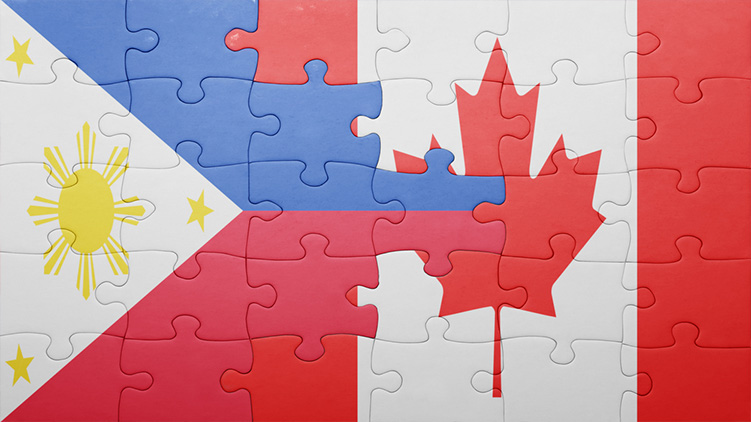
The Filipino population in Canada has grown rapidly over the past several decades, driven largely by immigration, particularly through economic and caregiving pathways. In 2021, over 957,000 individuals in Canada reported being Filipino, representing 2.6% of Canada’s population and making Filipinos the fourth-largest racialized group in the country.
Production of crude oil and equivalent products rose for the fifth consecutive year in 2025, up 4.0% from 2024 and reaching a new annual record of 310.9 million cubic metres.
In 2023, households accounted for over one-fifth (21.5%) of Canada’s total energy use and less than one-sixth (15.4%) of Canada’s total GHG emissions, virtually unchanged from 2022.