
On this page
- At a glance
- From the Minister
- From the Chief Statistician
- Results: What we achieved
- Spending and human resource
- Supplementary information tables
- Federal tax expenditures
- Corporate information
- Definitions
Copyright information
© His Majesty the King in Right of Canada, as represented by the Minister of Industry and Minister responsible for Canada Economic Development for Quebec Regions, 2026
Catalogue Number: 11-628-X2026001
ISSN: 2368-1160
Note: Statistics Canada used generative AI tools to support the development of content in this report. A human has reviewed and validated all AI-generated content.
At a glance
This departmental results report details Statistics Canada's actual accomplishments against the plans, priorities and expected results outlined in its 2025–26 Departmental Plan.
These results align with the priorities outlined in the May 21, 2025, mandate letter from the Prime Minister, as well as with Statistics Canada's vision, mission, raison d'être and operating context.
Key priorities
Statistics Canada identified the following key priorities for 2025–26:
- Advance the agency's large-scale transformation agenda to deliver more integrated, timely and relevant data and insights for Canadians.
- Deliver high-quality statistical programs and services to support evidence-based decision making and Government of Canada priorities.
Highlights
In 2025–26, Statistics Canada undertook major preparations for the 2026 Census of Population and Census of Agriculture, which provide foundational information for infrastructure planning, community services and agricultural development across Canada:
- The 2026 Census of Population collected comprehensive demographic data, including information on new topics such as homelessness, general health and sexual orientation for Canadians aged 15 and older. Preparations in 2025–26 focused on ensuring the agency's systems, infrastructure and workforce were ready for this national undertaking.
- The 2026 Census of Agriculture questionnaire content was finalized, and preparations were in place for the increased use of administrative data to improve efficiency, reduce respondent burden and maintain high-quality agricultural statistics.
In addition to census preparations, Statistics Canada advanced work to improve the availability, accessibility and relevance of statistical information for Canadians. The agency strengthened economic and social data programs through initiatives such as the Artificial Intelligence and Technology Measurement Program (TechStat), enhanced housing data to support understanding of affordability and supply, and expanded information on Canada's domestic and international economic connections. It also expanded access to data through secure platforms and continued its transformation agenda through the use of new technologies, including artificial intelligence and open-source tools. These efforts supported the agency's ability to provide timely, trusted information in a rapidly changing environment.
- Total actual spending (including internal services): $811,685,256
- Total full-time equivalent staff (including internal services): 6,689
For detailed information on Statistics Canada's total spending and human resources, read the Spending and human resources section of this report.
Summary of results
The following provides a summary of the results the department achieved in 2025–26 under its "core responsibility" (its main areas of activity).
Core responsibility: Statistical information
Actual spending: $717,724,847
Actual human resources: 6,028
In 2025–26, Statistics Canada delivered high-quality, timely and relevant statistical information to support evidence-based decision making for Canadians, businesses and governments. The agency strengthened its core economic and social data programs while advancing key transformation initiatives to improve how data are collected, integrated and analyzed.
The agency made significant progress in enhancing Canada's economic measurement framework. Updates to core national accounts improved the accuracy, coherence and international comparability of key economic indicators, such as gross domestic product (GDP), strengthening their use for fiscal, monetary and investment decision making. Statistics Canada releases highlighted major economic developments during the year, including annual GDP growth slowing to 1.7% in 2025 (The Daily — Gross domestic product, income and expenditure, fourth quarter 2025), inflation easing to 1.8% in early 2026 (The Daily — Consumer Price Index, February 2026) and record high exports to countries other than the United States, which rose to 5.7% in May 2025 (The Daily — Canadian international merchandise trade, May 2025). In response to external disruptions, Statistics Canada took targeted measures to sustain the timely release of critical economic statistics, ensuring decision makers continued to have reliable information when it was most needed. At the same time, new and expanded data on strategic sectors, such as internal trade and emerging technologies, provided timely and targeted insights into Canada's evolving economy, equipping decision makers to respond to emerging risks and opportunities for Canadians.
Complementing these efforts, social data were strengthened to reflect issues of importance to Canadians. Enhancements to housing data improved understanding of affordability and supply, informing housing policy and planning decisions. Health initiatives supported federal priorities, such as disease prevention and better knowledge of health system performance, enabling more effective monitoring and response. Improved labour force data collection and innovative approaches to respondent engagement ensured continued accuracy and representativeness of key labour market indicators, supporting workforce and economic decision making.
To support these advancements, Statistics Canada invested in innovation and transformation to sustain the quality and relevance of its programs. The agency expanded the use of administrative and alternative data sources and continued the adoption of modern statistical methods to address challenges such as declining response rates, reducing respondent burden and improving data coverage. Transitioning to open-source data processing environments increased flexibility, efficiency and transparency, enabling more agile development and faster deployment of statistical products. At the same time, artificial intelligence and innovative technologies were leveraged to accelerate analytical capabilities, streamline processes and support the broader transformation agenda. These efforts enabled faster insights and more responsive statistical production.
To ensure these improvements translated into greater impact, the agency strengthened connections with Canadians through a multifaceted approach that made data and statistics more accessible, engaging and relevant to diverse audiences. Expanded online platforms and dashboards, thematic content, and interactive tools increased access to key information and improved how users—from policy makers and researchers to the general public—navigate and apply data, supporting more informed decisions about economic, social and environmental issues.
For more information on Statistics Canada's activities related to statistical information, read the Results: What we achieved section of this report.
From the Minister
It is our pleasure to present the 2025–26 Departmental Results Report for Statistics Canada.
Every day, individuals, households, businesses and farms contribute data that, when transformed into trusted statistics, becomes a public good. These statistics help communities plan schools, hospitals and public transit, support businesses as they invest and create jobs, and enable governments to develop policies, allocate resources and deliver services that respond to the needs of Canadians. In this way, reliable information helps ensure decisions are grounded in evidence and contributes to a stronger, more resilient Canada.
To honour that contribution and ensure Canadians continue to benefit from the information they provide, Statistics Canada continued transforming how it produces and delivers statistics. By reducing respondent burden, accelerating analytical capabilities, expanding the use of artificial intelligence and innovative technologies, and strengthening international comparability the agency enhanced its ability to provide timely, high-quality information that supports decisions across Canada.
Statistics Canada also finalized preparations for the 2026 Census of Population and Census of Agriculture. By participating in these foundational programs, Canadians, households and agricultural operators help build a shared understanding of the country's changing population and economy. The information collected supports decisions about housing, health care, education, transportation, infrastructure and other services that affect communities across Canada.
We invite you to read this report to learn more about how Statistics Canada is working with partners across the country to support Canadian businesses, foster innovation and create opportunities for today and for future generations to come.
The Honourable Mélanie Joly
Minister of Industry and Minister responsible for Canada Economic Development for Quebec Regions

The Honourable Mélanie Joly
Minister of Industry and Minister responsible for Canada Economic Development for Quebec Regions
From the Chief Statistician
In 2025–26, Statistics Canada continued to operate in a period of significant transformation. This moment in time is being shaped by rapid technological advances, evolving expectations for information, growing economic and social complexity, and fundamental changes in how people access, interpret and use data. These shifts are creating both opportunities and disruption, transforming how information is produced, shared and consumed across society.
In this context, the role of national statistics is becoming increasingly important. As both the volume of information continues to grow and the pace of change accelerates, Canadians expect information that is timely, accessible and trustworthy. Meeting these expectations requires national statistical organizations to continuously adapt while preserving the principles that underpin public confidence in official statistics.
Throughout the year, Statistics Canada continued transforming its statistical programs, methods, systems and ways of working to ensure the agency remains responsive, sustainable and relevant in a rapidly changing environment. This included preparations for the 2026 Census of Population and the 2026 Census of Agriculture, foundational programs that remain essential to understanding a changing Canada and supporting informed decisions in communities across the country.
At the same time, the agency advanced more integrated and automated approaches to statistical production, greater use of existing data sources, and more accessible digital information to better support Canadians' evolving information needs. These changes are also reshaping the nature of statistical work itself. Across the agency, employees continue to adapt to new technologies, new methods and new ways of collaborating to respond to increasingly complex issues and information needs. Their expertise, professionalism and commitment remain central to the agency's ability to innovate and deliver high-quality statistical information for Canadians.
As Statistics Canada evolves, maintaining public trust remains fundamental to its work. Trust is built through transparency, strong governance, ethical data practices, scientific integrity and meaningful engagement with Canadians. These principles will guide the agency as it prepares for the future.
Looking ahead, Statistics Canada will continue to evolve alongside the society it serves. This will require ongoing innovation, collaboration and strong stewardship to ensure Canada's statistical information remains relevant, inclusive and responsive in an increasingly dynamic world.
I invite you to read this report to learn more about the agency's results and accomplishments in 2025–26.
André Loranger
Chief Statistician of Canada

André Loranger
Chief Statistician of Canada
Results: What we achieved
Core responsibilities and internal services
Core responsibility: Statistical information
In this section
Description
Statistics Canada's core responsibility is to produce objective, high-quality statistical information about Canada. The statistical information produced relates to the commercial, industrial, financial, social, economic, environmental, and general activities and conditions of the people of Canada.
The role of Statistics Canada as Canada's national statistical office
Canada is experiencing a socioeconomic transformation shaped by global trade dynamics, demographic shifts and rapid technological advances such as artificial intelligence (AI). While these changes present opportunities to increase productivity and reshape industries, they also introduce complex considerations relating to privacy, ethics and workforce adaptation. In this environment, Statistics Canada plays a critical role in providing timely, trusted data to support evidence-based decisions and help Canadians navigate change.
Statistics Canada's extensive suite of statistical programs provides essential insights into Canada's economy, society and environment, informing decisions that affect Canadians every day—from determining where schools and health facilities are built to monitoring food prices and preparing for emergencies. While most of the Agency's statistical programs support specific policy, legislative or information needs, five key programs are critical to shaping Canada's economic and social policies:
- The Census of Population provides comprehensive data on Canada's population, supporting infrastructure planning and community services.
- The Census of Agriculture provides detailed data on the agricultural sector, supporting agricultural policy, development and planning.
- The Consumer Price Index measures inflation, informing fiscal policy and the Bank of Canada's monetary decisions.
- The Labour Force Survey measures employment and labour market trends, supporting workforce planning and training policies.
- The System of National Accounts provides a comprehensive view of economic activity, including gross domestic product, enabling analysis and decision making across government and industry.
Together, these programs reinforce Statistics Canada's role as Canada's national statistical office, providing the trusted information that underpins decision making across the country.
Building on this foundation, Statistics Canada continued to advance its mandate in 2025–26 while responding to a rapidly evolving environment.
Supporting the allocation of government funding
Statistics Canada's data play a key role in the allocation of federal funds to the provinces and territories. Under the Federal-Provincial Fiscal Arrangements Act, the agency provides population counts, national accounts data and other economic statistics that are used to determine annual transfer payments, guiding the distribution of more than $100 billion in funding for health care, education and other essential public services. National Accounts data also underpin the revenue allocation formula for the harmonized sales tax program.
In 2025–26, Statistics Canada carried out its mandate while advancing its transformation agenda. This agenda focused on delivering more connected, timely and trusted insights for Canadians, enabling rapid adaptation to emerging needs and supporting efficient and sustainable operations. These efforts were supported by a continued focus on fostering an inclusive and respectful workplace, ensuring employees were equipped to deliver results for Canadians.
Within this context, the agency maintained and strengthened its role as Canada's national statistical office by
- contributing to statistical standards and practices
- maintaining public trust in statistics
- adapting to a rapidly evolving data environment
- playing a key role in the international statistical system.
The following sections expand on how these roles were carried out in 2025–26:
- Contributing to statistical standards and practices: Statistics Canada adhered to established standards and frameworks—such as the United Nations (UN) Fundamental Principles of Official Statistics (PDF)—ensuring credibility, data coherence and comparability over time. Within Canada, the agency continued to lead the 2023–2026 Data Strategy for the Federal Public Service, promoting sound data stewardship, secure and ethical data use, and high-quality statistical practices. Internationally, the agency contributed to the development and maintenance of global classification systems and supported initiatives such as the ongoing update of the Generic Statistical Business Process Model, led by the UN Economic Commission for Europe. These efforts ensure that Canadian statistics remain consistent, comparable, and aligned with international standards.
- Maintaining public trust in statistics: Maintaining public trust remained central to Statistics Canada's mandate. In an environment where misinformation could erode confidence in public institutions, the agency upheld high standards of scientific integrity and ethics. As part of its transformation, it strengthened transparency through enhanced communications, website improvements and ongoing outreach via its Trust Centre. The development of the Countering Misinformation and Disinformation Strategy—including protocols to identify and address misinformation, enhanced social media monitoring, and increased public engagement on responsible data use—helped ensure that Canadians continue to have access to reliable, credible information. This work is complemented by collaboration with federal and international partners to share expertise and best practices.
- Adapting to a rapidly evolving data environment: National statistical organizations are navigating a rapidly evolving environment marked by declining response rates, growing privacy concerns, increasing availability of big data and an expanding ecosystem of private data providers. Through its transformation agenda, Statistics Canada continued to adapt to this changing data landscape by adopting new methodologies, addressing emerging ethical considerations and strengthening partnerships across the data ecosystem. These efforts helped sustain data quality and relevance, ensuring Canadians continue to benefit from accurate and timely information.
- Playing a key role in the international statistical system: Statistics Canada reinforced its international leadership through active participation in over 175 committees and expert groups, including but not limited to the UN Statistical Commission, the UN Economic Commission for Europe, and the Organisation for Economic Co-operation and Development (OECD). In June 2025, the Chief Statistician was elected chair of the Conference of European Statisticians, guiding the UN Economic Commission for Europe on key statistical matters. The Chief Statistician also serves as a member of the OECD Committee on Statistics and Statistical Policy, helping influence the direction of the organization's statistical program. The agency also contributed to advancing global statistical standards, including updates to the 2025 System of National Accounts, the Balance of Payments and International Investment Position Manual, and the UN System of Environmental-Economic Accounting. This work helps ensure that Canadian statistics remain internationally comparable and supports Canada's influence in shaping global statistical practices.
Through these efforts, Statistics Canada not only strengthened its data offerings to Canadians but also reinforced its role as a global leader in official statistics. By maintaining strong partnerships and contributing to global statistical standards, the agency enhanced the relevance, comparability and credibility of Canadian statistics and ensured decision makers have access to trusted, internationally aligned information.
Quality of life impacts
Statistics Canada's Quality of Life Statistics Program provides high-quality, timely data on well-being in Canada by bringing together information across a broad range of indicators. The program supports decision makers by delivering insights that inform policies and actions on the issues that matter most to Canadians.
In 2025–26, the program strengthened its role as a leading source of well-being data in Canada. Central to these efforts is the Quality of Life Hub, which underwent significant enhancements and continues to rank among the most-accessed resources on the Statistics Canada website.
- New tools enable users to explore data by census subdivision, improving access to localized insights. An analytical release catalogue makes it easier to find products related to the program's 91 indicators, while an indicator alignment tool shows how indicators connect to frameworks across federal departments—enhancing the discoverability and use of well-being data.
- The program also exercised leadership in international efforts to advance the measurement of well-being, including through the UN Statistical Commission's Friends of the Chair Group on Social and Demographic Statistics, and the UN Economic Commission for Europe. This work contributed to the development of the Guidelines on measurement of well-being (PDF), drawing on Statistics Canada's expertise as a global leader.
Through the Quality of Life Statistics Program, Statistics Canada contributed to good governance by ensuring that public decisions are grounded in evidence, transparent and responsive to the lived experiences of Canadians. The program also supported federal departments in planning, decision making and reporting on Canada's Quality of Life Framework.
Progress on results
This section details the department's performance against its targets for each departmental result under Core responsibility: Statistical Information.
Table 1 shows the target, the date to achieve the target and the actual result for each indicator under high-quality statistical information is available to Canadians in the last three fiscal years.
Departmental result indicators | Target | Date to achieve target | Actual results |
|---|---|---|---|
Number of post-release corrections due to accuracy for mission critical programs | 0 | March 31, 2026 |
|
Percentage of international standards with which Statistics Canada conforms | 90% | March 31, 2026 |
|
Number of statistical products available on the website | 54,106 | March 31, 2026 |
|
Number of Statistics Canada data tables available on the Open Data Portal | 9,900 | March 31, 2026 |
|
| |||
Table 2 shows the target, the date to achieve the target and actual result for each indicator under high-quality statistical information is accessed by Canadians in the last three fiscal years.
Departmental result indicators | Target | Date to achieve target | Actual results |
|---|---|---|---|
Number of visits to Statistics Canada's website | 31,500,000 | March 31, 2026 |
|
Number of hits on Statistics Canada's Application Programming Interface (API) | 23,765,544 | March 31, 2026 |
|
Percentage of website visitors that found what they were looking for | 78% | March 31, 2026 |
|
Number of interactions on social media | 1,300,000 | March 31, 2026 |
|
| |||
Table 3 shows the target, the date to achieve the target and actual result for each indicator under high-quality statistical information is relevant to Canadians in the last three fiscal years.
Departmental result indicators | Target | Date to achieve target | Actual results |
|---|---|---|---|
Number of media citations on Statistics Canada data | 130,000 | March 31, 2026 |
|
Number of journal citations | 38,000 | March 31, 2026 |
|
Percentage of users satisfied with statistical information | 80% | March 31, 2026 |
|
| |||
The Results section of the Infographic for Statistics Canada on GC Infobase provides additional information on results and performance related to its program inventory.
Details on results
The following section describes the results for statistical information in 2025–26 compared with the planned results set out in Statistics Canada's departmental plan for the year.
Censuses
Censuses
Results achieved
As Canada's national statistical office, Statistics Canada produces data for the country and for each province and territory. Censuses serve as the most comprehensive source of information on the country's population, economy and environment. They provide detailed, high-quality foundational data that support a wide range of social and economic analysis, from population and social trends to economic and environmental conditions. By showing how Canada is changing over time, censuses provide a consistent foundation of information for planning and policy development across different sectors.
The completion of major preparation activities in advance of the May 4, 2026, launch of the Census of Population and the Census of Agriculture marked an important milestone in the 2026 Census cycle. The order in council prescribing census content for both the Census of Population and the Census of Agriculture was signed in June 2025 and published in the Canada Gazette in July, fulfilling requirements under the Statistics Act. These actions established the formal approval framework for both census programs. Together, they form a core pillar of Canada's statistical system and provide key baseline data that underpin Statistics Canada's broader statistical system.
Censuses
- Census of Population
- Census of Agriculture
Census of Population
The Census of Population is mandated under the Constitution Act, 1867 and the Statistics Act, and provides a detailed picture of Canada and its people. Its data provide a foundational input for Statistics Canada's statistical programs. Governments, Indigenous communities and organizations, community and farm organizations, businesses, as well as many others use census data. For example, provincial and territorial governments use census data mapping to better target community health services based on neighbourhood needs.
In 2025–26, Statistics Canada undertook preparations for the 2026 Census of Population, the 24th census of its kind, to support the collection of accurate, reliable and inclusive data. The agency finalized questionnaire content, introducing new questions on general health, experiences of homelessness, sexual orientation and diversity to better reflect Canada's changing population and information needs.
Recruitment of local census staff began in November 2025, supporting the hiring of approximately 32,000 employees to carry out census operations across the country. Early enumeration activities also progressed, with 21,000 responses collected as of March 31, 2026.
Census of Agriculture
Statistics Canada also advanced preparations for the 2026 Census of Agriculture, which provides essential information on Canada's farming sector that support business planning and inform policies affecting farmers, rural communities and the broader economy. The agency finalized the census questionnaire to support the collection of consistent and reliable data.
To reduce response burden, the questionnaire was streamlined—some questions were removed and the information was instead obtained from administrative data. This approach helped maintain data quality while improving the efficiency of data collection.
Census of Agriculture data provide a comprehensive picture of the farming sector, including farm finances, production levels, farming practices, and demographic information on farm operators. The census supports federal, provincial and territorial initiatives, including the $3.5 billion Sustainable Canadian Agricultural Partnership (2023–2028), by providing information needed to measure progress in the agriculture sector.
Census data are also widely used by government and other data users to support analysis of sector conditions. Labour-related data help inform labour market forecasts and assessments of the sector's growth and sustainability. Revenue and expense data support analysis of affordability and financial conditions across the agriculture sector.
Economic statistics
Economic statistics
Results achieved
Together, the foundational data produced through the census programs support a broader understanding of Canada's economy and inform ongoing economic measurement.
Drawing on these foundational sources, Statistics Canada's economic statistics program provides a comprehensive view of Canada's economy, supporting understanding of the forces shaping economic performance in a context of ongoing uncertainty, structural change and increasing global interconnectedness.
Statistics Canada plays a central role in producing reliable and timely economic data to inform decisions by governments, businesses and Canadians. Through its broad suite of statistical programs—including national accounts, inflation, industry statistics, trade and wealth—the agency tracks economic activity across key sectors while improving the understanding of economic conditions.
In 2025–26, Statistics Canada focused on strengthening the resilience of core economic indicators, advancing measurement frameworks to better reflect emerging economic realities, and expanding analysis of Canada's domestic and international economic linkages.
Economic statistics
- Supporting Canadians during economic uncertainty
- Advancing knowledge of Canadian economic conditions
- Measuring natural assets and environmental-economic linkages
- Strengthening Canada's understanding of international connections
Supporting Canadians during economic uncertainty
In a context of economic volatility and evolving data availability, maintaining continuity of key indicators is essential. Statistics Canada continued to provide accurate and up-to-date economic data to support Canadians, businesses and policy makers in navigating these changing conditions. The agency ensured continuity of core economic indicators and strengthened domestic economic insights to support greater confidence in official statistics and improved understanding of economic trends.
Statistics Canada ensured continuity in key macroeconomic indicators, including gross domestic product (GDP) and balance of payments statistics, even during periods of volatility in external data sources. This was supported through contingency measures such as modelled estimates, alternative data sources, and enhanced documentation of assumptions and revisions.
The agency enhanced the Canadian Internal Trade Data and Information Hub, developed in partnership with the Privy Council Office, to improve understanding of economic activity within Canada. The Hub was expanded with new data on interprovincial flows of goods and services and improved labour mobility information, supported by analytical content on regional trade patterns and workforce trends. These enhancements to the Hub enabled more detailed analysis of trade linkages between regions and the impacts across industries, with volume-based estimates available for more than 250 products. The Hub also added indicators of internal trade intensity for more than 220 detailed Input-Output Industry Classification groups, as well as timely experimental estimates of interprovincial labour mobility at a more granular occupational level across Canada.
Statistics Canada also expanded analysis of the critical minerals sector through releases such as the Economic contribution of critical mineral production in Canada, which reported a $30.2 billion contribution to GDP and support for nearly 55,000 jobs in 2023. This work was supported by enhanced mineral production reporting and collaboration with Natural Resources Canada.
Advancing knowledge of Canadian economic conditions
At the same time, the agency strengthened how economic activity is measured to reflect emerging trends and structural change.
Statistics Canada continued to enhance its economic measurement capabilities by enhancing methodologies, aligning with evolving international standards and expanding data on emerging economic forces. These efforts improved the quality, comparability and analytical usefulness of economic statistics, supporting better understanding of economic performance.
In line with these efforts, Statistics Canada introduced updates to Canada's economic accounts through improvements to the supply and use tables, a core component of the System of National Accounts. These updates included adding a new benchmark year (2022); integrating the latest production, trade, and consumption data; and improving classifications and data consistency.
The agency is also transitioning toward updated international standards under the System of National Accounts 2025, which will expand how economic activity is measured. These updates strengthen comparability and broaden the scope of macroeconomic statistics to better capture areas such as sustainability, well-being, digitalization, globalization, financial innovation and the informal economy. They also improve the consistency and comparability of data used for economic analysis.
Complementing this work, and in response to the growing influence of emerging technologies, Statistics Canada launched the Artificial Intelligence and Technology Measurement Program (TechStat). TechStat was designed to systematically measure the adoption and use of artificial intelligence (AI) and technologies by Canadian businesses, households, workers and workplaces, and the federal government, as well as economic and social impacts of AI.
Measuring natural assets and environmental-economic linkages
By extending the measurement of economic activity to include environmental-economic linkages, Statistics Canada also produces environmental statistics through the Census of Environment, which provides a comprehensive view of Canada's natural systems.
The Census of Environment provides data on Canada's ecosystems, describing the extent and condition of land, water and other natural systems. This information supports the understanding of Canada's natural assets and their management over time.
Key milestones were achieved as part of the Census of Environment initiative. New analytical releases highlighted the economic and social benefits of nature, including a spotlight on oceans and coastal ecosystems, examining their conditions, extent, services and economic value.
The agency developed ecosystem accounting frameworks for urban areas, supporting the measurement of ecosystem conditions and services in cities. This work helps to improve the understanding of how natural features in urban areas, such as parks, green spaces and waterways, contribute to quality of life, climate resilience and local economic activity.
Enhancements to geospatial tools and international collaboration, along with work to establish the foundations of ecosystem physical and monetary valuation, reinforced Canada's leadership in environmental accounting. These efforts strengthened decision making by providing a clearer understanding of Canada's natural resources in terms of long-term environmental, economic and social benefits.
Strengthening Canada's understanding of international connections
As economic activity increasingly reflects global linkages, understanding Canada's international connections is essential.
Global economic relationships continued to evolve over the year, shaped by shifting trade patterns, cross-border investment flows and changing mobility trends. In this context, Statistics Canada expanded its data and analytical products on international economic connections, providing integrated information on trade, investment and tourism to support a clearer understanding of their role in the global economy.
Statistics Canada expanded its international trade data offerings and analytical content. New tools were released to support the understanding of the Canadian international merchandise trade balance and to provide new perspectives on country attribution in Canadian international merchandise trade statistics. Broader international accounts products also provided integrated information on merchandise trade, services trade and cross-border investment activity, offering a more complete view of economic linkages with global partners.
At the same time, the agency also strengthened its tourism data to support analysis of cross-border mobility and its economic impacts. Indicators derived from Canada Border Services Agency data provided timely signals on travel activity and its implications for tourism-related activities, employment and related industries. By the first quarter of 2026, tourism demand, tourism exports and tourism GDP had reached their highest levels on record since 1986, while tourism jobs reached their highest level since the fourth quarter of 2019.These data supported a clearer understanding of tourism as an export activity and its contribution to Canada's economic performance, particularly in the context of rapidly evolving travel patterns.
To improve accessibility and coherence of international economic information, Statistics Canada continued to enhance its international trade, tourism and international accounts products, providing users with integrated insights on trade, travel, investment and ownership patterns. These efforts provide a more complete view of Canada's international economic relationships and help users better understand their contribution to the Canadian economy.
Social statistics
Social statistics
Results achieved
While economic indicators provide important insights, understanding their impacts on people and communities requires a complementary social perspective.
Social and demographic changes shape the lives of Canadians, influencing housing, health, labour market conditions and population growth. In this context, Statistics Canada provides data and analysis that help track these changes and offer a clearer picture of the conditions affecting individuals and communities across the country.
Statistics Canada plays a key role in producing social statistics that describe how Canadians live, work and access services. By bringing together social, economic and environmental data, the agency integrates information from across these areas to provide a more complete picture of social conditions and emerging trends. This generates insights on how these conditions are interconnected and supports efforts to reduce response burden through greater use of existing data sources.
In 2025–26, Statistics Canada focused on improving the availability, relevance and accessibility of social data while strengthening its ability to respond to evolving information needs. This included advancing housing data, supporting health-related analysis, modernizing labour force data collection, and producing timely information on population and immigration trends. These activities provide a comprehensive view of the social conditions affecting Canadians.
Social statistics
- Improving housing data
- Informing health care
- Strengthening labour force data
- Measuring immigration and the population
Improving housing data
As noted in the mandate letter, housing affordability and availability remain key concerns for Canadians and the Government of Canada, as changes in housing supply, rental costs and home prices continue to affect households across the country. Statistics Canada plays an important role in providing timely information on housing conditions to support a clearer understanding of these pressures and how they are evolving.
Statistics Canada continued to improve the coverage, frequency, and timeliness of housing statistics, including information on housing stock, residential construction, and prices of owned and rented housing. The agency also produced data on housing outcomes for individuals receiving housing assistance, as well as on the characteristics of those most at risk of homelessness and eviction.
In addition to these improvements, in June 2025, Statistics Canada worked in partnership with the Canada Mortgage and Housing Corporation to collect new information on average asking rents for rental units listed on major digital platforms in Canada through the Quarterly Rent Statistics program. The results provided more up-to-date insight into rental market conditions and affordability trends.
These housing pressures also have broader implications for health outcomes and service demand.
Informing health care
Access to timely and relevant health data is essential for understanding health outcomes, supporting health systems and improving care for Canadians. Statistics Canada works with partners across the health sector to provide data and analysis that help monitor key health issues, support program development and improve the delivery of health services.
In 2025–26, Statistics Canada contributed to collaborative research on breast cancer incidence and mortality rates for 15 population groups in Canada by providing disaggregated data analysis to support the Public Health Agency of Canada's breast cancer screening and prevention action plan. This work helps improve understanding of how breast cancer affects different populations, such as Black women (Breast Cancer Characteristics and Outcomes in Canadian Black Women by Ancestry), and supports more targeted approaches to prevention and care.
Complementing this work, the agency also contributed to the development of digital health tools and improved health workforce indicators. This included publishing data from the Survey on the Use of Digital Technologies by Health Care Providers, which provides insight into how digital tools are being used in health care settings and their impact on service delivery.
In addition to these efforts, Statistics Canada released results from the oral health component of the Canadian Health Measures Survey, conducted in 2024. These data provide baseline information on oral health and access to oral health care in Canada (The Daily — New direct measures suggest more adults are keeping their teeth, but gum health is declining, 2022 to 2024) at the time of the launch of the Canadian Dental Care Plan, supporting future monitoring and analysis.
Workforce availability also remained an important factor in understanding social and economic conditions across Canada.
Strengthening labour force data
Labour market information is essential for understanding employment trends, workforce participation and changing economic conditions. Statistics Canada produces labour force data that help track these trends and provide insight into the experiences of workers across the country. For example, regional unemployment rates from the Labour Force Survey are one input used by Employment and Social Development Canada in administering the employment insurance program, including determination of eligibility thresholds and benefit duration under the Employment Insurance Regulations.
In 2025–26, Statistics Canada modernized the Labour Force Survey by expanding its "online-first" collection approach. This allows Canadians to respond at their convenience while making the survey more resilient to disruptions such as public health measures, postal delays or natural disasters. Enhancements, including expanded access to the online questionnaire, allow interviewers to focus on households that require additional support, improving overall efficiency and flexibility in data collection.
To further strengthen data quality and address declining response rates, the agency introduced targeted initiatives to increase participation. The Contact Information Collection initiative established early contact with households before their first survey month, helping identify out-of-scope dwellings and support more efficient collection. Combined with expanded online access, these efforts increased online response rates to 46% by August 2025, up from 40% prior to the initiative, and contributed to higher overall participation. Maintaining stable response levels required sustained engagement efforts.
In parallel, Statistics Canada also advanced new approaches through the Labour Force Survey Innovation Panel, launched in partnership with the Privy Council Office's Impact and Innovation Unit. This initiative applies behavioural science to survey design and respondent engagement by analyzing operational data, conducting research with participants, and testing new communication methods such as SMS, email and tailored outreach. This work is helping identify more effective ways to reach and retain respondents.
Measuring immigration and the population
Labour market conditions are closely linked to population growth and migration patterns, which continue to shape economic conditions, housing demand and public services in Canada. Statistics Canada provides data and analysis on these trends to help monitor changes in the population and support planning across different sectors.
In 2025–26, Statistics Canada produced data and related to immigration levels. This helps inform the Government of Canada's priorities on sustainable immigration levels. The agency reported a slowdown in population growth, including a quarterly decline driven largely by a reduction in non-permanent residents. During this period, Canada's population decreased by 0.2%, representing a net loss of just over 102,000 people. These results were associated with changes in temporary immigration levels and broader demographic trends.
In support of evidence needs aligned with the government's priorities related to economic immigration and the attraction of global talent as outlined in the mandate letter, Statistics Canada leveraged key data sources, such as the Longitudinal Immigration Database, to produce new data and analysis on the socioeconomic outcomes of immigrants in Canada. This included new insights on the labour market outcomes and mobility of newcomers by admission category, as well as an overview of American-born immigrants living in Canada (The Daily — The median entry wage of new immigrants decreased by 10.6% in 2023 but remained above its pre-COVID-19 pandemic level). As part of the Ethnicity, Language and Immigration Thematic Series, the agency also released detailed socioeconomic portraits of the Arab, Chinese and South Asian populations in Canada, providing additional evidence on integration and social outcomes across diverse communities.
Statistics Canada also continued to publish demographic estimates and projections, providing ongoing insight into population trends and supporting the monitoring of immigration levels over time.
Connecting with Canadians
Connecting with Canadians
Results achieved
As demographic and economic conditions evolve, ensuring Canadians can access and understand statistical information remains essential.
As part of its broader efforts to make statistical information relevant and accessible, Statistics Canada connects with Canadians through ongoing engagement to understand their needs and by providing data, services and insights that are easier to access, understand and use in daily life.
This includes improving how users navigate the Statistics Canada website, expanding digital access to data and strengthening communication channels that support questions and feedback. These activities also support Canadians in accessing trusted statistical information in a context where quality and reliability are increasingly important.
These efforts reflect a continued focus on improving the user experience and ensuring Canadians can engage with statistical information in ways that meet their needs.
Connecting with Canadians
- Enhancing the website
- Expanding access to data
- Engaging with Canadians
Enhancing the website
Work in 2025–26 focused on enhancing Statistics Canada's website to improve how users access information and services. These changes aimed to make it easier for Canadians to navigate the site and find the data they need.
A new Statistics Canada homepage was launched in July 2025 as the first phase of a broader website modernization project. The updated design features a clearer layout, updated branding and simplified navigation. It was developed based on government standards, user research, international best practices and lessons learned from other statistical agencies. The redesign improves the browsing experience while maintaining existing page links, bookmarks and access to data tools.
At the same time, work began in collaboration with Shared Services Canada to explore live chat as a potential support option on the website. This work focused on assessing how a live chat function could enhance user support by complementing existing phone and email channels and improving responsiveness to enquiries. It also considered how an additional digital channel could support broader service delivery for users who prefer online communication.
While these improvements focus on how users find and navigate information, expanding access to data also requires improving the ways users can work with and analyze that information.
Expanding access to data
Access to detailed data is essential for researchers, governments and organizations seeking to analyze complex economic and social issues. Statistics Canada works to make its data more accessible while safeguarding privacy and confidentiality, as well as ensuring strong security. This includes modernizing platforms and expanding access options to better meet the needs of a wide range of data users.
In 2025–26, Statistics Canada significantly enhanced the Virtual Data Lab (VDL), developing a new platform planned for launch in early 2026–27. The VDL provides approved users with secure remote access to detailed microdata for research and analysis. This platform will expand access for non-academic researchers and improve how federal and provincial partners use microdata. The agency also introduced new access programs, allowing federal partners to access data based on their mandate requirements rather than specific research questions. This approach supports more timely access and helps respond to emerging and urgent data needs through the Secure Data Access Centre program.
Statistics Canada also advanced the implementation of the Virtual Research Data Centre (vRDC) in partnership with the Canadian Research Data Centre Network. The vRDC allows approved researchers to securely access detailed data remotely for more complex and in-depth analysis. Work also continued on secure-room operations with academic partners remotely located, providing controlled-access environments for approved researchers. This work will allow eligible centres to operate without on-site Statistics Canada employees, while maintaining established controls and strong security safeguards, increasing access for a broader range of researchers.
To further expand access through secure platforms and better use new and emerging technologies, the agency continued to enhance the Real Time Remote Access (RTRA) platform. Unlike direct access environments, RTRA allows users to analyze data by submitting code and receiving aggregated results, without accessing the underlying microdata. These improvements will expand access to researchers across government, academia, businesses, and organizations, and increase availability through the Data Liberation Initiative, creating more opportunities for users at over 80 academic institutions.
Engaging with Canadians
A key outcome for Statistics Canada is ensuring that statistical information is relevant to Canadians and decision makers. Making data and information available is essential to this, but on its own is not sufficient to ensure relevance. Engaging with Canadians and decision makers by clearly presenting and interpreting data helps ensure the information is accessible and useful and supports informed use in public discussions and decision making. Statistics Canada engages with users across the digital spaces where Canadians already consume information, using a range of channels to support the understanding and use of official statistics.
In 2025–26, Statistics Canada continued to strengthen its social media presence as part of this approach, delivering data-driven, accessible and bilingual content designed to engage a wide range of audiences. Over the course of the year, Statistics Canada's social media communications reached over 68 million people (189% over target) and generated over 2.3 million user interactions (182% over target). Through strong multimedia formats, including videos on topics such as non-permanent residents and data privacy, the agency made complex data and insights easier to understand and more relevant to Canadians.
The agency also expanded the reach and impact of its digital content through continued growth in its podcast and visual products. The Eh Sayers podcast reached key milestones in 2025–26, with consistent top 30 rankings. The podcast saw a peak at number one in Canada and continued placing in the top decile globally. January 2026 marked the highest monthly downloads on record, driven in part by an episode focusing on GDP. Infographic performance also improved, with higher average views per release despite fewer products. Strong traffic from search engines and more than 12,000 views from AI-enabled platforms and assistants contributed to overall reach.
These efforts are supported by ongoing improvements in how data are produced and analyzed.
Advancing data methods and tools
Advancing data methods and tools
Results achieved
Statistics Canada is transforming how data are produced, processed and analyzed to improve the speed, quality and accessibility of statistical information for Canadians. This includes the use of new analytical methods and evolving technologies to produce more responsive statistics that better reflect economic and social conditions. These improvements also support more efficient use of resources across statistical programs.
Innovation efforts span the development of new analytical approaches, the transition to advanced programming environments, and the transformation of statistical methods used to collect and combine data. These changes collectively support more flexible and efficient statistical processes that can respond to emerging data needs while maintaining strong standards for quality, confidentiality and methodology.
As these changes are implemented across the agency, they are improving the ability to produce statistics that better reflect a changing economic and social environment in Canada.
Advancing data methods and tools
- Transitioning to open-source tools
- Transforming statistical methods to reduce response burden and minimize bias
Transitioning to open-source tools
Statistics Canada expanded the use of open-source programming tools to support more adaptable statistical production systems and improve responsiveness to emerging data needs.
In 2025–26, the agency continued adopting open-source platforms for data processing, analysis and production workflows. These environments improved analytical workflows and the ability to integrate data and respond to emerging information needs. As a result, many of the agency's systems began or continued to transition to open-source tools, supporting more advanced analysis and facilitating collaboration in the development of statistical programs. These changes also supported more automated processes, contributing to faster production timelines and more efficient use of resources. At the same time, they improved the integration of data from multiple sources and support collaboration with partners, aligning Statistics Canada with international practices in statistical production.
This transition required teams to adapt to new open-source programming environments while maintaining ongoing production responsibilities and meeting established release timelines. Managing both transformation activities and regular statistical outputs created capacity pressures, reinforcing the need for ongoing training, mentorship and phased implementation approaches to support reskilling and effective prioritization of work.
To support this shift, Statistics Canada continued investing in skills development and guidance to ensure employees could effectively apply these tools across programs.
Transforming statistical methods to reduce response burden and minimize bias
At the same time, these improvements were designed to reduce demands on Canadians and businesses by minimizing response burden and improving the sustainability of data collection while maintaining quality.
The agency continued to strengthen its use of modelling and non-survey data sources to produce reliable statistics without additional burden on respondents. This includes the development of data at a one-square-kilometre grid level, starting with GDP estimates for Yukon and expanding to Canada as a whole. These estimates combine multiple data sources, including administrative information and data on economic activity in sectors such as oil and gas. This approach supports a more detailed understanding of local economies and conditions, including exposure to climate-related risks.
Statistics Canada also continued to invest in methodological research to address emerging challenges such as declining survey response rates. In 2025–26, an initiative to accelerate methodological research was completed, with results prepared for wider use across statistical programs. This includes approaches that make better use of administrative data to improve efficiency in survey design and reduce response burden, sub-sampling techniques that focus follow-up efforts where they are most needed, and small-area-estimation methods that combine data sources to improve the quality of statistics for smaller populations and local areas. These improvements supported more consistent and reliable data used by governments, businesses and communities.
Work is also underway to strengthen the sustainability and cost-effectiveness of data collection methods so they remain efficient and fit for purpose over time. This includes leading the international Advanced Survey Cost-Effectiveness Nonresponse Treatment (ASCENT) project under the United Nations Economic Commission for Europe (UNECE) High-Level Group for the Modernisation of Official Statistics (HLG-MOS). The resulting guide, A Practical Guide to Cost-Effectiveness and Nonresponse Treatment for Social Surveys in NSOs (published May 2026), consolidates evidence and case studies from national statistical organizations (NSOs) and provides comprehensive recommendations to address declining response rates and mitigate nonresponse bias across the survey lifecycle. This work directly reflects approaches being developed and implemented at Statistics Canada.
In parallel, Statistics Canada was also a major contributor to the revision of the United Nations Statistics Division (UNSD) household survey guidelines, the first major update in more than 40 years. The final draft of Handbook of Surveys on Households and Individuals: Foundations and Emerging Approaches (PDF) was published in February 2026 and supports the modernization of household survey methodology by incorporating recent innovations in survey design, data collection, processing, analysis and dissemination, while remaining grounded in established statistical principles. It also reflects the growing need for more inclusive, efficient and integrated survey systems within increasingly complex national statistical environments.
Overall, these efforts aim to safeguard the quality and integrity of statistical outputs while reducing respondent burden and supporting more efficient use of resources.
Key risks
Proactive risk monitoring enables Statistics Canada to remain responsive to changes in its operating environment that could affect its performance. Key risks relate to maintaining public trust, ensuring financial and organizational sustainability, protecting confidential information, and adapting statistical programs to evolving information needs. Early identification of risks supports timely and strategic action to reduce potential impacts on operations and maintain Canadians' trust. In 2025–26, the agency addressed key risks by strengthening governance, investing in its workforce and infrastructure, maintaining regular engagement with stakeholders, enhancing data linkages, and evolving the methods and systems used to produce statistical information. The following sections outline how these risks were managed over the reporting period.
1. Public trust
Maintaining public trust is essential to ensuring continued participation in Statistics Canada's statistical programs and use of its data and statistical information. This risk continued to be influenced by a challenging public trust environment, heightened expectations for transparency and privacy protection, and the increasing prevalence of misinformation and disinformation. The agency supported trust by upholding scientific integrity and ethical standards, communicating transparently through its Trust Centre, and proactively disclosing error corrections. It also continued to strengthen its infrastructure and methodologies to support reliable and relevant data and statistical outputs.
2. Financial sustainability
Financial sustainability is required to maintain statistical operations and respond to emerging data needs. The agency continued to manage financial pressures, including budget constraints, evolving priorities and the need to invest in programs, systems and operations while maintaining core statistical activities. In 2025–26, Statistics Canada strengthened financial management by improving key financial processes, developing new governing instruments such as the budget transfer directive, and aligning expenditures with operational priorities to support sound stewardship of public resources and fiscal discipline.
3. Organizational resilience
Organizational resilience depends on maintaining a skilled workforce and productive working environments that can adapt to ongoing changes in program delivery. Statistics Canada continued to invest in employee learning, upskilling and well-being to support workforce capacity. These efforts included training in evolving areas, such as data analysis, digital tools and the responsible use of new technologies. The agency also enhanced its physical and digital infrastructure, providing improved tools and workspaces to support program delivery. In parallel, Statistics Canada advanced accessibility, reconciliation and inclusion through initiatives that supported a barrier-free workplace, including the implementation of its Road to Accessibility plan.
4. Privacy and confidentiality
Protecting the privacy and confidentiality of information entrusted to Statistics Canada remains a fundamental responsibility and priority for the agency. Increasing cyber threats and the growing complexity of data environments continued to require strong safeguards for sensitive information. In 2025–26, the agency strengthened data protection using cloud-based infrastructure with enhanced access controls and continued application of established governance and safeguards, while promoting the use of de-identified data for analysis.
5. Relevance
Maintaining relevance requires adapting statistical programs to evolving information needs. This requires responding to rapidly changing user expectations, increasing demand for timely and detailed information, and a growing volume of data from diverse sources. In 2025–26, Statistics Canada expanded data and analysis on international trade, housing affordability and availability, and health care. This included new educational material on understanding the Canadian international merchandise trade balance, along with new products to support interpretation of emerging trends, helping to ensure statistical outputs remain aligned with the needs of decision makers and Canadians.
6. Accuracy
Ensuring accuracy is fundamental to the credibility of official statistics. Statistics Canada rigorously validated all new methods, such as the use of large language models in record linkage, which combines traditional statistical matching methods with AI-based approaches. It also ensured that methods followed the Quality Assurance Framework before implementation and continued to track, investigate and communicate errors in published data to ensure transparency and improve data quality over time.
While these actions strengthened the agency's ability to manage risks, ongoing pressures, such as declining response rates, evolving data needs and technological change, continue to require active monitoring and adaptation.
Resources required to achieve results
Table 4 provides a summary of the planned and actual spending and full-time equivalents required to achieve results.
Resource | Planned | Actual |
|---|---|---|
Spending (net of respendable revenue) | $728,582,988 | $717,724,847 |
Full-time equivalents (including respendable revenue) | 6,762 | 6,028 |
The Finances section of the Infographic for Statistics Canada on GC Infobase page and the People section of the Infographic for Statistics Canada on GC Infobase page provide complete financial and human resources information related to its program inventory.
Related government priorities
This section highlights government priorities that are being addressed through this core responsibility.
Gender-based Analysis Plus
Gender-based Analysis Plus
Statistics Canada plays a key role in supporting Gender-based Analysis Plus (GBA Plus) by providing detailed and reliable information on Canada's diverse demographic groups.
In 2025–26, the agency prioritized the availability and accessibility of disaggregated statistics to inform decision makers, drawing on a wide range of data sources, including surveys and administrative data. The Gender, Diversity and Inclusion Statistics (GDIS) Hub serves as a central access point for data, analysis and reference materials relevant to GBA Plus, including those that support the Gender Results Framework.
The GDIS Hub was regularly updated with the latest disaggregated analytical products, supporting more consistent application of a GBA Plus lens in policy and analysis.
In addition, Statistics Canada undertook data development activities to enhance the availability of disaggregated statistics on specific population groups in Canada, including the addition of sexual orientation content in the 2026 Census of Population, strengthening the evidence base for inclusion and equity-focused analysis.
United Nations 2030 Agenda for Sustainable Development and the UN Sustainable Development Goals
United Nations 2030 Agenda for Sustainable Development and the UN Sustainable Development Goals
In 2025–26, Statistics Canada played a key role in advancing Canada's implementation of the 2030 Agenda for Sustainable Development and the Sustainable Development Goals (SDGs) by producing data, indicators and analysis to track progress across population groups and themes.
Statistics Canada reported on progress through the SDG Global Indicator Framework and the SDG Canadian Indicator Framework. It also contributed statistical analysis and reported on progress through the SDG annual report, supporting a clearer picture of progress toward the goals. These platforms provide access to disaggregated data, indicators and time series that allow users to examine progress over time.
The agency contributed to international measurement efforts through its participation in the UN Inter-agency and Expert Group on SDG Indicators and as a member of the Conference of European Statisticians Steering Group on Statistics for Sustainable Development Goals under the United Nations Economic Commission for Europe (UNECE). These contributions have shaped the revised Global Indicator Framework for the SDGs and facilitated their implementation in UNECE countries.
As a member of the Inter-agency and Expert Group on SDG Indicators, Statistics Canada supported other countries in implementing the Global Indicator Framework and addressing data challenges related to measurement of the goals. Statistics Canada also contributed to the UNECE task team for measuring progress, co-authoring guidance on measuring and communicating progress that was published in early 2026. This guidance was also included in the second addendum to the Conference of European Statisticians Road Map on Statistics for SDGs.
Statistics Canada developed a new online tool to help measure progress more consistently across cities, countries and reporting platforms. The tool is integrated into the Open SDG platform, where it provides automated progress indicators that display standardized labels and icons for each indicator, improving the consistency, comparability and clarity of progress reporting for users. The same methodology was adopted by Environment and Climate Change Canada for their annual report for the Federal Sustainable Development Strategy, promoting greater coherence in federal progress reporting.
Complementing these efforts, Statistics Canada strengthened the availability and quality of disaggregated data to address remaining data gaps. The agency developed a tool to assess the suitability of non-official data for reporting on sustainable development, with a planned publishing date in 2026. Furthermore, the agency developed an analytical process using available data to identify groups showing lower outcomes across available disaggregations. Finally, the agency strengthened relationships at the community level through partnerships with local organizations and engagement with community stakeholders as well as by helping improve data quality, indicator development and data capacity for locally driven data initiatives. These partnerships aim to support communities in contributing their data to Canada's reporting on the goals.
More information on Statistics Canada's contributions to Canada's Federal Implementation Plan on the 2030 Agenda and the Federal Sustainable Development Strategy can be found in our Departmental Sustainable Development Strategy and reports on progress.
Artificial intelligence
Artificial intelligence
In alignment with the Government of Canada's priorities on the strategic use of AI, the agency advanced the use of AI and analytical data approaches to improve the efficiency of repeatable processes, support faster production cycles and strengthen analysis. These improvements were carried out while maintaining human oversight to ensure results remained accurate, reliable and appropriately interpreted. As a result, the agency improved timeliness and used existing resources more efficiently.
AI tools were used in operational environments to support data processing, web-based data collection, translation and classification tasks. In selected programs, early applications reduced manual effort, including the use of large language models for information extraction and data processing. AI was applied across key stages of the statistical process, including collection, processing, analysis and dissemination, in alignment with the Generic Statistical Business Process Model.
Automation reduced costs associated with manual processing and improved consistency across statistical programs. At the same time, AI enabled the use of new and diverse data sources, including web-based and unstructured data, without increasing response burden. These improvements strengthened production systems by integrating additional data sources into statistical production processes and expanded the range of inputs available for analysis.
To support the responsible use of AI, Statistics Canada implemented governance, oversight and safeguards to enable AI adoption, including internal review processes and oversight committees. These measures helped ensure compliance with federal requirements, including the Treasury Board Directive on Automated Decision-Making, while supporting transparency, accountability and the appropriate use of AI in statistical activities. Secure internal environments were also established for testing and development, allowing AI solutions to be assessed under controlled conditions. Complementing these efforts, targeted training and upskilling strengthened staff capacity to use AI safely and effectively in their daily work.
As digital tools and AI evolve, the way Canadians interact with statistical information is also changing. Enhanced website search and discovery tools made it easier to find relevant data, while a chatbot application was introduced to support more intuitive access to statistical information. Accessibility features, including automated alternative text generation, improved usability for a wider range of users.
Statistics Canada also examined how AI may affect the dissemination and interpretation of statistical information. Work focused on issues such as transparency, explainability and the accurate communication of information in AI-enabled environments. This helped inform approaches to maintaining quality and user trust when automated systems are used to generate or summarize statistical content.
Building on these operational applications, the agency advanced the responsible adoption of AI through applied research and collaboration with government, academic and international partners. Research examined the integration of AI and machine learning methods into statistical production processes, including record linkage, imputation and estimation. Work focused on improving the measurement of the uncertainty associated with AI-based outputs, including variance and confidence interval estimation. This included the development and testing of prediction-based estimation approaches and machine learning methods integrated into existing statistical systems.
These efforts were supported through collaboration with academic partners, including the Canadian Statistical Sciences Institute, and international work with the UNECE on uncertainty measurement for AI methods in statistics. This work was also recognized internationally, with a Statistics Canada researcher receiving the 2025 International Association for Official Statistics Young Statistician Prize for applying large language models to record linkage.
Statistics Canada also measured the social and economic impacts of AI. Analysis on expected use of artificial intelligence by businesses in Canada showed that about 12% of businesses reported adopting AI, with most reporting no change in employment levels. Complementing this work, the Artificial Intelligence and Technology Measurement Program (TechStat) expanded the agency's ability to track the adoption, use and impacts of AI and other advanced technologies across businesses, workers and households. This work supported a more consistent approach to measuring the uptake and effects of emerging technologies over time.
To strengthen AI readiness, Statistics Canada improved metadata systems and explored secure approaches for interaction between AI tools and statistical data while maintaining established governance and security controls. This included work to support common metadata standards so that statistical information could be consistently defined and used by automated systems. The agency also explored controlled application programming interface (API) approaches to support secure and governed access to statistical information while maintaining confidentiality, security and integrity. These efforts contributed to ongoing efforts to strengthen AI readiness, advance responsible experimentation and ensure that AI applications remained aligned with Statistics Canada's governance, security and quality requirements.
Program inventory
Statistical information is supported by the following programs:
- Economic and Environmental Statistics
- Socioeconomic Statistics
- Censuses
- Cost-recovered Statistical Services
- Centres of Expertise
Additional information related to the program inventory for statistical information is available on the Results section of the Infographic for Statistics Canada on GC InfoBase.
Internal services
In this section
Description
Internal services are the activities and resources that support a department in meeting its corporate obligations and delivering its programs. The 10 categories of internal services are:
- acquisition management services
- communications services
- financial management services
- human resources management services
- information management services
- information technology services
- legal services
- material management services
- management and oversight services
- real property management services
Progress on results
This section presents details on how the department performed to achieve results and meet targets for internal services.
Statistics Canada continues to strengthen its internal services to support a high-performing, inclusive and secure organization. These efforts focus on building a healthy, diverse and skilled workforce, strengthening digital capacity and maintaining strong governance and security practices. Collectively, they enable the agency to deliver trusted, high-quality statistical information efficiently, ensuring Canadians continue to have access to timely and reliable data to support decisions that affect their daily lives.
Progress on results
- Strengthening workforce, inclusion and organizational culture
- Expanding learning and workforce capacity
- Advancing digital transformation and security
Strengthening workforce, inclusion and organizational culture
Statistics Canada is committed to fostering a healthy, diverse and inclusive workplace grounded in integrity and respect. In 2025–26, the agency updated and promoted its Code of Conduct and reinforced workplace processes to support a safe and respectful environment.
With the support of surveying and engagement activities, the agency continued to advance accessibility, reconciliation and inclusion through initiatives that support a barrier-free workplace. This includes implementing its Road to Accessibility plan and expanding opportunities for Indigenous language learning. The agency also continued to strengthen understanding of employee experiences through engagement and initiatives supporting equity-deserving groups.
Statistics Canada supported employee development and career growth through sponsorship and leadership programs that connect employees with senior leaders and strengthen advancement opportunities. Ongoing focus on employee well-being and engagement contributed to external recognition as one of Canada's Top 100 Employers in 2026.
Expanding learning and workforce capacity
Statistics Canada continued to strengthen employee skills and organizational capacity through a new structured learning framework focused on data, digital and analytical skills. This includes training in emerging areas, such as data analysis, digital tools and the responsible use of new technologies, such as AI.
The agency also supported leadership development and required Government of Canada training to ensure employees have the skills needed to support high-quality statistical operations. This contributes to a skilled and adaptable workforce capable of responding to evolving operational needs.
Advancing digital transformation and security
Statistics Canada is advancing its digital transformation to support efficient, secure and modern statistical operations. The agency developed an enterprise architecture framework to guide the evolution of its digital systems and launched new tools to streamline statistical processes, as well as internal processes, such as staffing, planning and budgeting.
In parallel, Statistics Canada strengthened its cyber security posture through ongoing improvements in risk management, system resilience and security awareness. These efforts help protect sensitive data and ensure the continuity of statistical operations.
Resources required to achieve results
Table 5 provides a summary of the planned and actual spending and full-time equivalents required to achieve results.
Resource | Planned | Actual |
|---|---|---|
Spending (net of respendable revenue) | $99,325,542 | $93,960,409 |
Full-time equivalents (including respendable revenue) | 718 | 661 |
The Finances section of the Infographic for Statistics Canada on GC Infobase and the People section of the Infographic for Statistics Canada on GC Infobase provide complete financial and human resources information related to its program inventory.
Risk and compliance process
The Risk and Compliance Process (RCP) is a self-assessment designed to help deputy heads verify that they have controls and practices in place to meet their accountabilities under legislation and Treasury Board policy, and to effectively manage risks in their organizations.
In 2025–26, Statistics Canada completed the RCP self-assessment. The results show that the agency demonstrated appropriate practices and controls in all areas.
Contracts awarded to Indigenous businesses
Government of Canada departments are required to award at least 5% of the total value of contracts to Indigenous businesses every year.
As shown in Table 6, Statistics Canada awarded 6.61% of the total value of all contracts to Indigenous businesses for the fiscal year.
Contracting performance indicator | 2025–26 result |
|---|---|
Total value of contracts awarded to Indigenous businesses (A) | $1,338,886.79 |
Total value of contracts awarded to Indigenous and non‑Indigenous businesses (B) | $81,747,842.22 |
Value of exceptions approved by deputy head (C) | $61,495,778.01 |
Proportion of contracts awarded to Indigenous businesses [A / (B−C) × 100] | 6.61% |
Notes For the purposes of the minimum 5% target, Indigenous Services Canada defines "Indigenous businesses" as:
A "contract" is a binding agreement for the procurement of a good, service or construction and does not include real property leases. It includes contract amendments and contracts entered into by means of acquisition cards of more than $10,000. | |
Statistics Canada's deputy head has approved exclusions for certain commodities in the calculation of the Indigenous procurement results. These include an exclusion of $41 million for cloud services in 2025–2026 because the cloud services framework did not include an Indigenous-owned supplier and a one-time exclusion of $13 million related to the advertising campaign for the 2026 Census of Population, for which the Government of Canada's agency of record is not Indigenous owned. An exclusion was also applied to software licensing, since specific proprietary solutions are required to support business objectives, including the Census of Population, and are constrained by intellectual property and interoperability requirements. Collectively, these commodities represented a substantial monetary value and contributed to meeting the overall target.
Statistics Canada has exceeded its established targets and remains committed to fostering Indigenous participation in federal contracting. The agency will continue to promote inclusion by inviting Indigenous-owned businesses to participate in competitive processes, including the use of conditional set-aside opportunities. Additionally, teams across the organization will collaborate to share challenges, successes and best practices, further strengthening efforts to enhance Indigenous representation in procurement activities.
In its 2026–27 Departmental Plan, Statistics Canada estimated that it would award 5.71% of the total value of its contracts to Indigenous businesses by the end of 2025–26. Statistics Canada exceeded it planned targets because of a combination of strategic and operational factors. These included more frequent invitation of suppliers identified through the Indigenous Business Directory and supported by procurement planning and engagement with program managers.
Spending and human resources
In this section
Spending
This section presents an overview of the department's actual and planned expenditures from 2023–24 to 2028–29.
Budgetary performance summary
Table 7 shows the money that Statistics Canada spent in each of the past three years on its core responsibilities and on internal services.
Core responsibilities and internal services | 2025–26 Main Estimates | 2025–26 total authorities available for use | Actual spending over three years (authorities used) |
|---|---|---|---|
Statistical information | 848,582,988 | 877,710,994 |
|
Internal services | 99,325,542 | 99,006,734 |
|
Total gross | 947,908,530 | 976,717,728 |
|
Respendable revenue | -120,000,000 | -120,000,000 |
|
Total net | 827,908,530 | 856,717,728 |
|
Analysis of the past three years of spending
Statistics Canada is funded by two sources: direct parliamentary appropriations and cost-recovery activities. It has the authority to generate respendable revenue from two streams: statistical surveys and related services, and custom requests and workshops.
In recent years, respendable cost-recovery revenue has contributed between $111 million and $133 million annually to the agency's total resources. A large portion of this respendable revenue is received from federal departments to fund specific statistical projects. Respendable revenue decreased in 2025–26 primarily because of the timing and cyclical nature of cost-recovery projects.
The increase in total authorities available in 2025–26 is mainly a result of the operating budget carry-forward, partially offset by a decrease in cost-recovery authorities. The difference between 2025–26 actual spending and total authorities available for use is largely attributable to how the agency strategically manages its investments over time. The agency leverages the operating budget carry-forward mechanism to support the cyclical nature of its operations and investments in the agency's strategic priorities. The increase in spending within statistical information is primarily driven by the ramp-up of census activities. In addition, spending includes one-time costs related to the voluntary departure program under the federal workforce adjustment process, which supports the implementation of savings targets announced in Budget 2025 under the Comprehensive Expenditure Review.
The Finances section of the Infographic for Statistics Canada on GC Infobase provides more financial information from previous years.
Planned spending for next three years
Table 8 shows Statistics Canada's planned spending for each of the next three years on its core responsibilities and on internal services.
Core responsibilities and internal services | 2026–27 planned spending | 2027–28 planned spending | 2028–29 planned spending |
|---|---|---|---|
Statistical information | 1,090,488,458 | 678,005,501 | 577,720,384 |
Internal services | 85,539,271 | 81,968,939 | 75,888,781 |
Total gross | 1,176,027,729 | 759,974,440 | 653,609,165 |
Respendable revenue | -120,000,000 | -120,000,000 | -120,000,000 |
Total net | 1,056,027,729 | 639,974,440 | 533,609,165 |
Analysis of the next three years of planned spending
Spending peaks in 2026–27, when the 2026 Census of Population and 2026 Census of Agriculture are conducted, consistent with the cyclical nature of the Census Program. This increase in spending is partly offset by savings targets announced in Budget 2025 under the Comprehensive Expenditure Review (CER).
To meet CER savings targets over the next three years, Statistics Canada will increase the efficiency of its statistical programs by adopting new tools and methods to reduce costs while continuing to deliver relevant and high-quality data for Canadians. In addition, adjustments will be made to the frequency of collection and level of detail collected for datasets that are less relevant to Canadians. The agency will also modernize processes, flatten management structures and modernize internal services. These changes will build on the agency's prior strategic investments in technology, particularly in artificial intelligence, machine learning and automation, which have already been shown to improve operational efficiency and responsiveness.
Funding for the 2031 Census of Population and 2031 Census of Agriculture is not included in 2028-29, as it will be sought through a forthcoming approval process. Funding for cloud infrastructure is not reflected in the planned spending for the next three years since funding was originally set to end in 2025–26. However, through the Spring Economic Update 2026, the Government announced an extension of this funding through 2028–29. The associated funding is expected to be received by Statistics Canada during the 2026–27 fiscal year. As a result, the impact of this announced funding is not yet captured in the figures presented in the table above.
The Finances section of the Infographic for Statistics Canada on GC Infobase provides more detailed financial information related to future years.
Budgetary actual gross spending
Table 9 reconciles gross planned spending with net spending for 2025–26.
Core responsibilities and internal services | 2025–26 actual gross spending | 2025–26 actual revenues netted against expenditures | 2025–26 actual net spending (authorities used) |
|---|---|---|---|
Statistical information | 828,773,926 | -111,049,079 | 717,724,847 |
Internal services | 94,085,240 | -124,831 | 93,960,409 |
Total | 922,859,166 | -111,173,910 | 811,685,256 |
Analysis of budgetary actual gross spending summary
Statistics Canada generated $111 million in respendable revenue, from the sale of statistical products and services. Additionally, from 2025–26 to 2027–28, Statistics Canada is providing financial management services to the Office of the Intelligence Commissioner under a cost-recovery agreement, reflected under internal services.
The Finances section of the Infographic for Statistics Canada on GC Infobase provides information on the alignment of Statistics Canada's spending with Government of Canada's spending and activities.
Funding
This section provides an overview of the department's voted and statutory funding for its core responsibilities and for internal services.
Graph 1 summarizes the department's approved voted and statutory funding from 2023–24 to 2028–29.
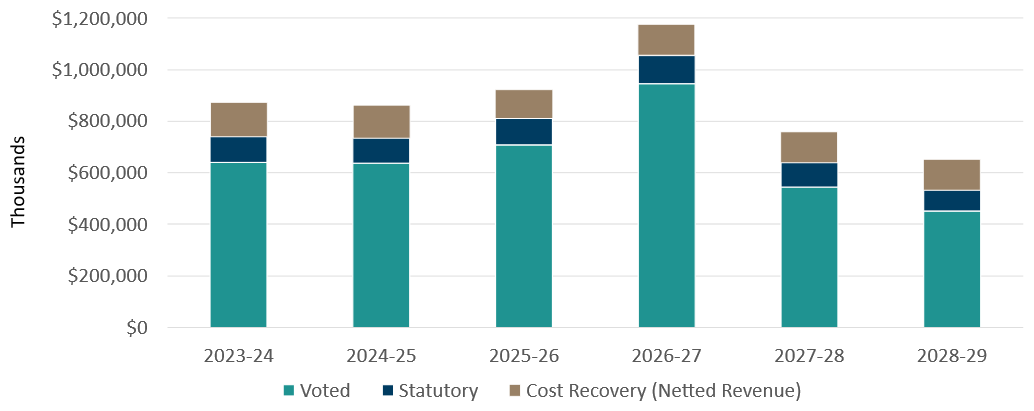
Text version of graph 1
Fiscal year | Statutory | Voted | Total | Cost recovery (netted revenue) |
|---|---|---|---|---|
2023–24 | 99,931 | 640,778 | 740,709 | 132,999 |
2024–25 | 96,236 | 638,037 | 734,273 | 128,407 |
2025–26 | 102,577 | 709,108 | 811,685 | 111,174 |
2026–27 | 110,524 | 945,504 | 1,056,028 | 120,000 |
2027–28 | 95,213 | 544,762 | 639,975 | 120,000 |
2028–29 | 82,104 | 451,505 | 533,609 | 120,000 |
Analysis of statutory and voted funding over a six-year period
Spending fluctuations shown in the graph and table are primarily driven by the Census Program. Spending continues to ramp up through 2025–26 and peaks in 2026–27, when the 2026 Census of Population and 2026 Census of Agriculture are conducted. Spending will decline significantly as 2026 Census operations wind down. Funding for the 2031 Census of Population and 2031 Census of Agriculture is not included in 2028–29, since it will be sought through a forthcoming approval process. The implementation of the targeted savings identified through the CER also contributes to the decline in funding.
Consult the Public Accounts of Canada for further information on Statistics Canada's departmental voted and statutory expenditures.
Financial statement highlights
This section presents Statistics Canada's Financial statements (Unaudited) for the year ended March 31, 2026.
Table 10 summarizes the expenses and revenues for 2025–26, which net to the cost of operations before government funding and transfers.
Financial information | 2025–26 actual results | 2025–26 planned results | Difference (actual results minus planned) |
|---|---|---|---|
Total expenses | 1,024,380,396 | 1,128,270,699 | -103,890,303 |
Total revenues | 110,231,414 | 120,000,000 | -9,768,586 |
Net cost of operations before government funding and transfers | 914,148,982 | 1,008,270,699 | -94,121,717 |
Analysis of expenses and revenues for 2025–26
The difference between actual and planned net costs for 2025-26 is $94.1 million (9.3%). Expenses were $103.9 million lower than anticipated. This variance is largely explained by the agency's use of the operating budget carry-forward mechanism to manage the cyclical nature of program operations and investments. Additional contributors are the closing of a settlement agreement and lower-than-estimated accommodation costs for the Census Program. Revenues and related spending were $9.8 million lower than anticipated.
For more information on the distribution of expenses by program and type, please see the two charts below.
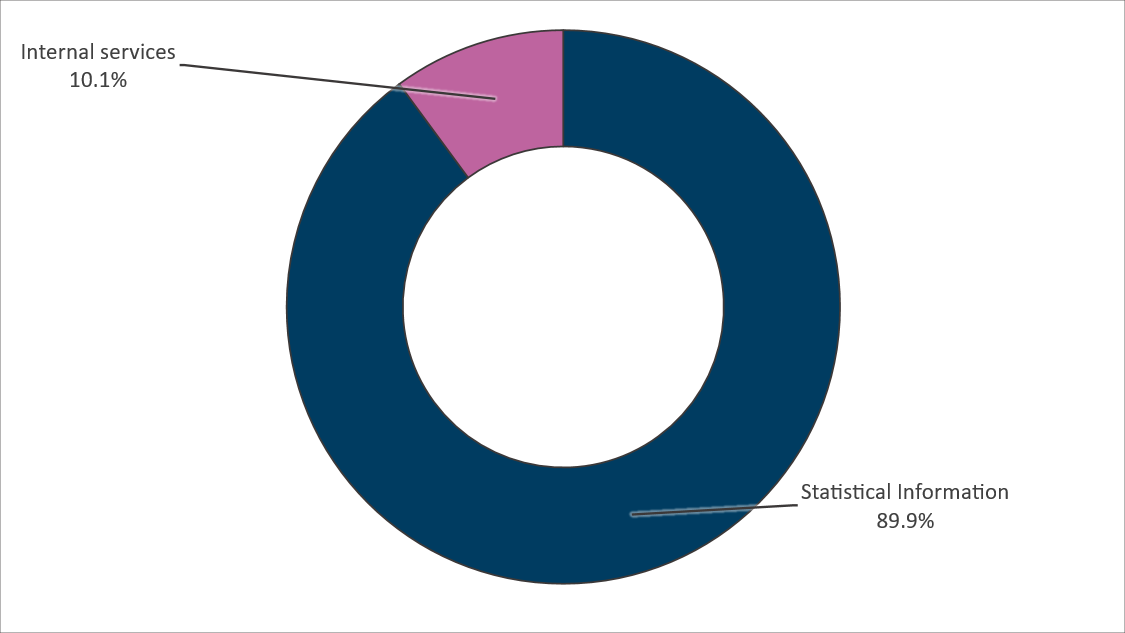
Text version of graph 2
Core responsibility | Percentage of total gross expenditures |
|---|---|
Statistical Information | 89.9% |
Internal services | 10.1% |
Total expenses, including services provided without charge by federal government departments, were $1,024.4 million in 2025-26. These expenses comprised $921.1 million (89.9%) for Statistical Information and $103.3 million (10.1%) for internal services.
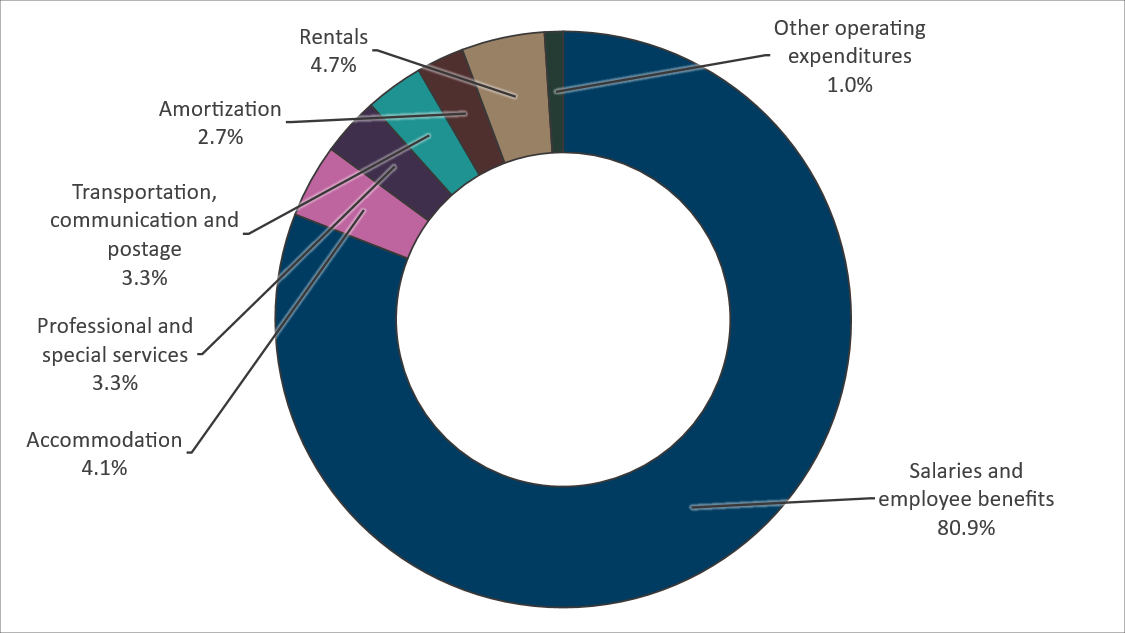
Text version of graph 3
Type of expenditure | Percentage of total gross expenditures |
|---|---|
Salaries and employee benefits | 80.9% |
Rentals | 4.7% |
Accommodations | 4.1% |
Professional and Special Services | 3.3% |
Transportation, communication and postage | 3.3% |
Amortization | 2.7% |
Other operating expenditures | 1.0% |
Statistics Canada spent $1,024.4 million in 2025-26. These expenses mainly comprised $829 million (80.9%) for salaries and employee benefits; $47.7 million (4.7%) for rentals; $42.3 million (4.1%) for accommodations; $33.7 million (3.3%) for professional and special services; $33.4 million (3.3%) for transportation, communication and postage; and $27.4 million (2.7%) for amortization. Other operating expenditures comprised $10.9 million (1%) for information, repairs and maintenance, materials and supplies.
The 2025–26 planned results information is provided in Statistics Canada's Future-Oriented Statement of Operations and Notes 2025–26.
Table 11 summarizes actual expenses and revenues and shows the net cost of operations before government funding and transfers.
Financial information | 2025–26 actual results | 2024–25 actual results | Difference (2025–26 minus 2024–25) |
|---|---|---|---|
Total expenses | 1,024,380,396 | 964,678,418 | 59,701,978 |
Total revenues | 110,231,414 | 128,238,953 | -18,007,539 |
Net cost of operations before government funding and transfers | 914,148,982 | 836,439,465 | 77,709,517 |
Analysis of differences in expenses and revenues between 2024–25 and 2025–26
The net cost of operations before government funding and transfers was $914.1 million, an increase of $77.7 million (9.3%) from $836.4 million in 2024-25, mainly attributable to an increase in spending related to the ramp up of census activities. In addition, spending includes one-time costs related to the voluntary departure program under the federal workforce adjustment process, which supports the implementation of savings targets announced in Budget 2025 in preparation for the Comprehensive Expenditure Review. This is offset by the closing of a settlement agreement.
Revenues decreased in 2025-26 because of the timing and cyclical nature of Statistics Canada's cost-recovery projects.
Table 12 provides a brief snapshot of the amounts the department owes or must spend (liabilities) and its available resources (assets), which helps to indicate its ability to carry out programs and services.
Financial information | Actual fiscal year (2025–26) | Previous fiscal year (2024–25) | Difference (2025–26 minus 2024–25) |
|---|---|---|---|
Total net liabilities | 164,108,531 | 147,116,377 | 16,992,154 |
Total net financial assets | 111,866,253 | 75,762,161 | 36,104,092 |
Departmental net debt | 52,242,278 | 71,354,216 | -19,111,938 |
Total non-financial assets | 117,311,452 | 131,653,553 | -14,342,101 |
Departmental net financial position | 65,069,174 | 60,299,337 | 4,769,837 |
Analysis of department's liabilities and assets since last fiscal year
The agency's net financial position was $65.1 million at the end of 2025-26, an increase of $4.8 million from $60.3 million in 2024-25.
Total net liabilities
The increase in total liabilities of $17 million is mainly attributable to an increase in accounts payable and accrued liabilities for incurred one-time costs related to a voluntary departure program implemented under the federal workforce adjustment process and payables at year-end for the 2026 Census, offset by the closing of a settlement agreement, as well as employee vacation pay and compensatory leave.
Total net financial assets
The increase in total net financial assets of $36.1 million is mainly attributable to an increase in the amount due from the Consolidated Revenue Fund to discharge accounts payable and accrued liabilities.
Total non-financial assets
The decrease in total non-financial assets of $14.3 million is mainly attributable to the ongoing amortization of tangible capital assets.
For more information on the distribution of the balances in the statements of financial position, please see the two charts below.
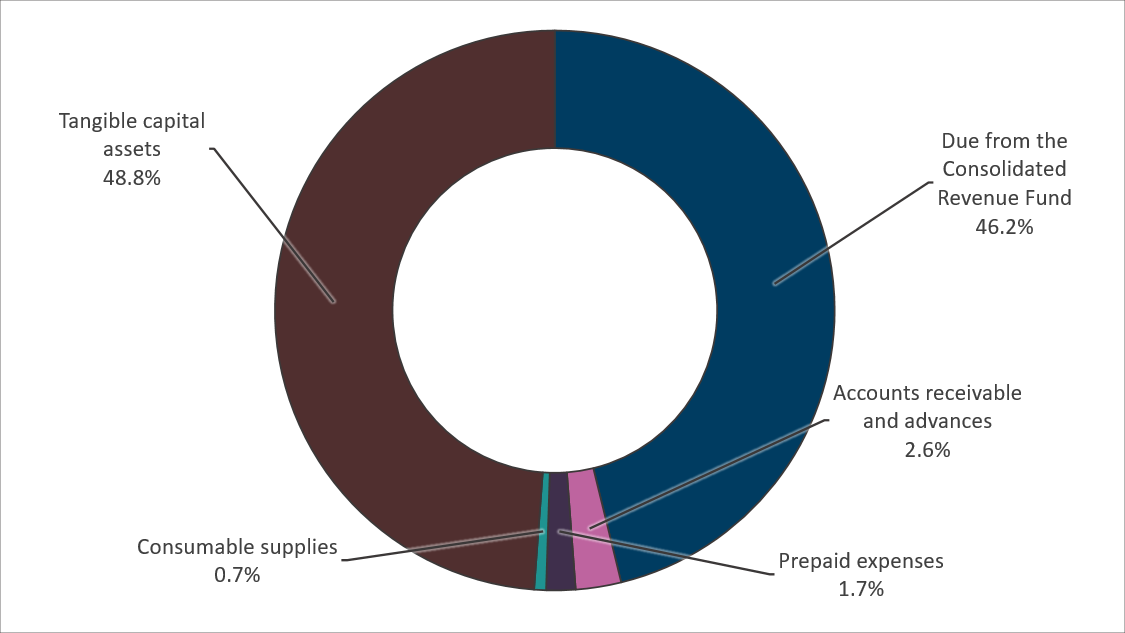
Text version of graph 4
Type of asset | Percentage of total assets |
|---|---|
Tangible capital assets | 48.8% |
Due from the Consolidated Revenue Fund | 46.2% |
Accounts receivable and advances | 2.6% |
Prepaid expenses | 1.7% |
Consumable supplies | 0.7% |
Total assets, including financial and non-financial assets, were $229.2 million at the end of 2025-26. Tangible capital assets represented the largest portion of assets, at $111.9 million (48.8%). They consisted of informatics software ($69.6 million), software under development ($25.9 million), leasehold improvements ($11.1 million) and other assets ($5.3 million). The remaining portion comprised $105.8 million (46.2%) for amounts due from the Consolidated Revenue Fund, $6 million (2.6%) for accounts receivable and advances, $3.9 million (1.7%) for prepaid expenses, and $1.6 million (0.7%) for consumable supplies.
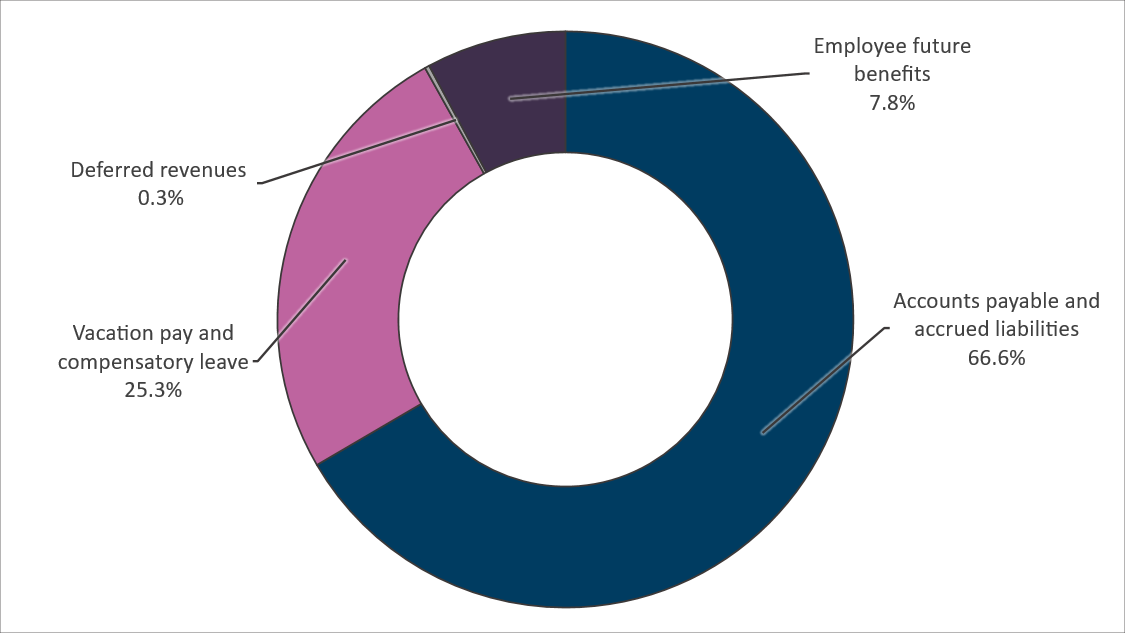
Text version of graph 5
Type of liability | Percentage of total liabilities |
|---|---|
Accounts payable and accrued liabilities | 66.6% |
Vacation pay and compensatory leave | 25.3% |
Employee future benefits | 7.8% |
Deferred revenues | 0.3% |
Total liabilities were $164.1 million at the end of 2025-26. Accounts payable and accrued liabilities made up the largest portion of liabilities, at $109.3 million (66.6%). They consisted of accrued salaries and wages ($72.2 million), accounts payable to external parties ($32.8 million), and accounts payable to other federal government departments and agencies ($4.3 million). The next largest portion was vacation pay and compensatory leave, at $41.5 million (25.3%). Employee future benefits made up $12.9 million (7.8%). The remaining portion was composed of deferred revenue, at $0.4 million (0.3%).
Human resources
This section presents an overview of the department's actual and planned human resources from 2023–24 to 2028–29.
Table 13 shows a summary in full-time equivalents of human resources for Statistics Canada's core responsibilities and for its internal services for the previous three fiscal years.
Core responsibilities and internal services | 2023–24 actual full-time equivalents | 2024–25 actual full-time equivalents | 2025–26 actual full-time equivalents |
|---|---|---|---|
Statistical information | 6,291 | 6,075 | 6,028 |
Internal services | 619 | 685 | 661 |
Total gross | 6,910 | 6,760 | 6,689 |
Respendable revenue | -1,373 | -1,267 | -992 |
Total net | 5,537 | 5,493 | 5,697 |
Analysis of human resources for the last three years
Fluctuations in full-time equivalents (FTEs) are largely attributable to how the agency strategically manages its resources over time. The agency leverages the operating budget carry-forward mechanism to manage the cyclical nature of its operations and investments in the agency's strategic priorities.
The decrease in resources under respendable revenue is linked to the timing and cyclical nature of cost-recovery projects.
Table 14 shows the planned full-time equivalents for each of Statistics Canada's core responsibilities and for its internal services for the next three years. Human resources for the current fiscal year are forecast based on year to date.
Core responsibilities and internal services | 2026–27 planned full-time equivalents | 2027–28 planned full-time equivalents | 2028–29 planned full-time equivalents |
|---|---|---|---|
Statistical information | 6,692 | 5,756 | 4,984 |
Internal services | 601 | 576 | 532 |
Total gross | 7,293 | 6,332 | 5,516 |
Respendable revenue | -1,164 | -1,164 | -1,164 |
Total net | 6,129 | 5,168 | 4,352 |
Analysis of human resources for the next three years
Statistics Canada's planned FTEs for 2026–27 to 2028–29 reflect the cyclical nature of the Census Program, which is partly offset by the saving targets announced under the CER.
Human resources peak in 2026–27, when the 2026 Census of Population and 2026 Census of Agriculture are conducted. As in previous census cycles, a significant decrease in FTEs is expected as 2026 Census operations wind down. This pattern is consistent with past trends and reflects the workforce required to support the agency's largest statistical operation. Resources for the 2031 Census of Population and 2031 Census of Agriculture are not included in 2028–29, since funding for the future cycle will be sought through a forthcoming approval process.
Supplementary information tables
The following supplementary information tables are available on Statistics Canada's website:
Federal tax expenditures
The tax system can be used to achieve public policy objectives through the application of special measures such as low tax rates, exemptions, deductions, deferrals and credits. The Department of Finance Canada publishes cost estimates and projections for these measures each year in the Report on Federal Tax Expenditures. This report also provides detailed background information on tax expenditures, including descriptions, objectives, historical information and references to related federal spending programs as well as evaluations and GBA Plus of tax expenditures.
Corporate information
Departmental profile
Departmental profile
Appropriate minister(s):
The Honourable Mélanie Joly, P.C., M.P.
Institutional head:
André Loranger
Ministerial portfolio:
Innovation, Science and Economic Development
Enabling instruments:
Year of incorporation or commencement:
The Dominion Bureau of Statistics was established in 1918. In 1971, with the revision of the Statistics Act, the agency became Statistics Canada.
Departmental contact information
Departmental contact information
Mailing address:
Statistics Canada
150 Tunney's Pasture Driveway
Ottawa, Ontario
K1A 0T6
Telephone:
Toll-free: 1-800-263-1136
International: 1-514-283-8300
TTY:
1-800-363-7629
Fax:
1-514-496-4879
Email:
Website:
Definitions
List of terms
appropriation (crédit)
Any authority of Parliament to pay money out of the Consolidated Revenue Fund.
budgetary expenditures (dépenses budgétaires)
Operating and capital expenditures; transfer payments to other levels of government, departments or individuals; and payments to Crown corporations.
core responsibility(responsabilité essentielle)
An enduring function or role of a department. The departmental results listed for a core responsibility reflect the outcomes that the department seeks to influence or achieve.
Departmental Plan (plan ministériel)
A report that outlines the anticipated activities and expected performance of an appropriated department over a three-year period. Departmental Plans are usually tabled in Parliament in spring.
departmental priority (priorité)
A plan, project or activity that a department focuses and reports on during a specific planning period. Priorities represent the most important things to be done or those to be addressed first to help achieve the desired departmental results.
departmental result(résultat ministériel)
A high-level outcome related to the core responsibilities of a department.
departmental result indicator (indicateur de résultat ministériel)
A quantitative or qualitative measure that assesses progress toward a departmental result.
departmental results framework (cadre ministériel des résultats)
A framework that connects the department's core responsibilities to its departmental results and departmental result indicators.
Departmental Results Report (rapport sur les résultats ministériels)
A report outlining a department's accomplishments against the plans, priorities and expected results set out in the corresponding Departmental Plan.
Full-time equivalent (équivalent temps plein)
Measures the person years in a departmental budget. An employee's scheduled hours per week divided by the employer's hours for a full-time workweek calculates a full-time equivalent. For example, an employee who works 20 hours in a 40-hour standard workweek represents a 0.5 full-time equivalent.
Gender-based Analysis Plus (GBA Plus) (analyse comparative entre les sexes plus [ACS Plus])
An analytical tool that helps to understand the ways diverse individuals experience policies, programs and other initiatives. Applying GBA Plus to policies, programs and other initiatives helps to identify the different needs of the people affected, the ways to be more responsive and inclusive, and the methods to anticipate and mitigate potential barriers to accessing or benefitting from the initiative. GBA Plus goes beyond biological (sex) and socio-cultural (gender) differences to consider other factors, such as age, disability, education, ethnicity, economic status, geography (including rurality), language, race, religion, and sexual orientation.
government priorities (priorités pangouvernementales)
For the purpose of the 2025–26 Departmental Results Report, government priorities are the high-level themes outlining the government's agenda as announced in the 2025 Speech from the Throne.
horizontal initiative (initiative horizontale)
A program, project or other initiative where two or more federal departments receive funding to work collaboratively on a shared outcome usually linked to a government priority, and where the ministers involved agree to designate it as horizontal. Specific reporting requirements apply, including that the lead department must report on combined expenditures and results.
Indigenous business (entreprise autochtones)
Requirements for verifying Indigenous businesses for the purposes of the departmental result report are available through the Indigenous Services Canada Mandatory minimum 5% Indigenous procurement target website.
non‑budgetary expenditures (dépenses non budgétaires)
Net outlays and receipts related to loans, investments and advances, which change the composition of the financial assets of the Government of Canada.
performance (rendement)
What a department did with its resources to achieve its results, how well those results compare to what the department intended to achieve, and how well lessons learned have been identified.
performance indicator (indicateur de rendement)
A qualitative or quantitative measure that assesses progress toward a departmental-level or program-level result, or the expected outputs or outcomes of a program, policy or initiative.
plan (plan)
The articulation of strategic choices, which provides information on how a department intends to achieve its priorities and associated results. Generally, a plan will explain the logic behind the strategies chosen and tend to focus on actions that lead to the expected result.
planned spending (dépenses prévues)
For Departmental Plans and Departmental Results Reports, planned spending refers to the amounts presented in Main Estimates. Departments must determine their planned spending and be able to defend the financial numbers presented in their Departmental Plans and Departmental Results Reports.
program (programme)
An Individual, group, or combination of services and activities managed together within a department and focused on a specific set of outputs, outcomes or service levels.
program inventory (répertoire des programmes)
A listing that identifies all the department's programs and the resources that contribute to delivering on the department's core responsibilities and achieving its results.
result (résultat)
An outcome or output related to the activities of a department, policy, program or initiative.
statutory expenditures (dépenses législatives)
Spending approved through legislation passed in Parliament, other than appropriation acts. The legislation sets out the purpose and the terms and conditions of the expenditures.
target (cible)
A quantitative or qualitative, measurable goal that a department, program or initiative plans to achieve within a specified time period.
voted expenditures (dépenses votées)
Spending approved annually through an appropriation act passed in Parliament. The vote also outlines the conditions that govern the spending.